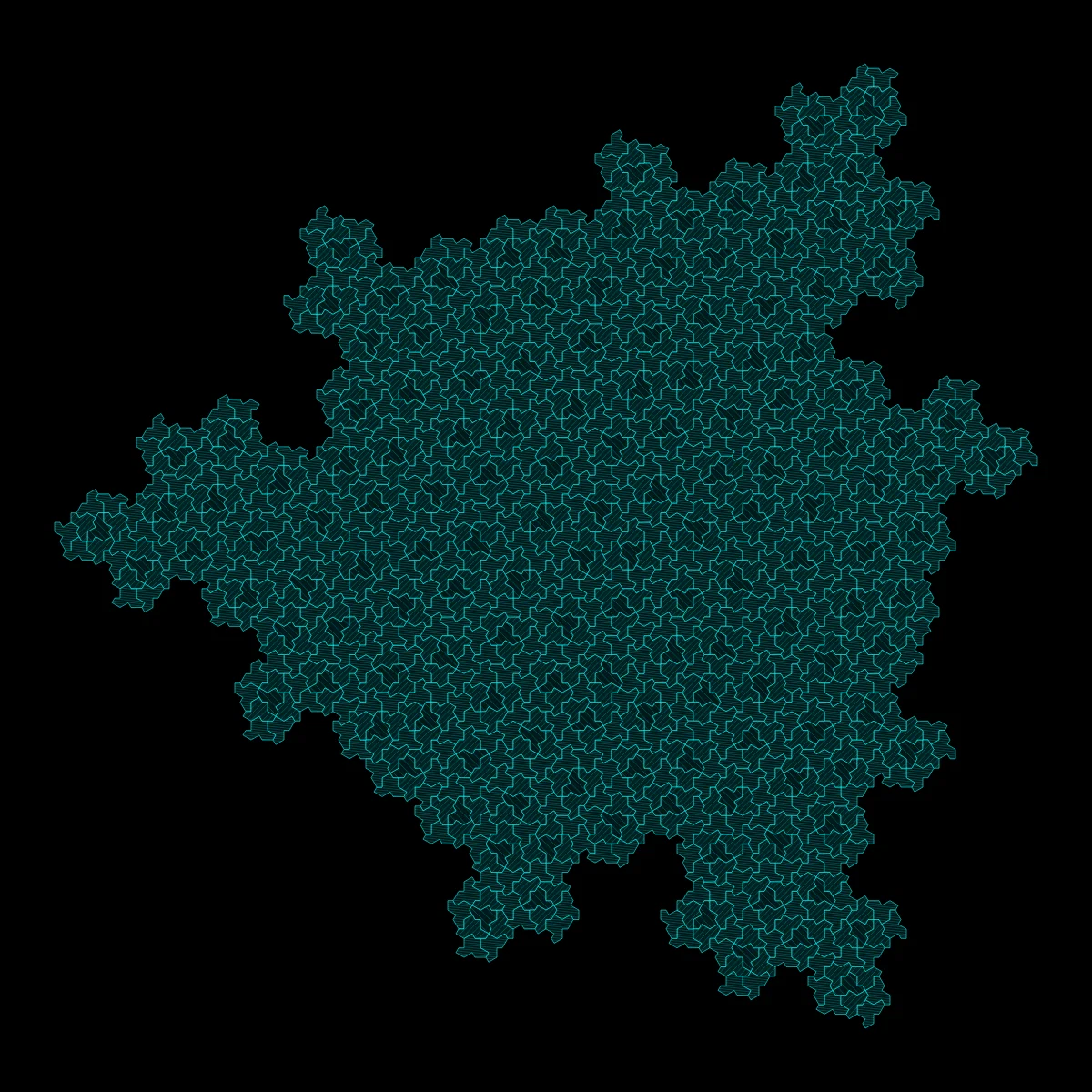
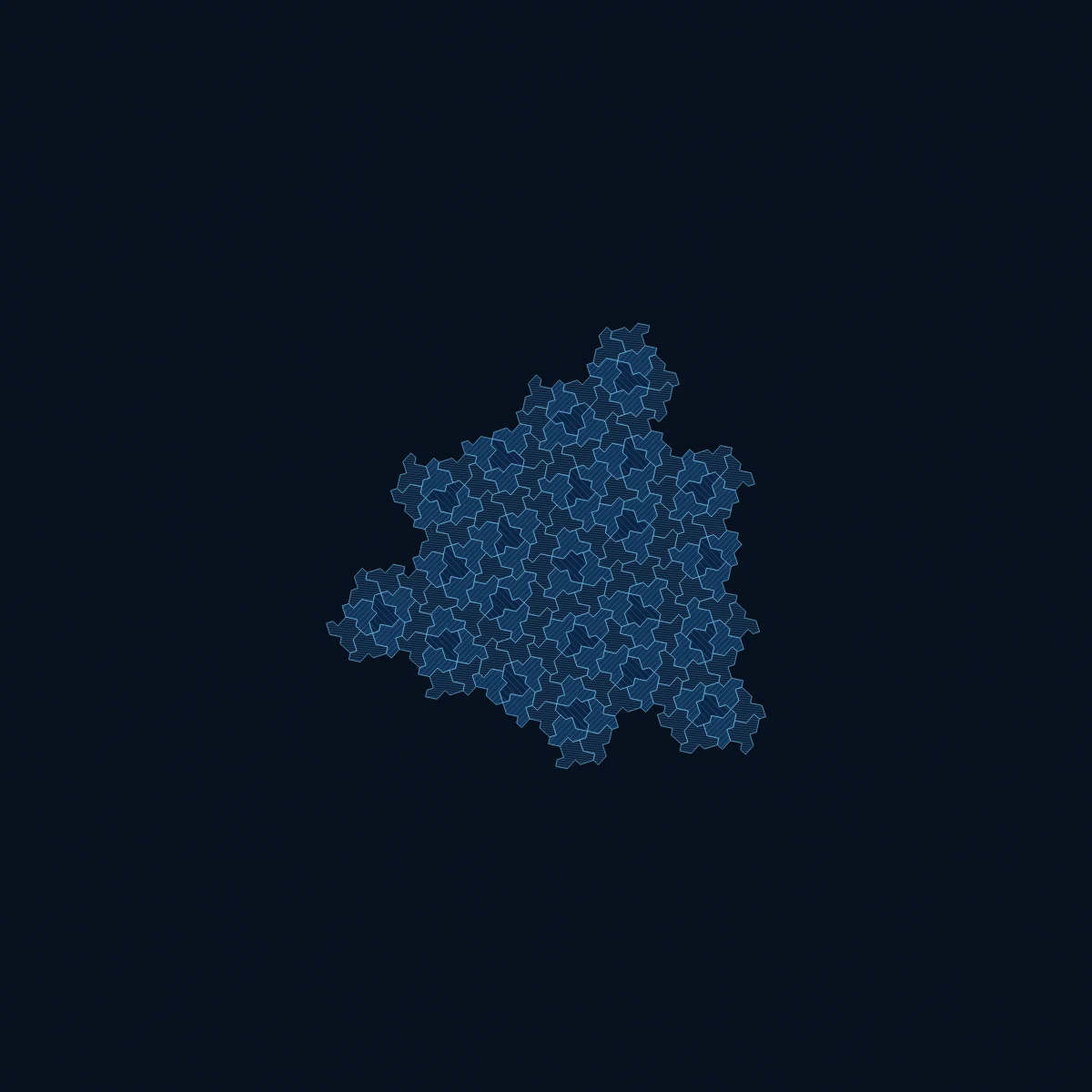
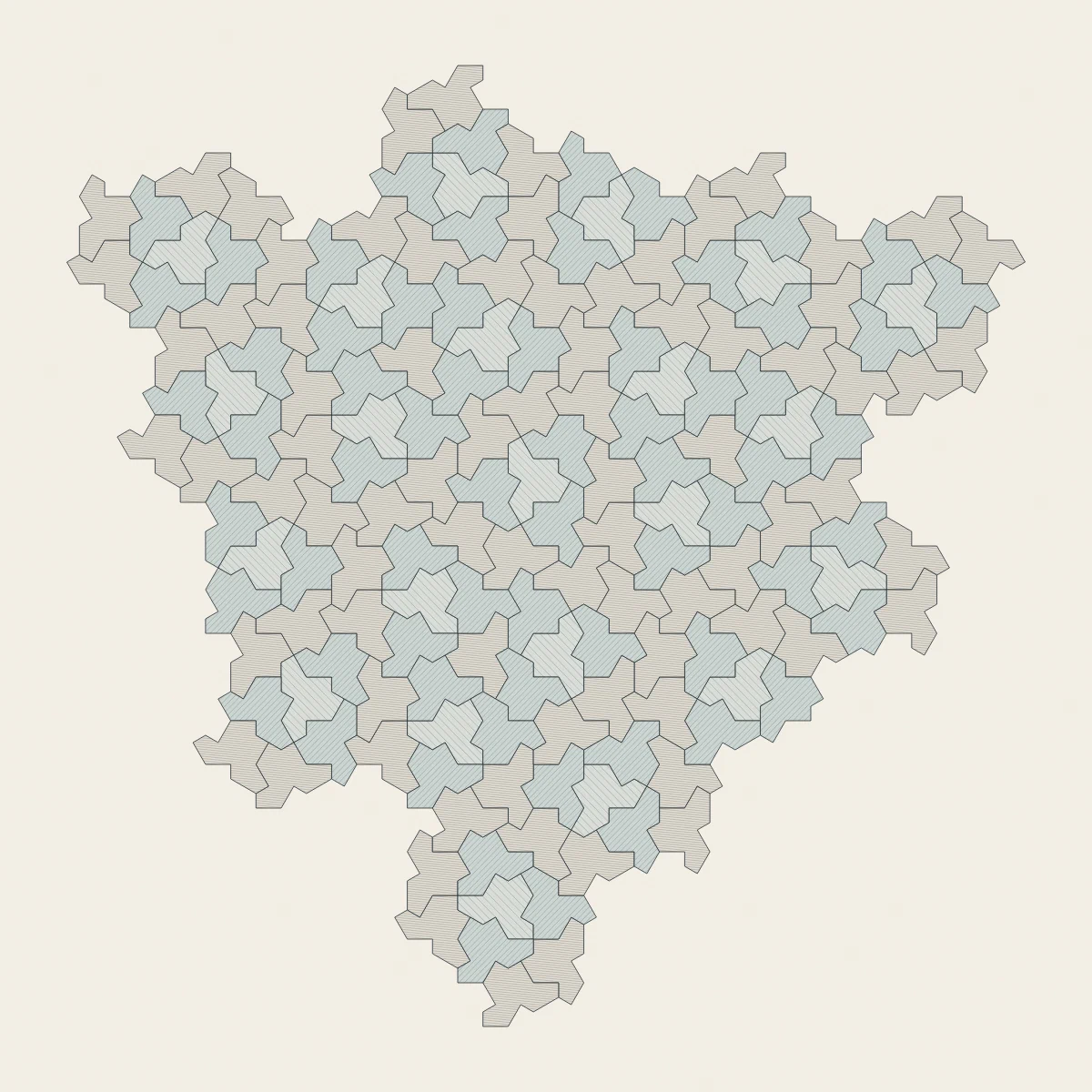
The hat: one tile that covers the plane and never repeats, grown by substitution.
An einstein
In March 2023 a retired printing technician named David Smith found a
thirteen-sided polygon that tiles the plane and never repeats. Not a set of tiles —
one tile. Mathematicians had been looking for that shape for fifty years and had a
name ready for it: an einstein, from ein Stein, one stone.
The shape drawn here is that tile, the hat. Thirteen edges, all of them drawn
from a hexagonal grid, which is why the outline looks like it was cut rather than
designed.
HexPt(0, 0),  HexPt(-1, -1), HexPt(0, -2), HexPt(2, -2),
HexPt(2, -1), HexPt(4, -2),  HexPt(5, -1), HexPt(4, 0),
HexPt(3, 0),  HexPt(2, 2),   HexPt(0, 3),  HexPt(0, 2),
HexPt(-1, 2)
Nobody lays these by hand
An aperiodic tiling cannot be built by pushing tiles together and hoping, because
the property being demonstrated is global: it is about what cannot happen
anywhere, ever. What is used instead is a substitution system.
Four shapes stand in for groups of hats — called H, T, P and F — and there is a
rule that replaces each one with a patch of twenty-nine of them, arranged so the
patch can itself be read as four larger H, T, P and F. Apply the rule again and the
patch quadruples. Apply it forever and the plane is covered.
Every tile in the finished piece is a hat. The metatiles are bookkeeping: they exist
so the arrangement can be generated at all.
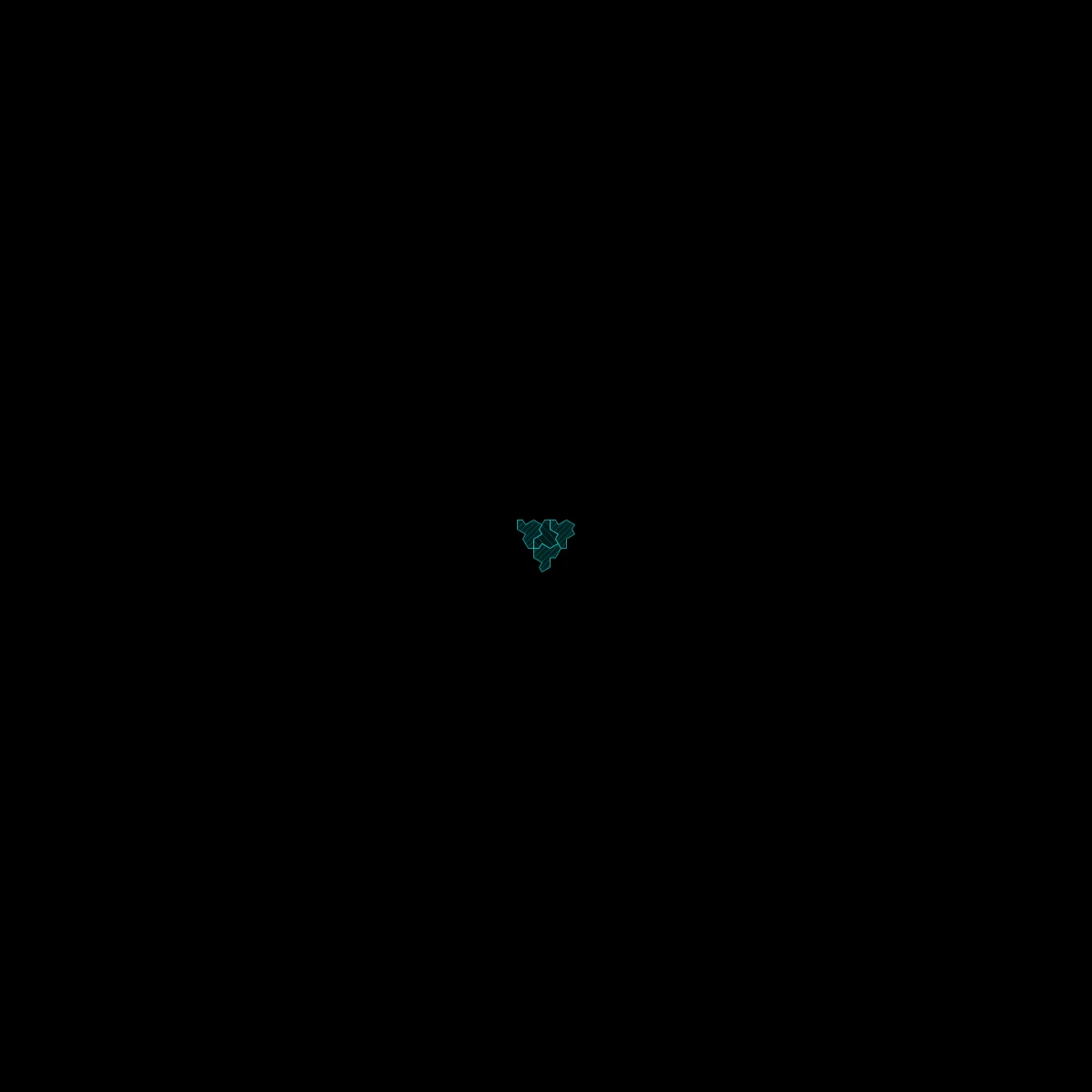
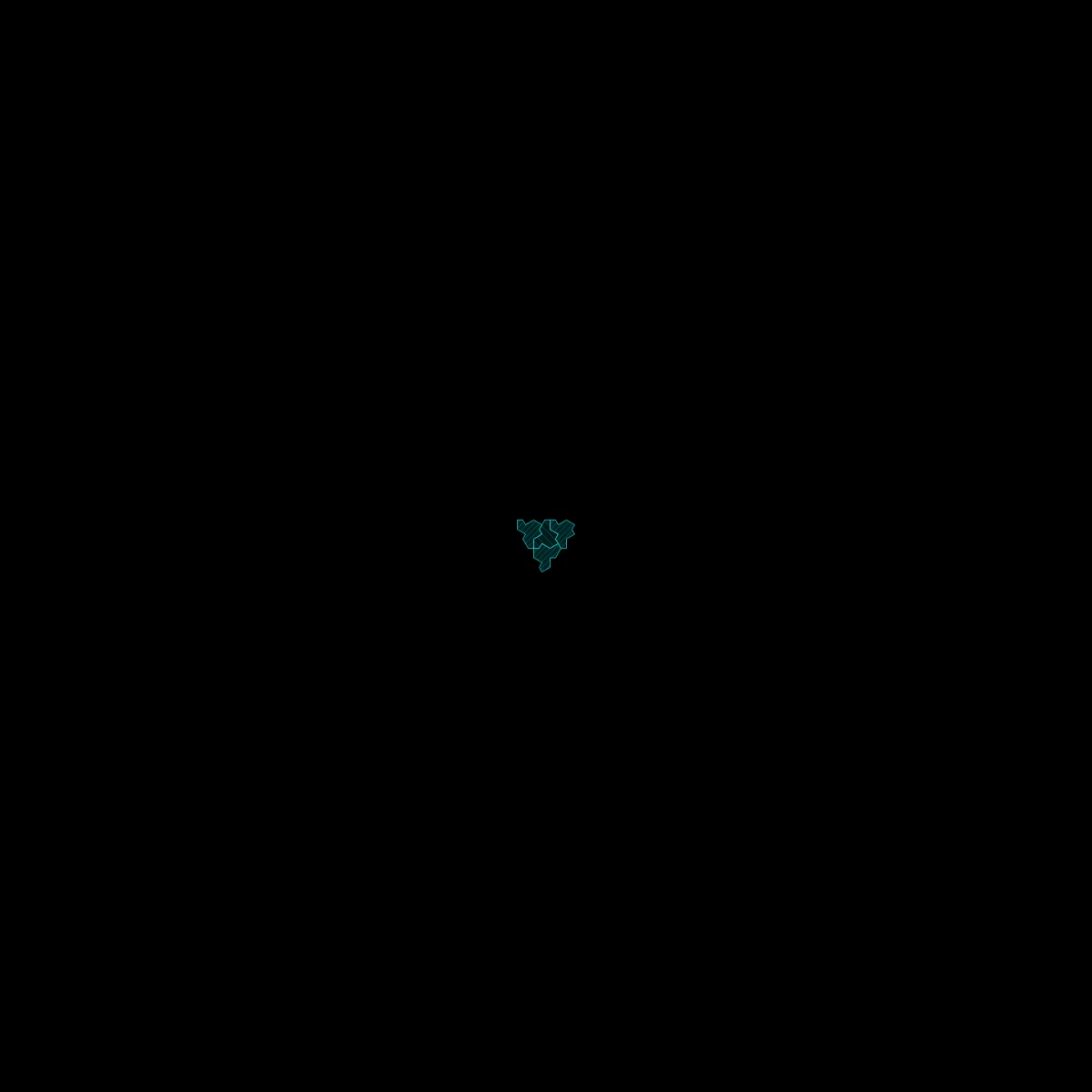
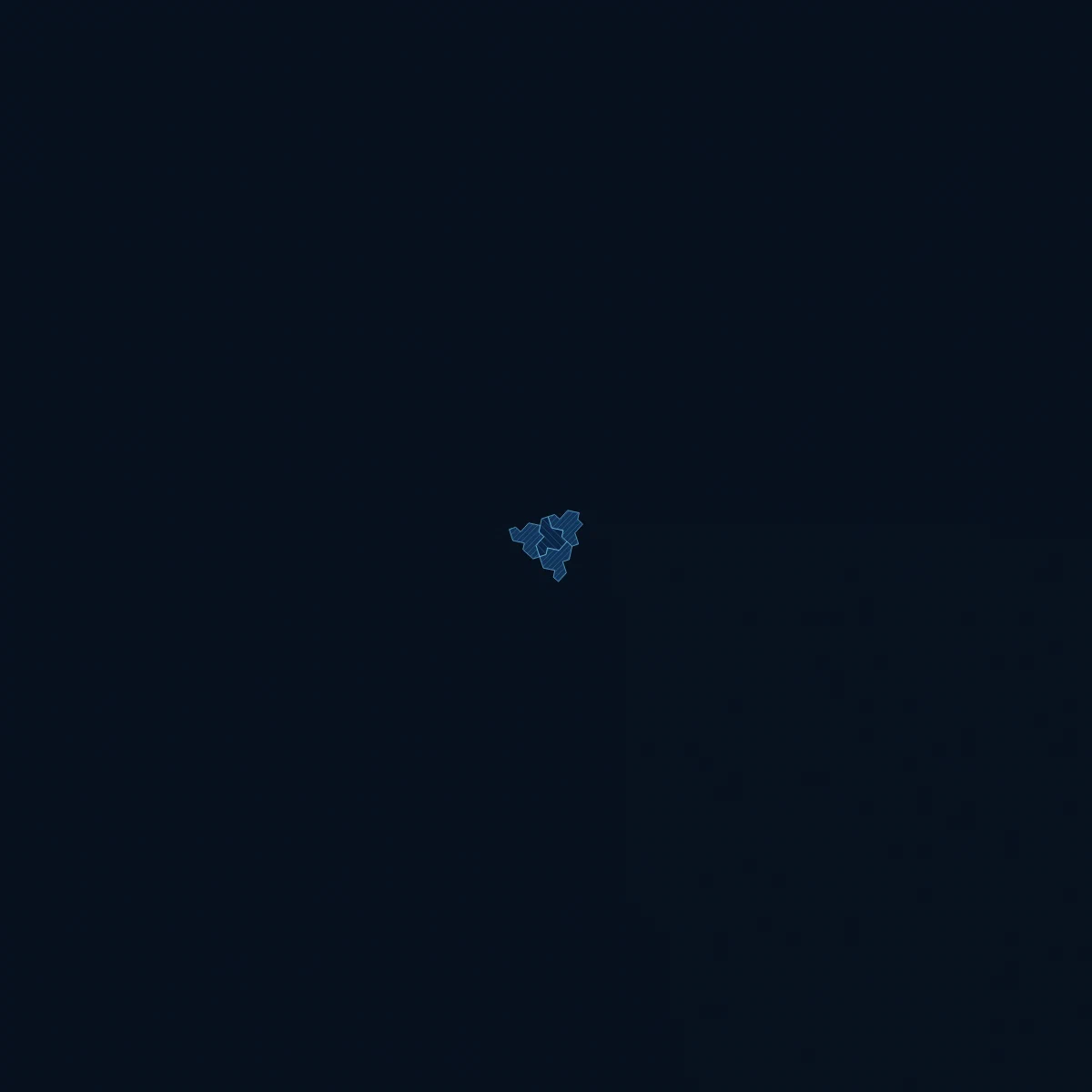
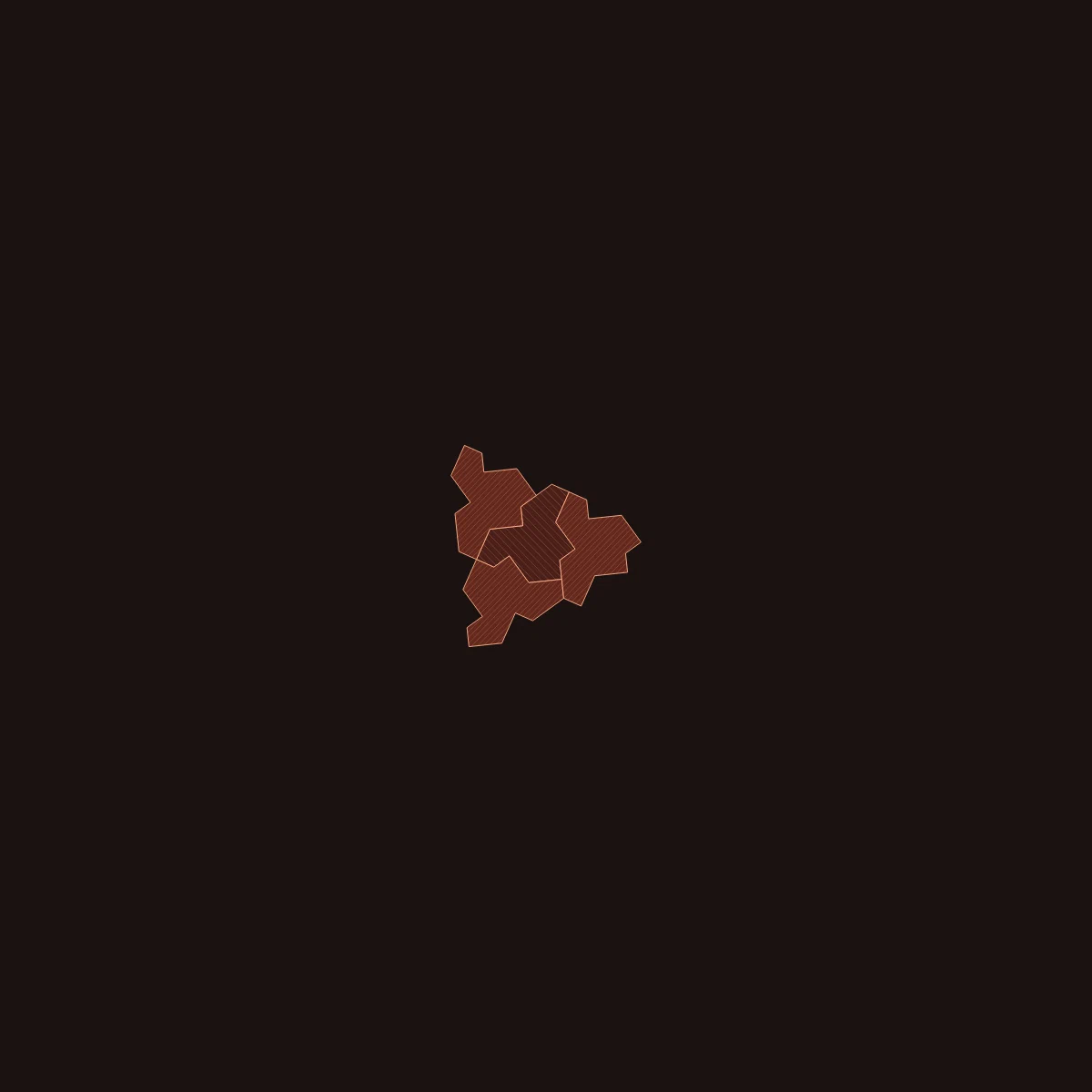
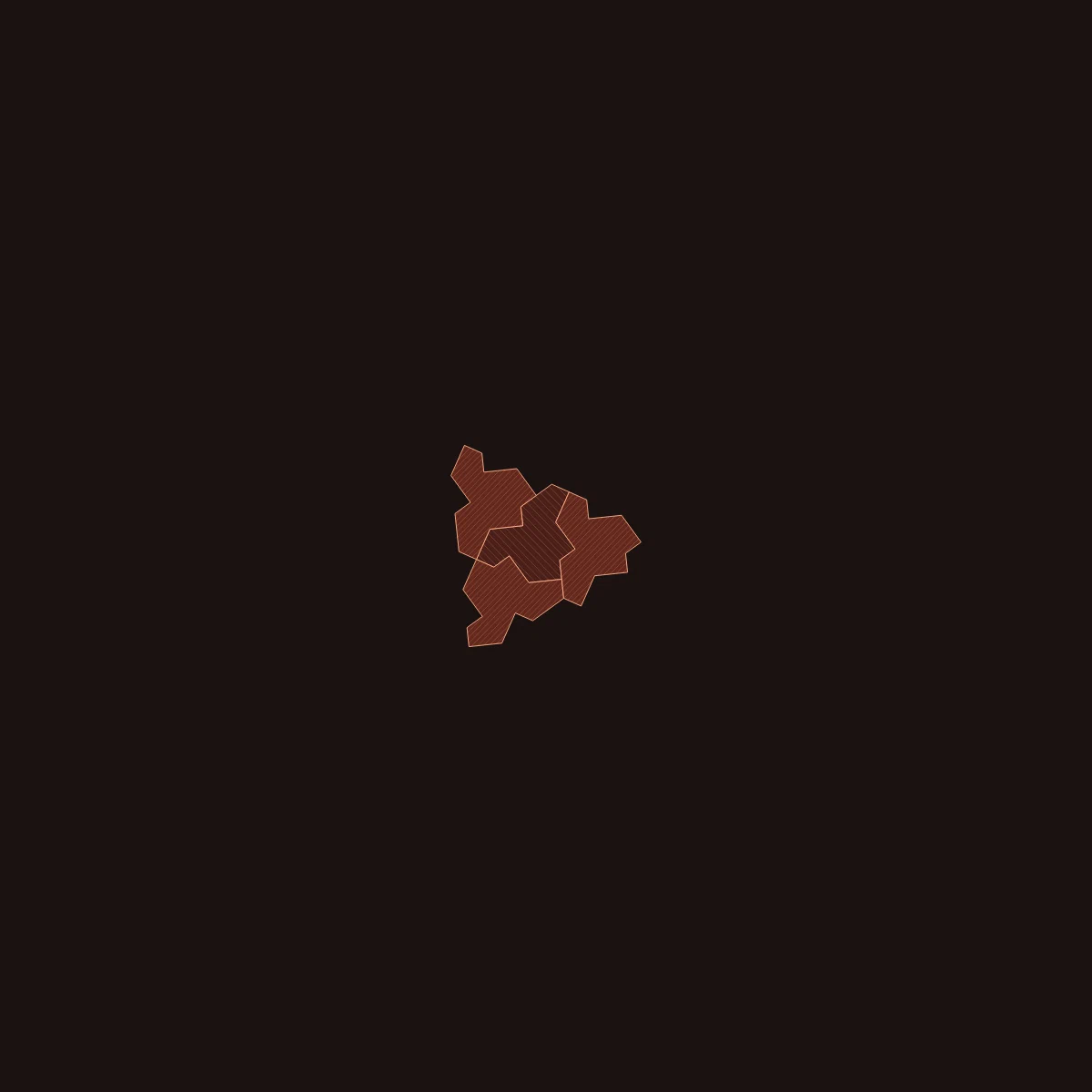
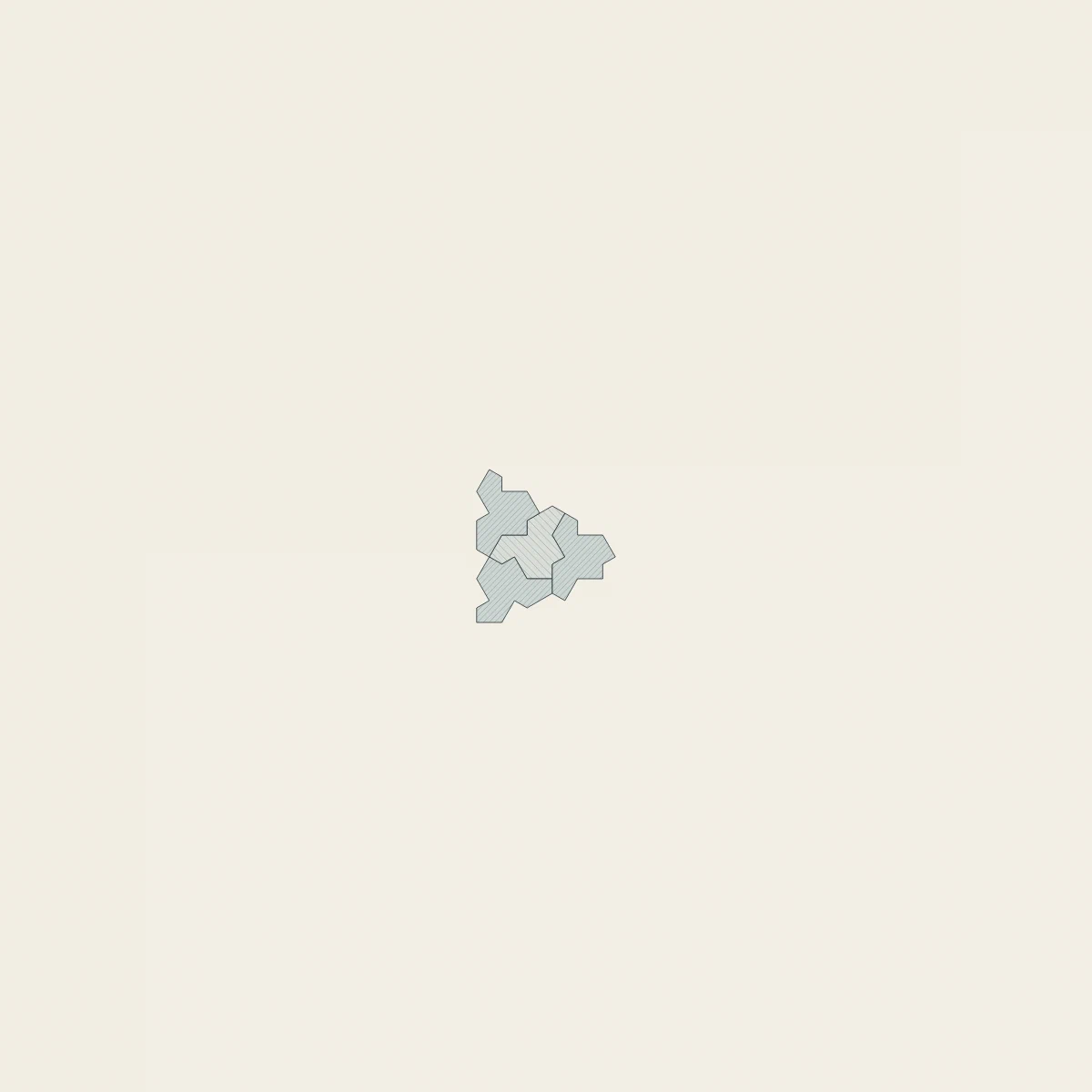
The H metatile, with the four hats that fill it. This is the smallest thing the
system knows how to build, and the whole of the rest is this arrangement inflated.
Inflation
for (var i = 0; i < levels; i++)
{
    var patch = ConstructPatch(tiles[0], tiles[1], tiles[2], tiles[3]);
    tiles = ConstructMetatiles(patch);
}
ConstructPatch assembles twenty-nine metatiles edge to edge — the long list of
ByEdge calls is that assembly, each one saying put a P here, matched to this edge
of the tile I placed four steps ago. ConstructMetatiles then draws four new
outlines around parts of that patch and declares them to be the next H, T, P and F.
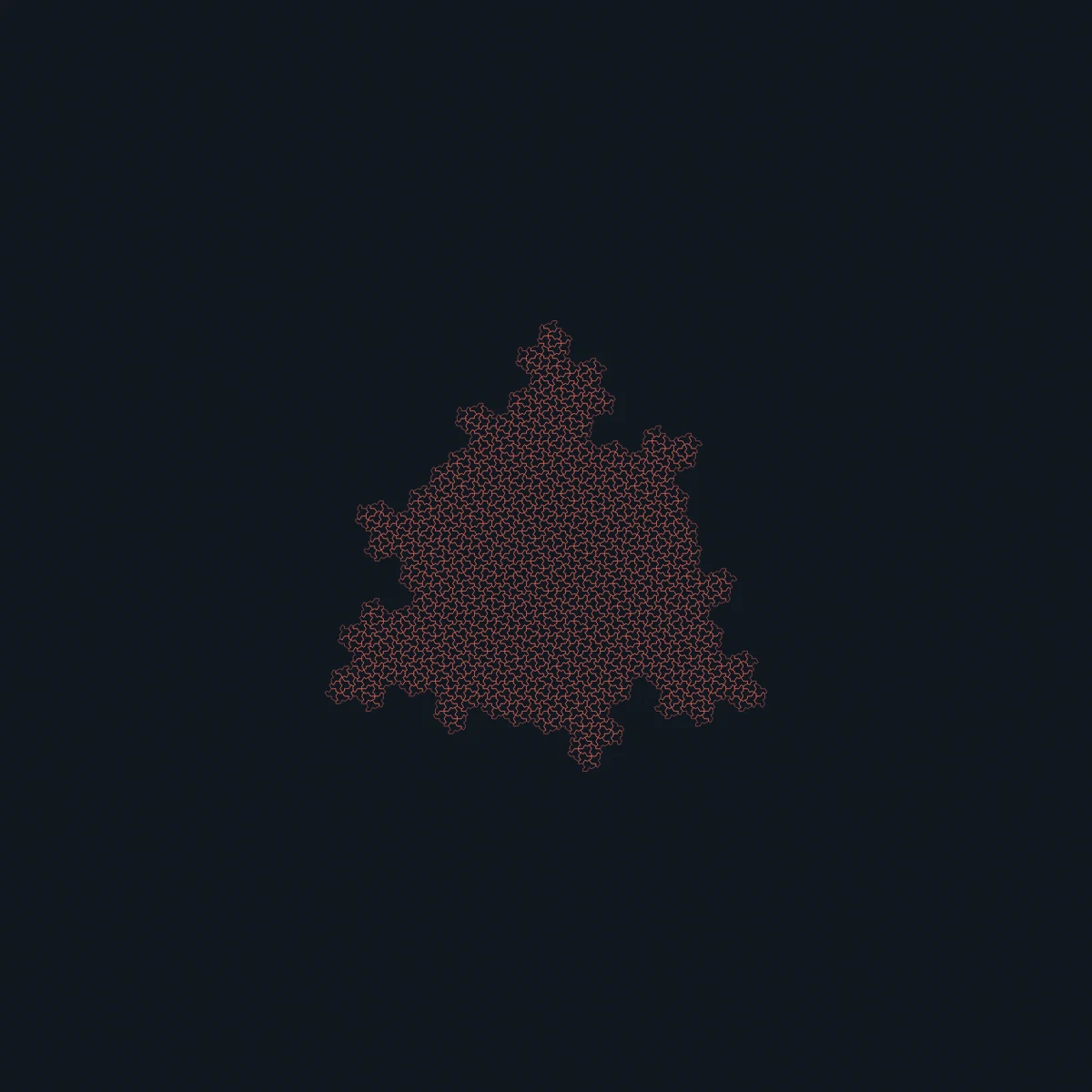
The tiles do not get bigger. The patch does, and each pass roughly quadruples the
number of hats in it, which is why the frame fills so quickly.
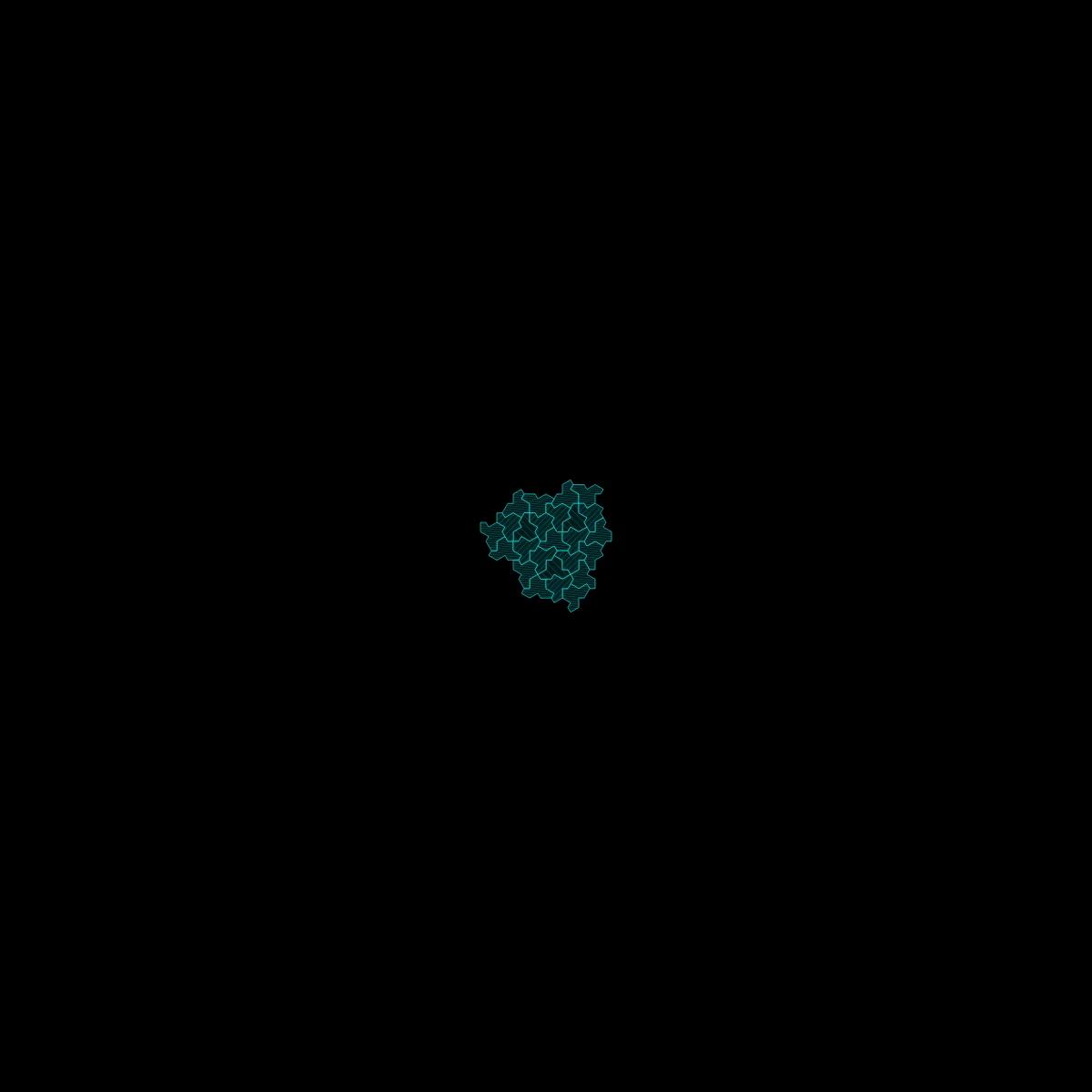
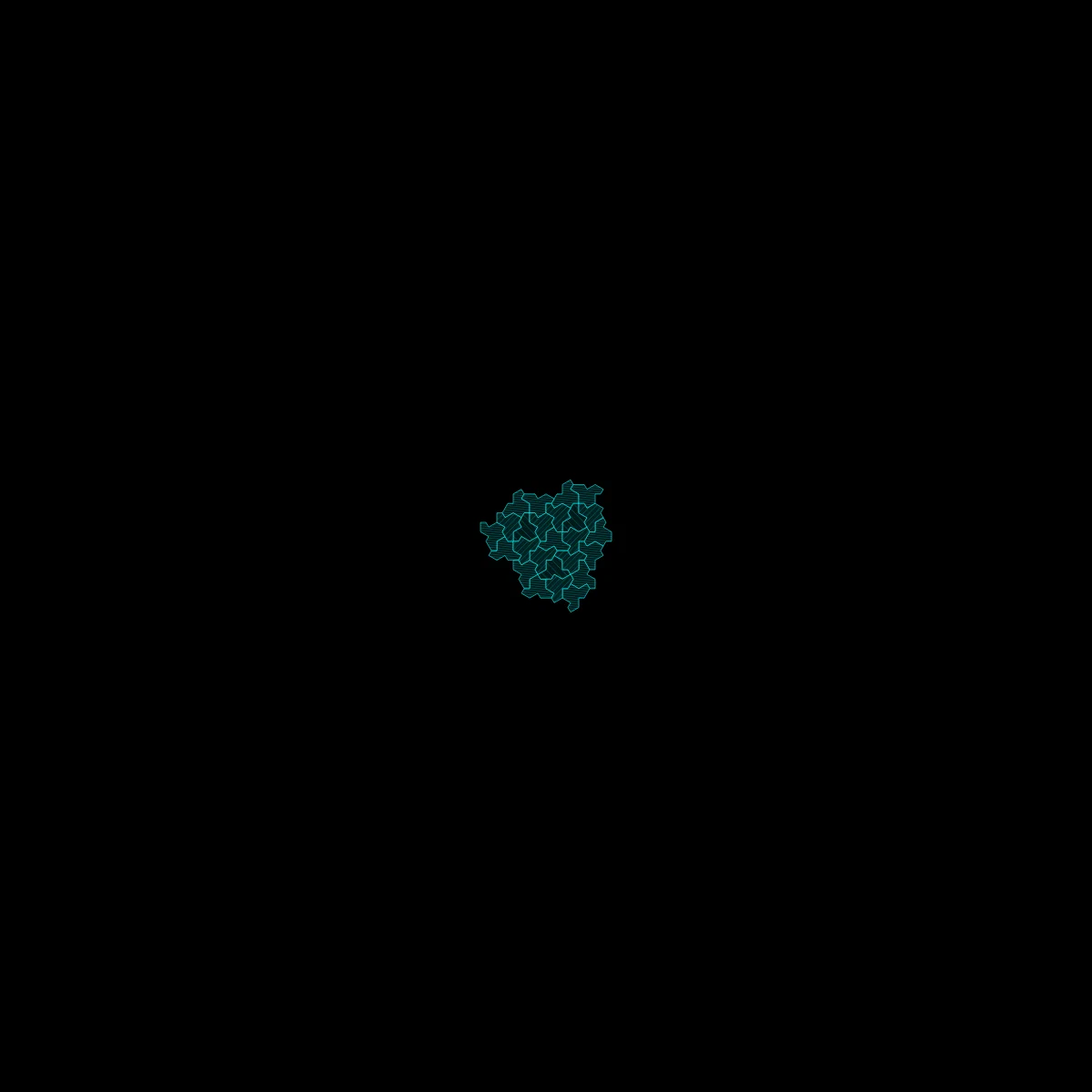
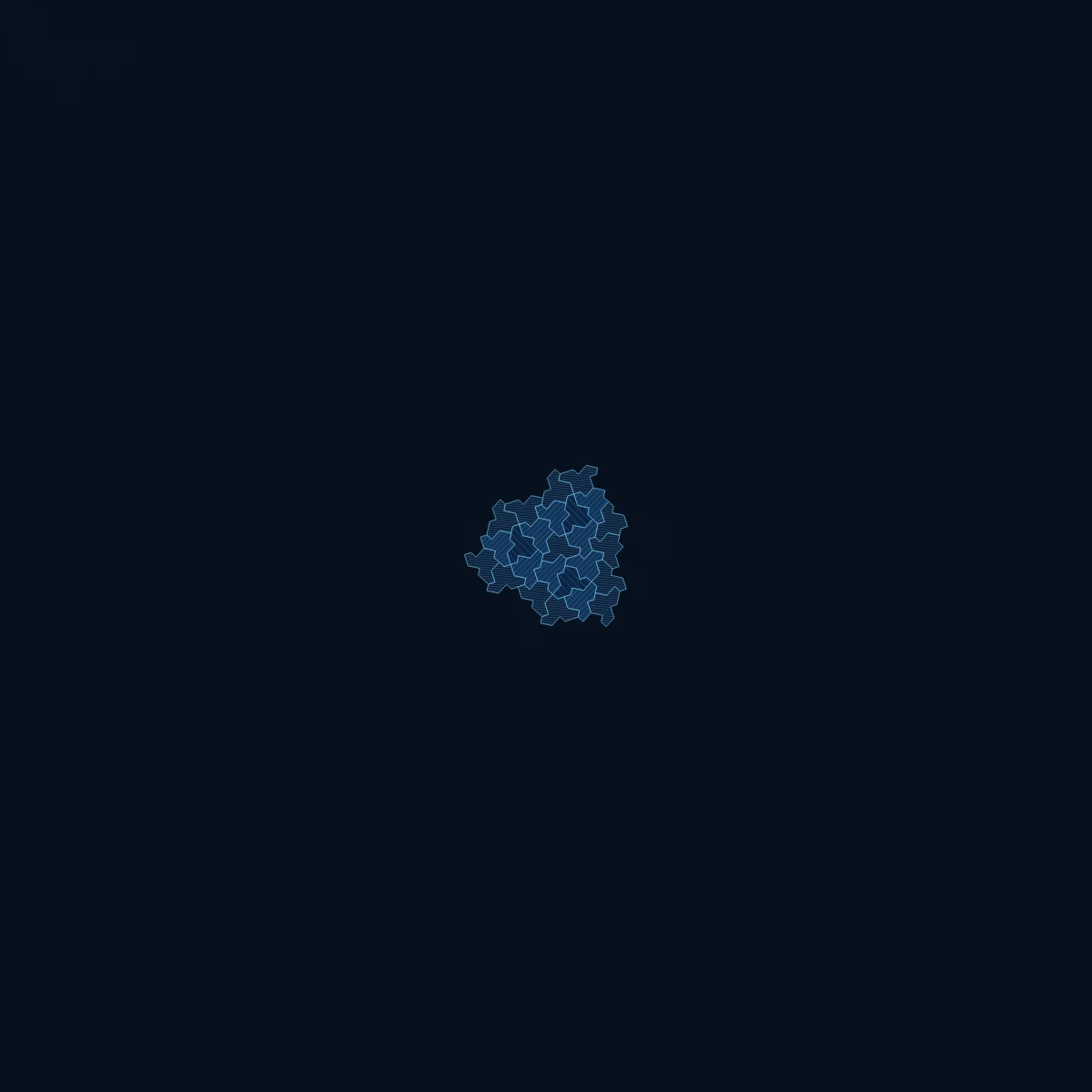
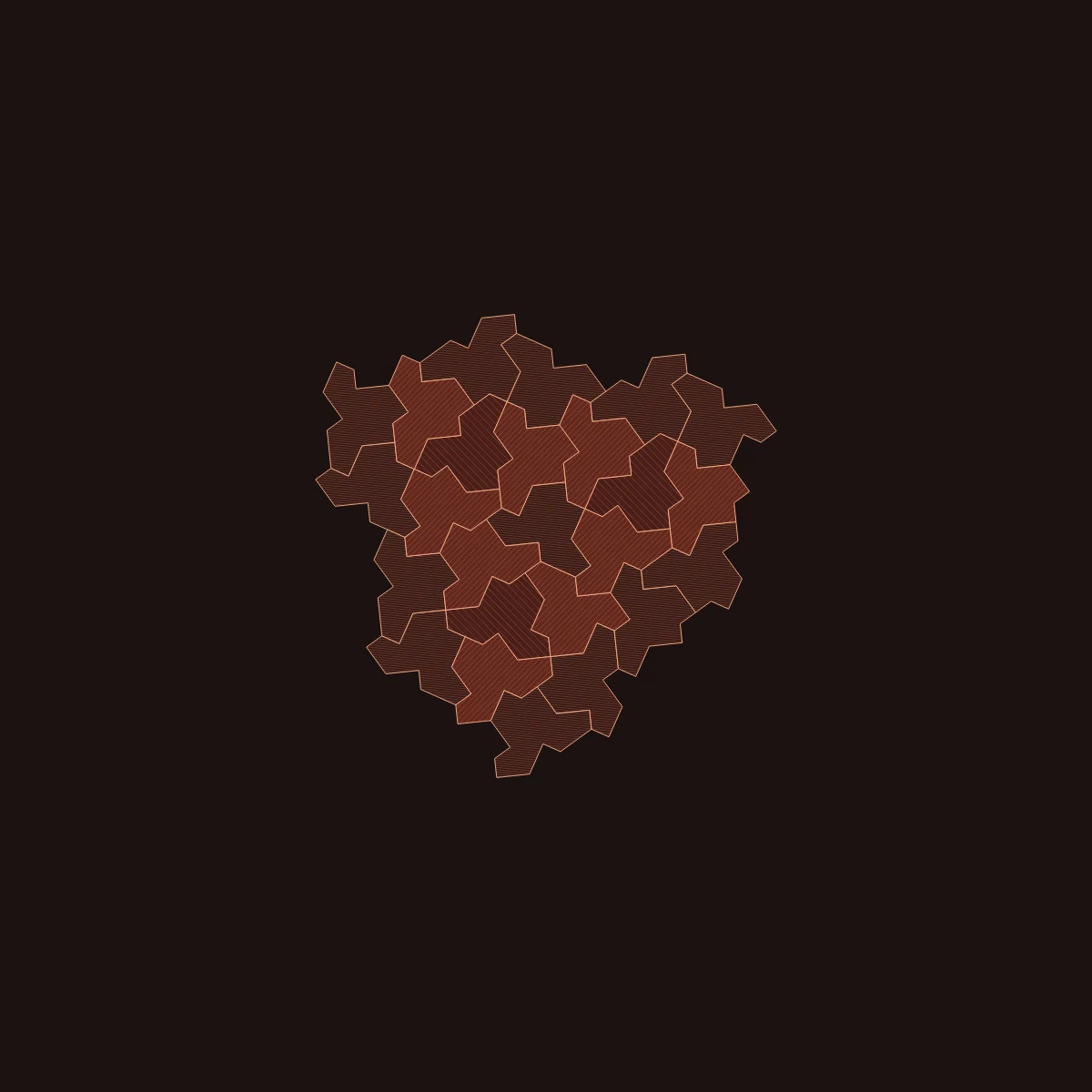
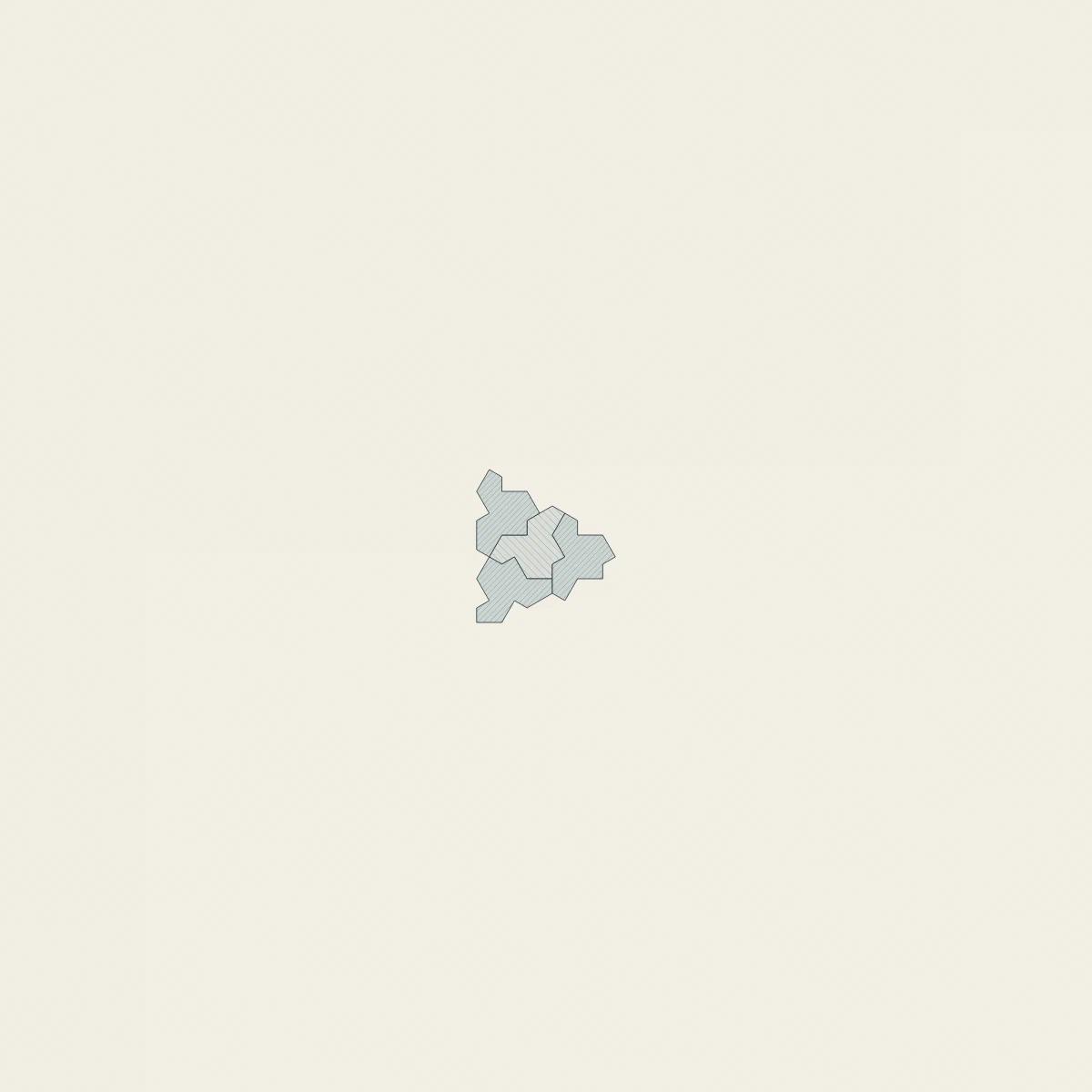
One inflation. The patch is now a group of metatiles, and the hats inside them are
already at the scale they will keep.
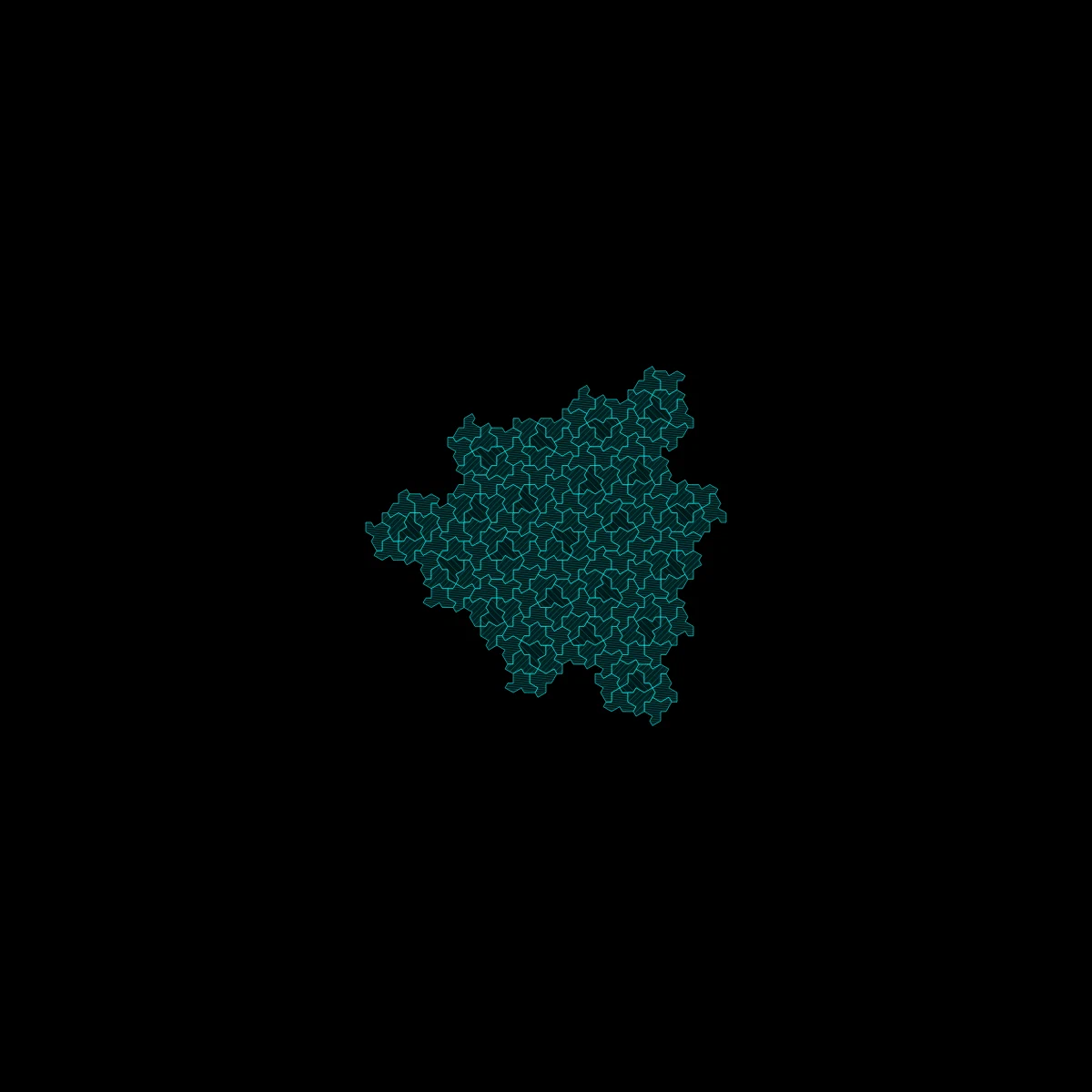
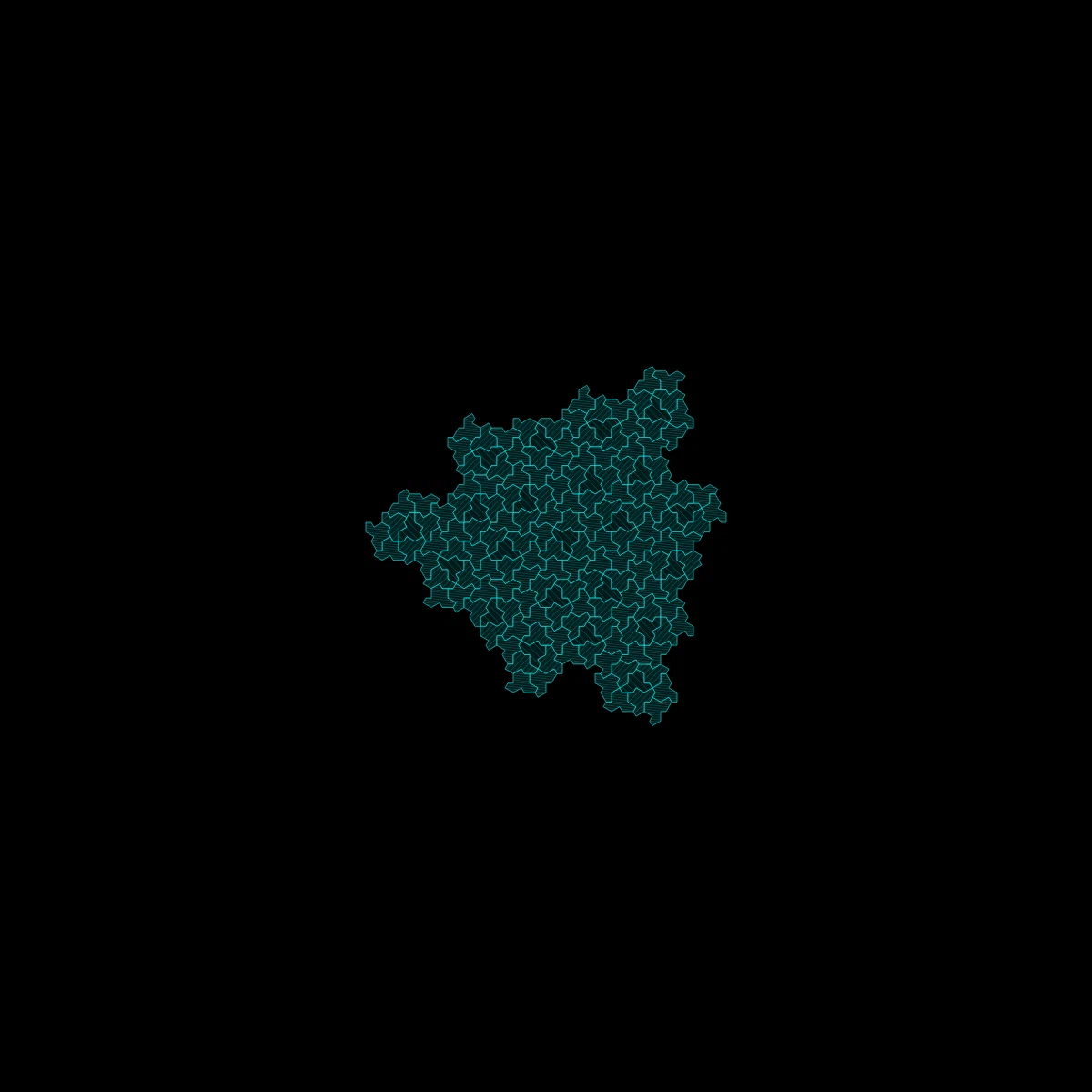
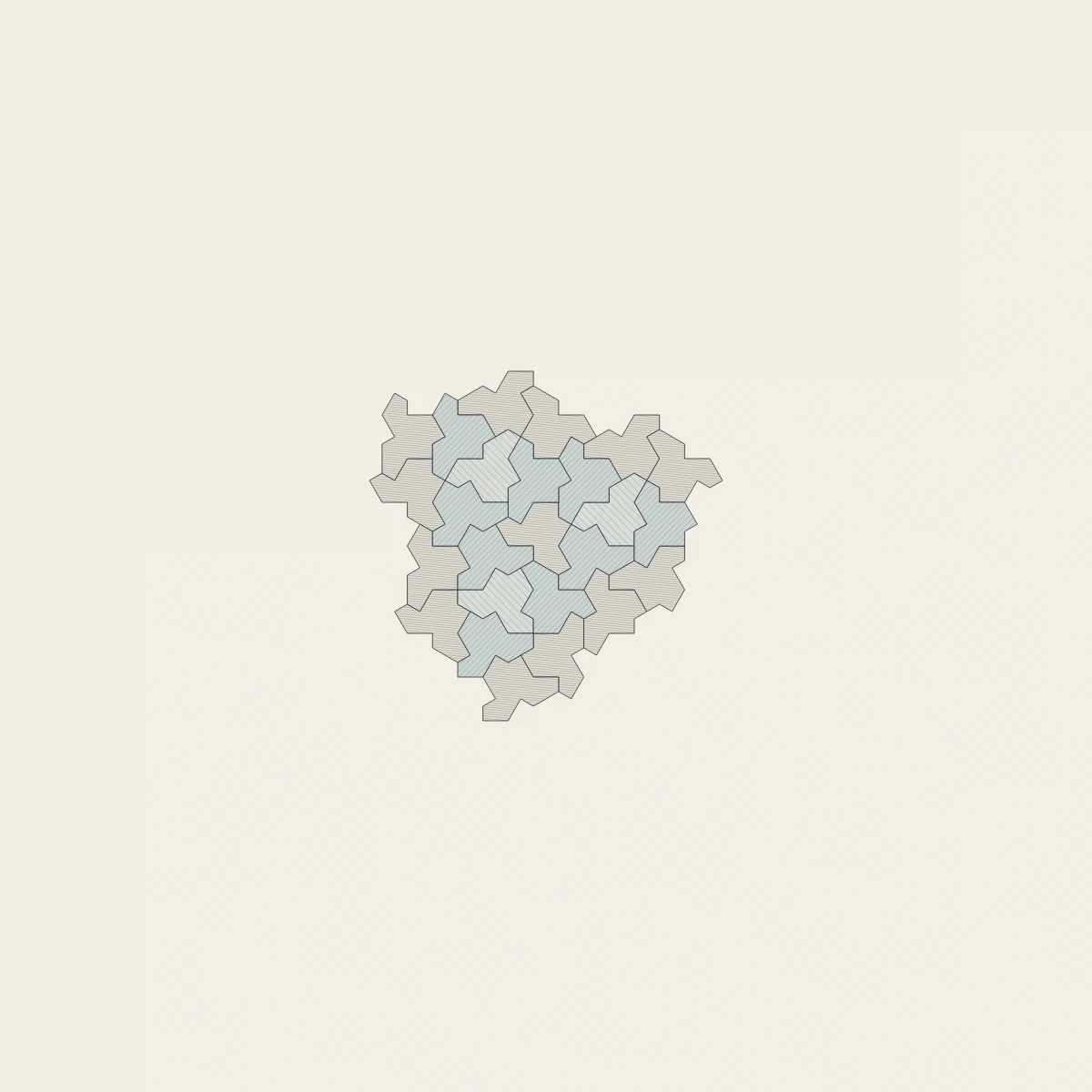
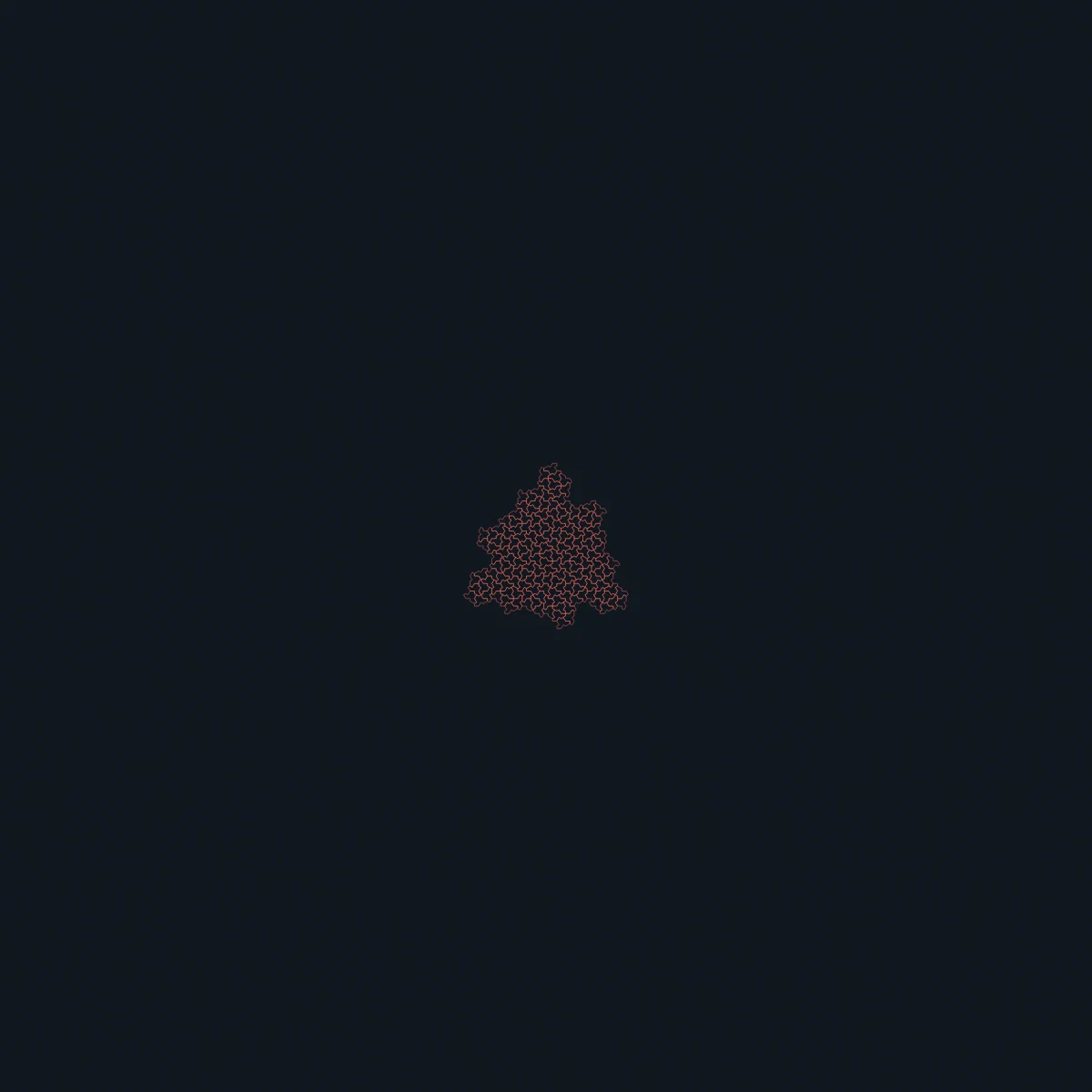
Two. Same rule, same hats, four times as many.
The hierarchy is real
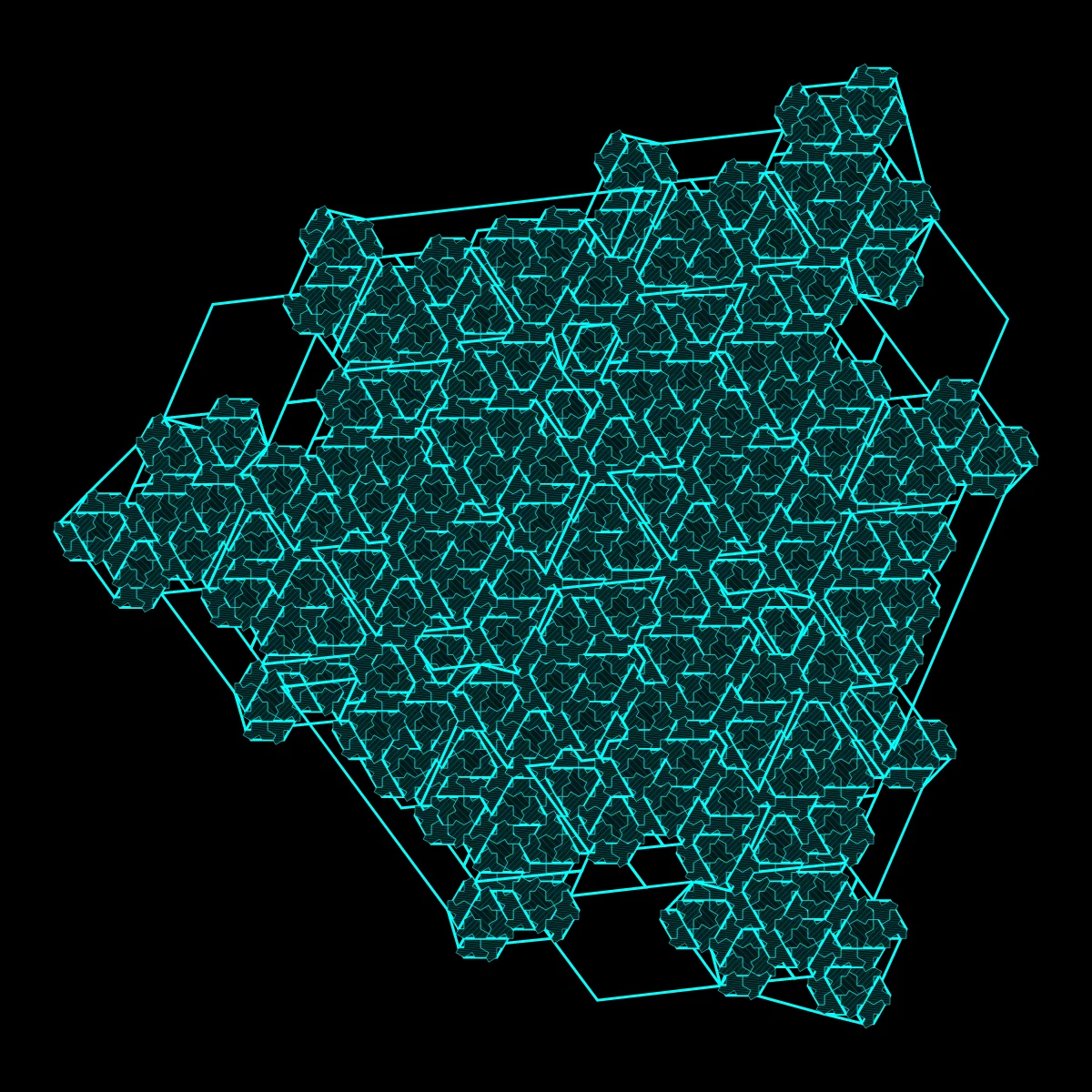
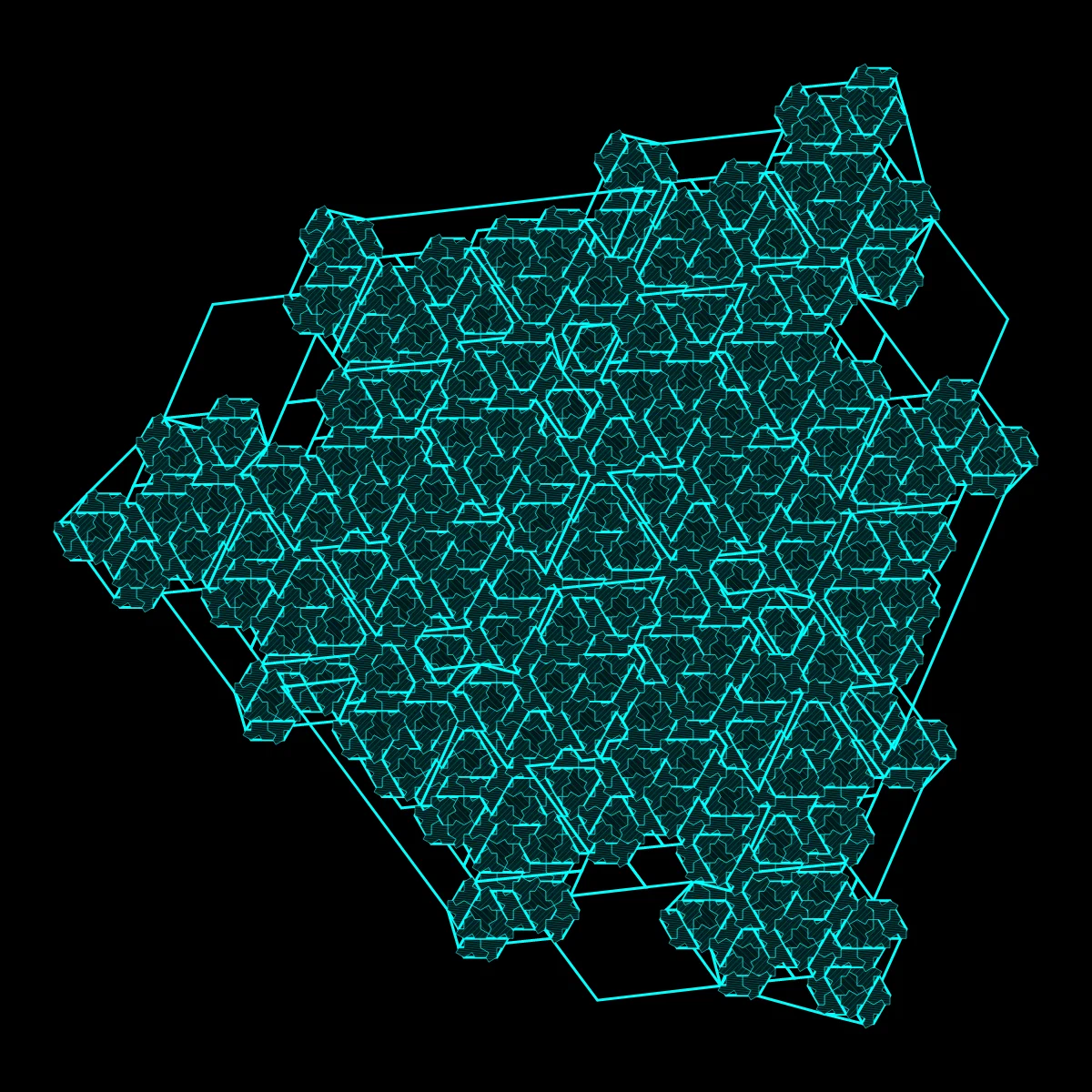
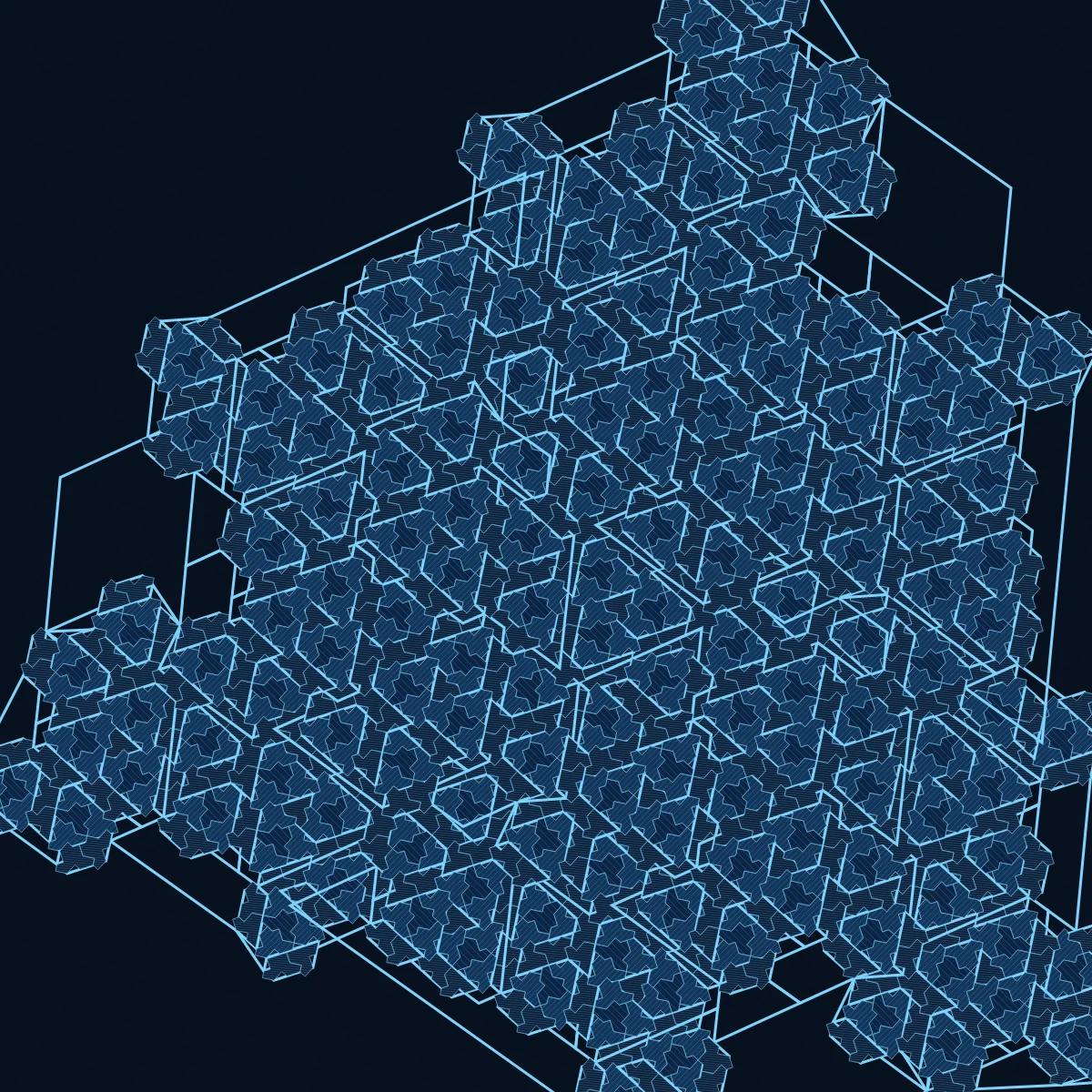
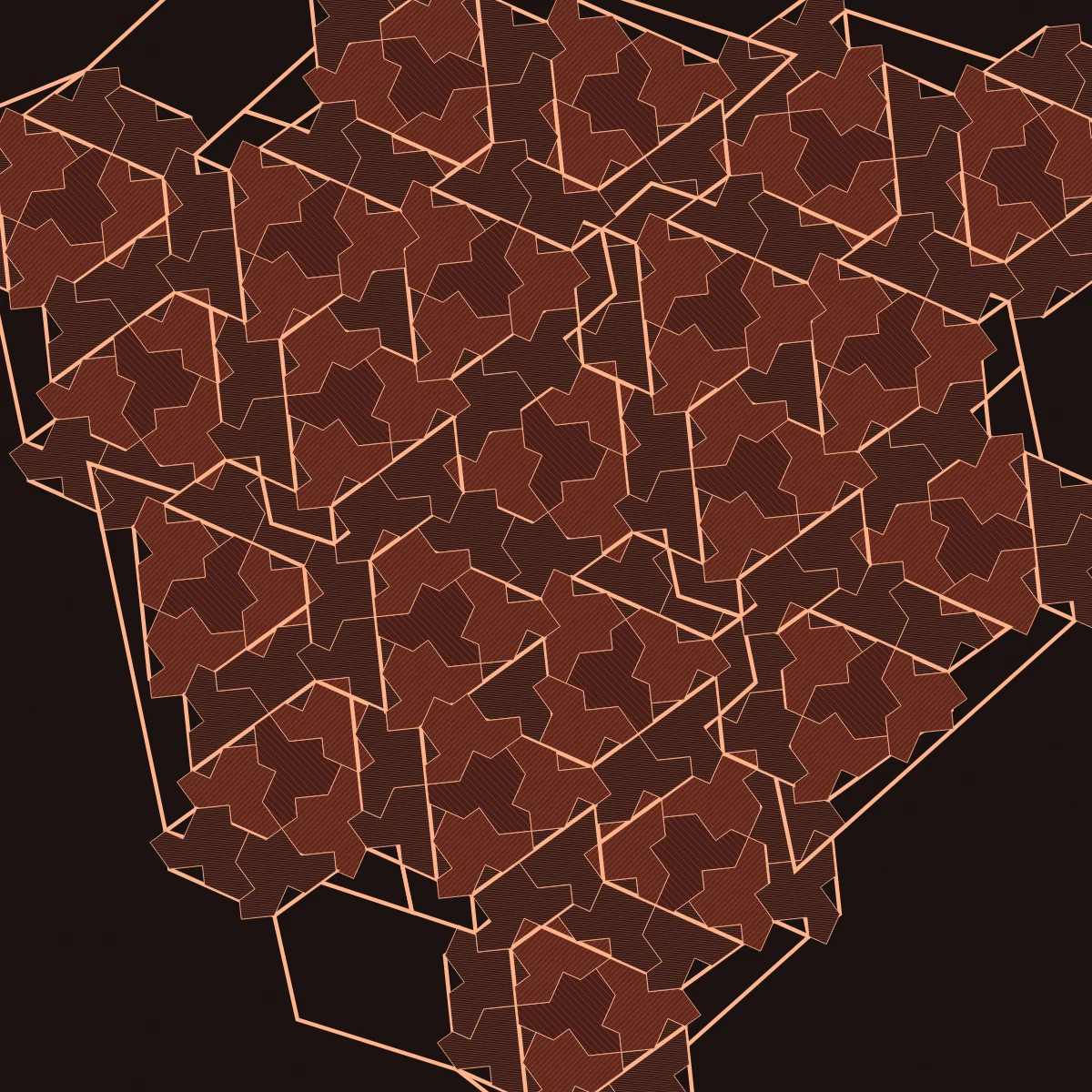
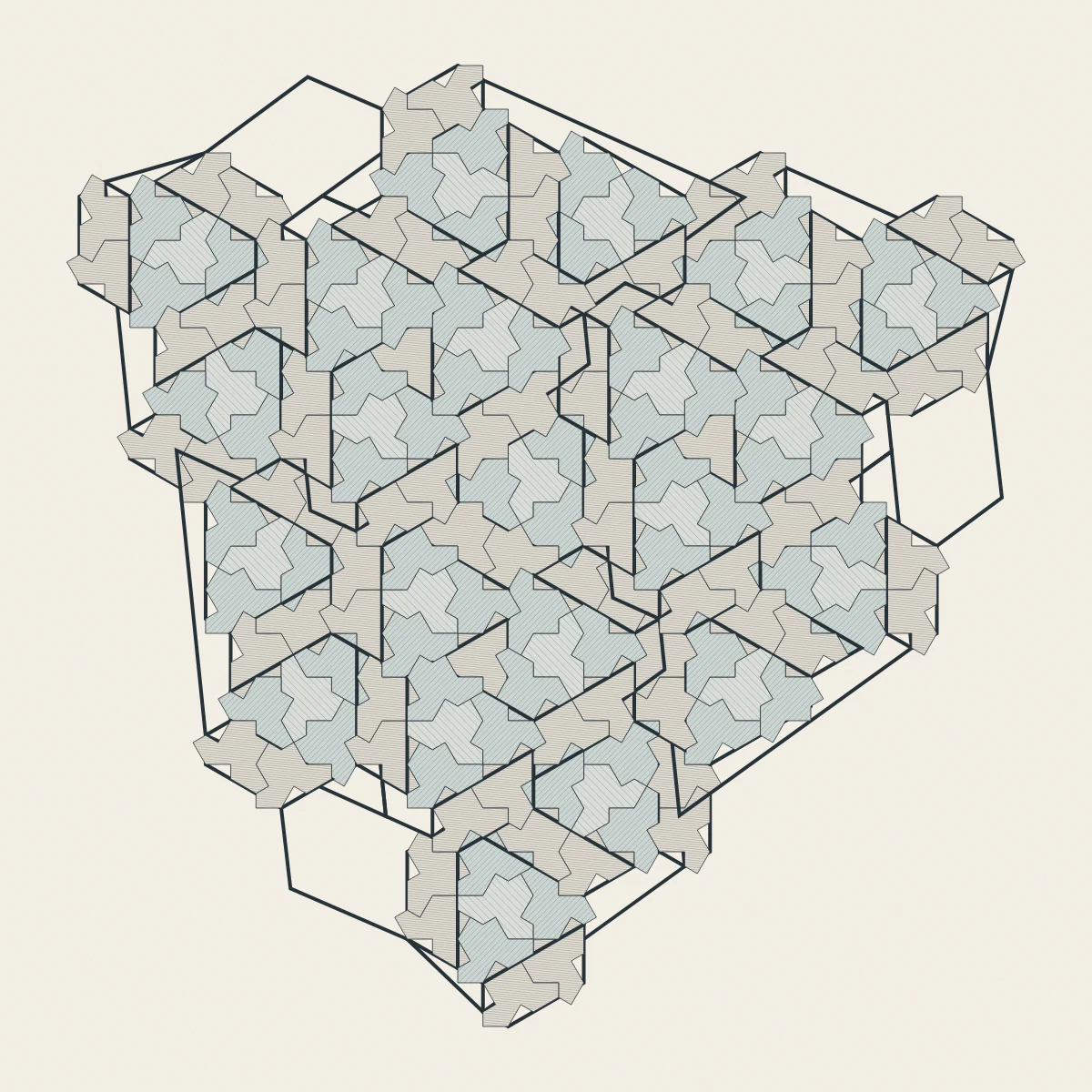
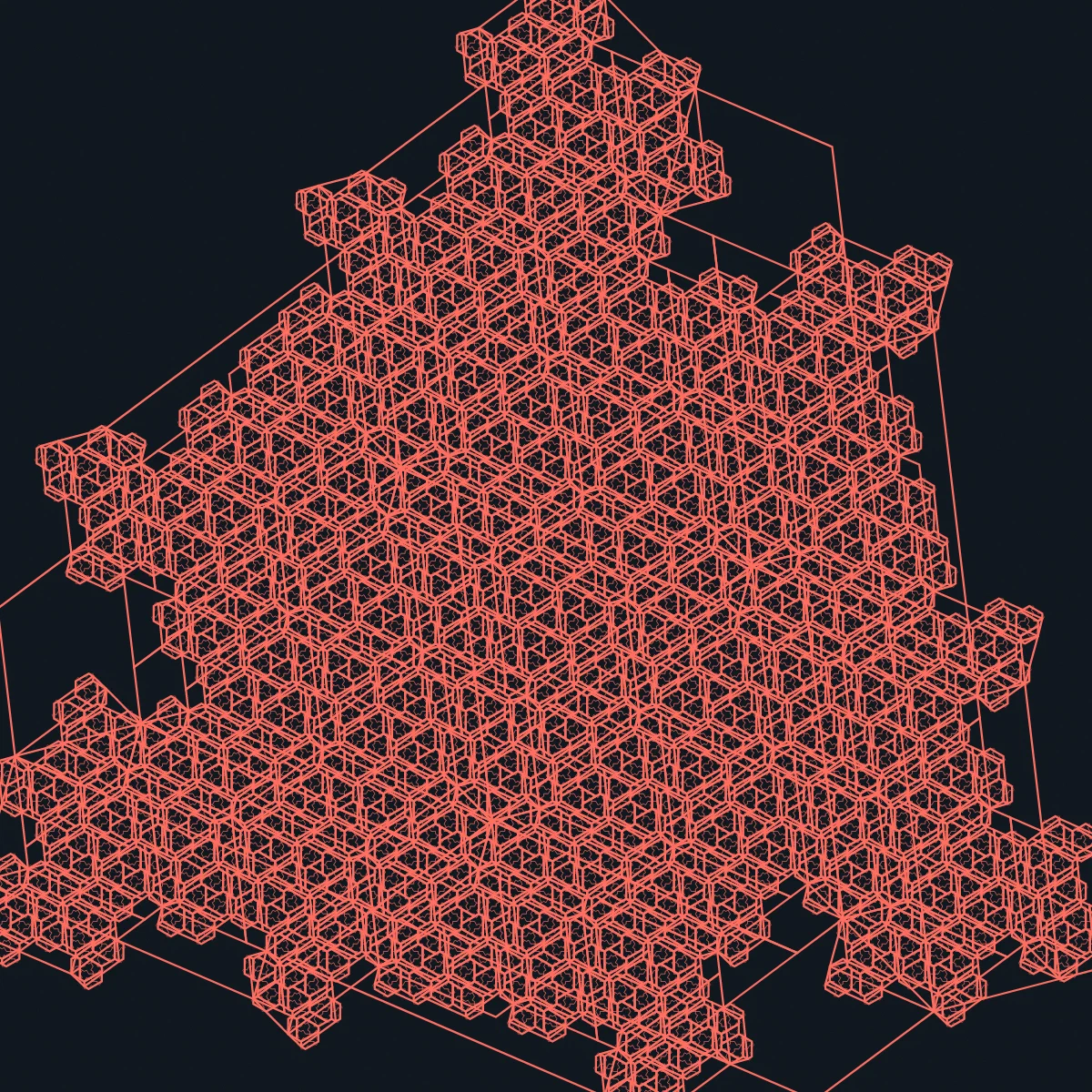
Here the metatile outlines are drawn over the tiling — every level of them at once,
from the small H that started it to the one that contains the whole patch. This is
the structure the substitution built, and it is not a fiction laid on top: each
outline encloses exactly the hats that one application of the rule put there.
That nesting is also the proof. If the tiling repeated, the hierarchy would have to
repeat with it, and the inflation rule makes that impossible at every scale at once.
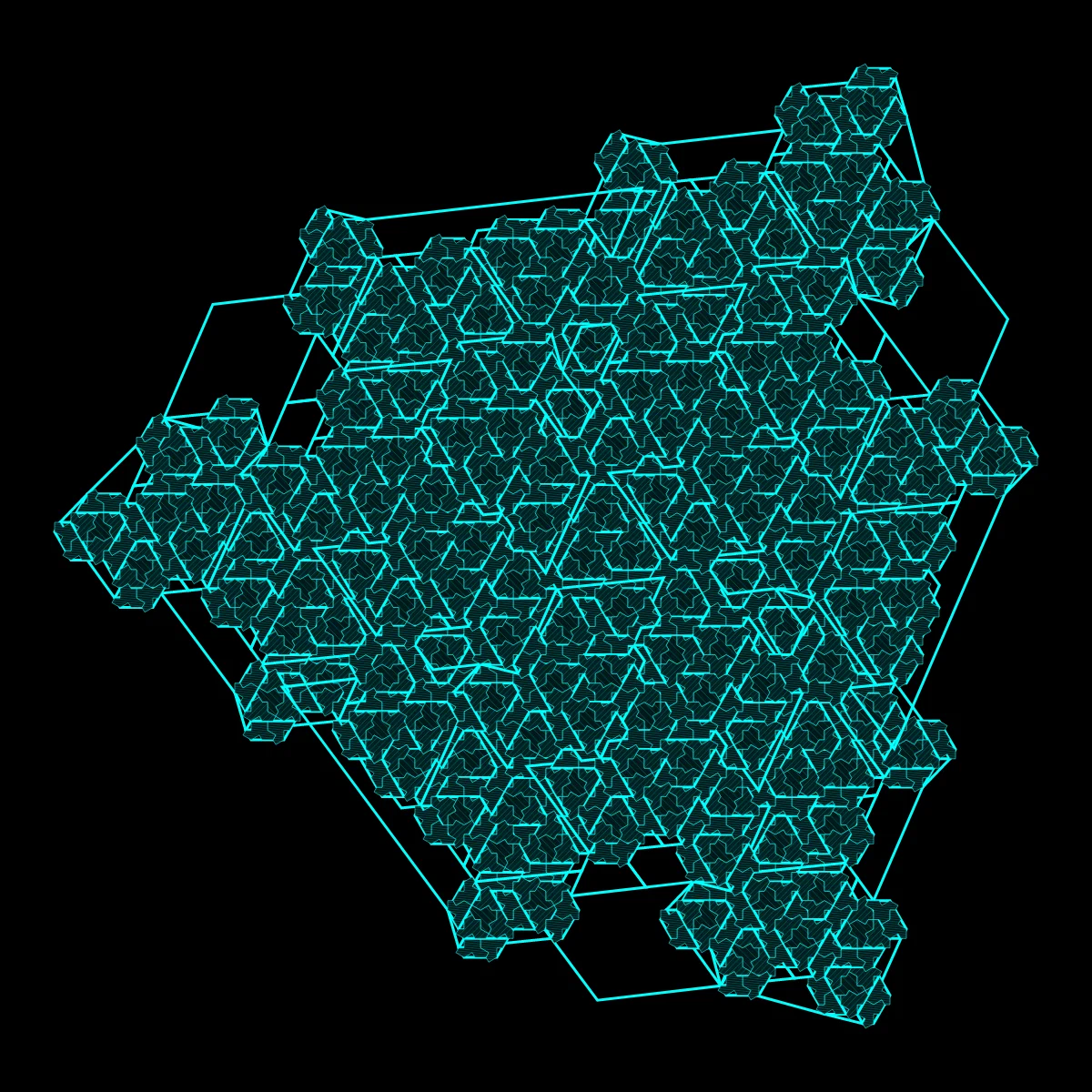
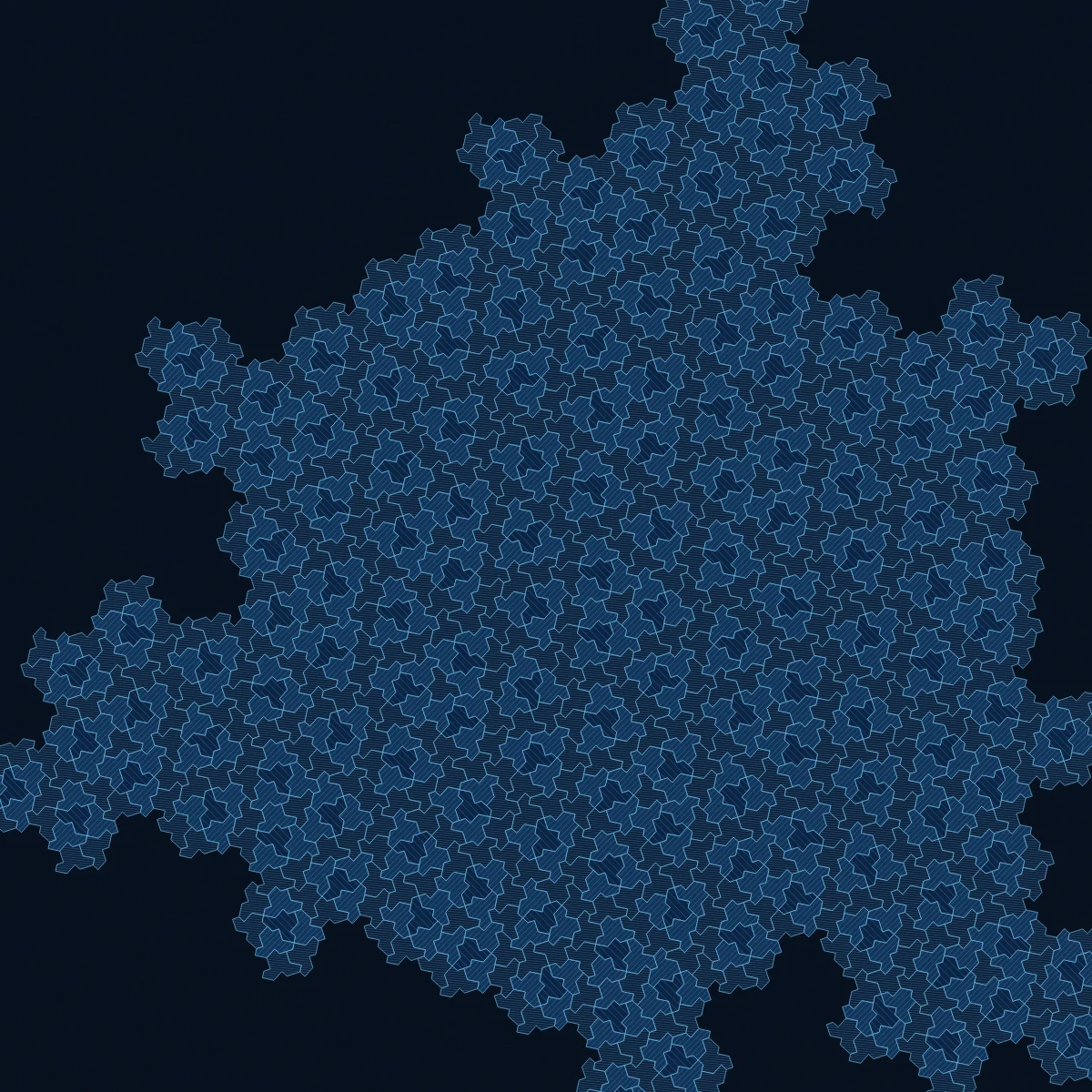
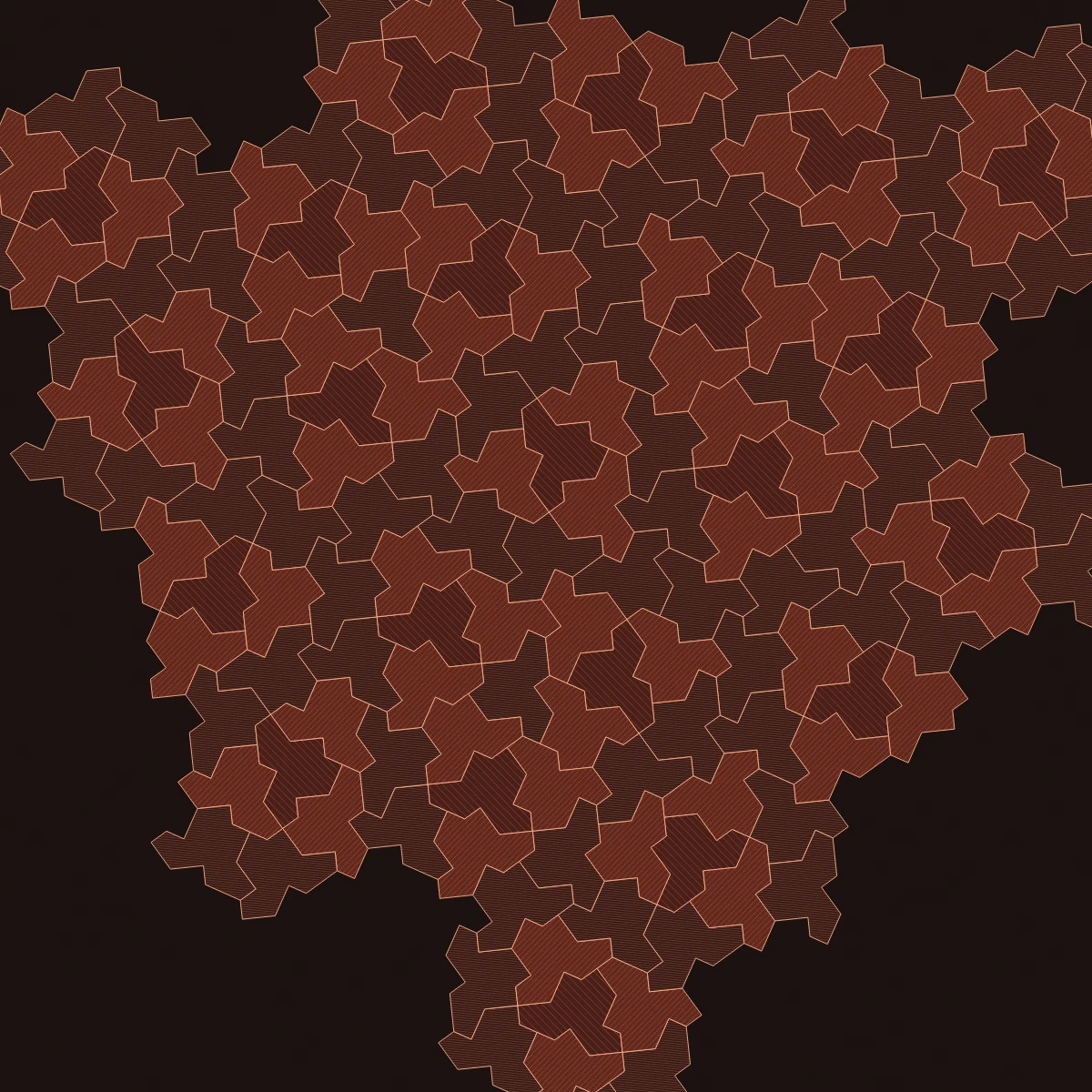
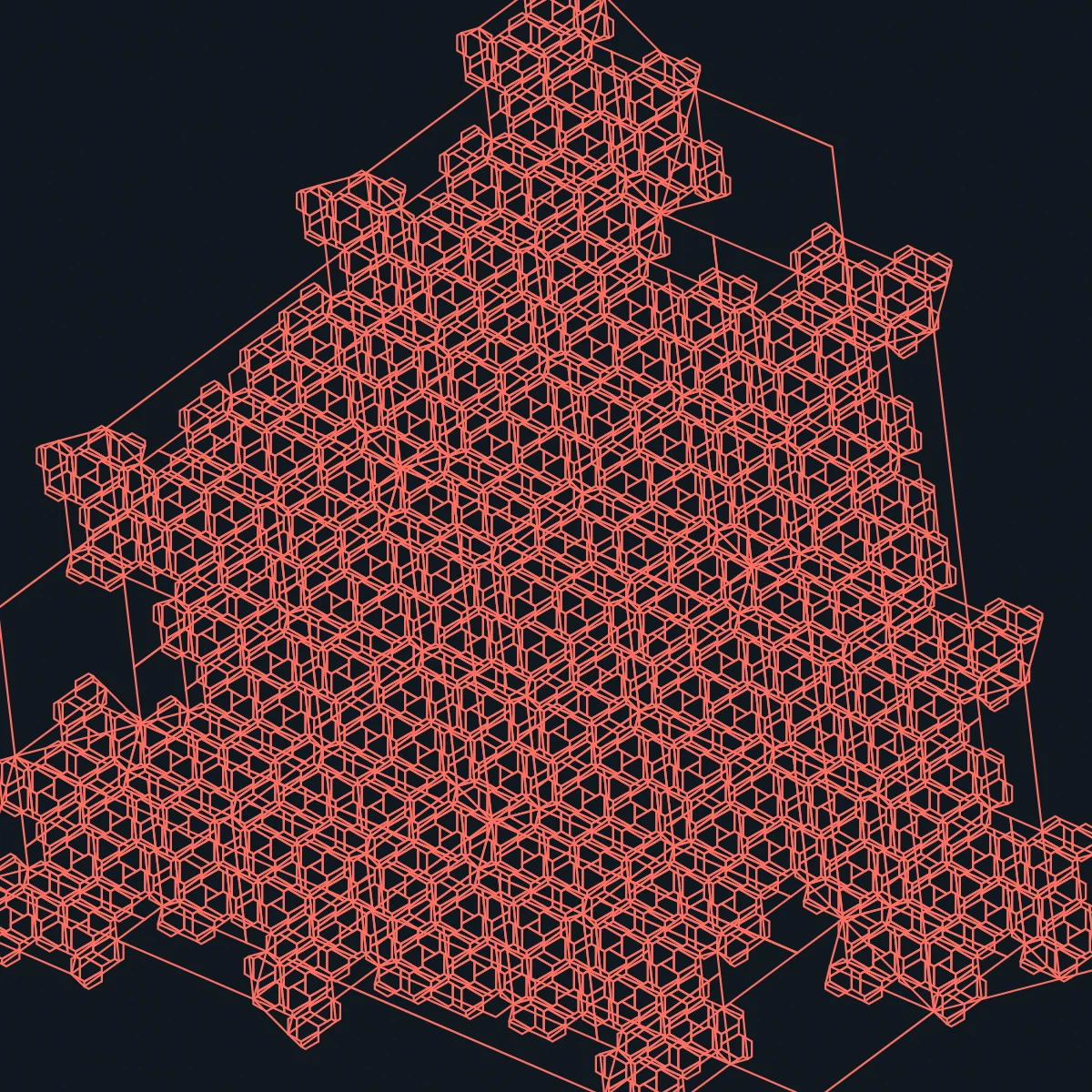
Scaffolding removed. What is left is one shape, in reflections and rotations,
covering the frame with no gap and no period.
Reflections
The hat needs its mirror image. Roughly one tile in seven is a reflected hat, and
that detail was the substance of the argument about whether the hat is really one
tile — settled a month later when the same authors found the spectre, which
tiles aperiodically without reflections. The piece draws the hat, mirrors included.
The hatching
The tiles are not flat-filled. Each one takes a hatch — three geometries, chosen by
the tile’s own fill index — laid down as parallel lines clipped to the tile:
| Fill | Angle | Spacing |
|---|
| 0 | 0.8 rad | 6.0 |
| 1 | −0.8 rad | 4.5 |
| 2 | 0.1 rad | 2.5 |
Because the angle belongs to the tile rather than to the canvas, two adjacent hats
in different orientations hatch in different directions, and the boundary between
them reads without needing a heavier outline. It is a plotter’s solution: tone from
line, never from fill.
Seven renderings
| Rendering | Levels | Scale | Treatment |
|---|
| Cyan Tessellation | 3 | 12 | The complete tiling in cyan on black |
| Cyan Hierarchy | 3 | 12 | Cyan hats and metatile scaffolding on black |
| Cobalt Drift | 3 | 15 | Rotated, dense blue field |
| Ember Close-up | 2 | 42 | Enlarged warm tile study |
| Porcelain Study | 2 | 32 | Dark geometry on a light mineral ground |
| Coral Scaffold | 4 | 5.5 | Metatile hierarchy without leaf hats |
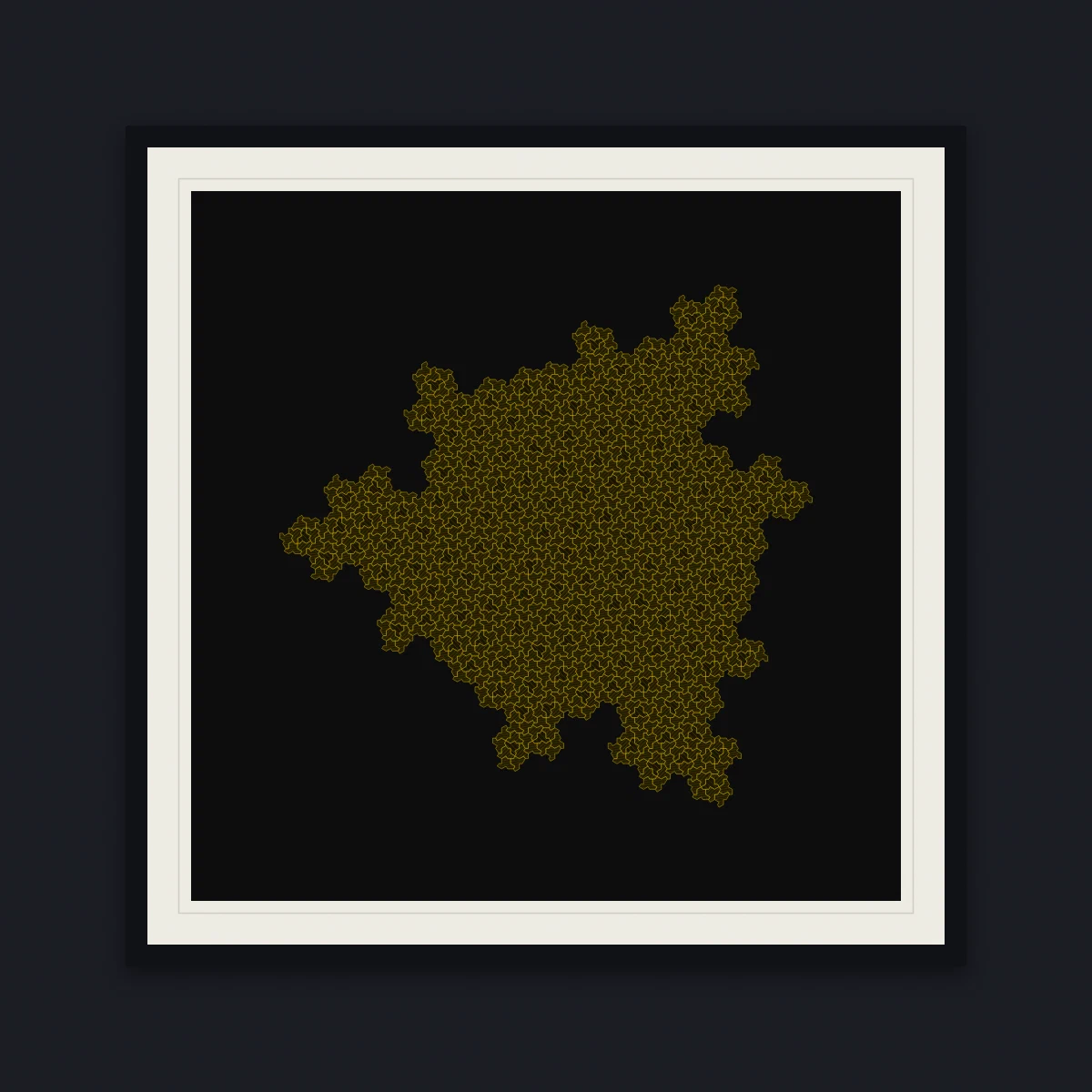
| Museum Framing | 3 | 10 | Gold tiling within a fine presentation frame |
The variants change what part of the substitution is visible, not only its ink.
The close studies stop after two inflations and enlarge the hats; Cobalt Drift
rotates and crops the three-level patch; Coral Scaffold goes one level deeper but
removes the leaf hats, leaving only the nested construction. The palettes remain
restrained so those structural differences stay legible. Museum Framing is a
finished gallery plate rather than a variant: it wraps the tiling in a
presentation layer and has no progression of its own.
Museum framing
The framed rendering presents the gold tiling as a gallery piece: the art sits
behind a pale mat and inside a dark frame against a wall, with a soft drop shadow
lifting the frame off the surface. Mat, frame and shadow widths are proportional
to the shorter canvas side, so the treatment scales from plate to print. Nothing
about the tiling changes — the same patch, the same hats, the same hatch — only
it is now shown the way you would hang it.
Determinism
Nothing here is seeded. The tiling is produced by matrix composition on fixed
outlines, in a fixed order, from a fixed starting patch. Two runs produce the same
tiles in the same places, and the only floating-point work is affine transformation
of coordinates that were themselves computed from constants.