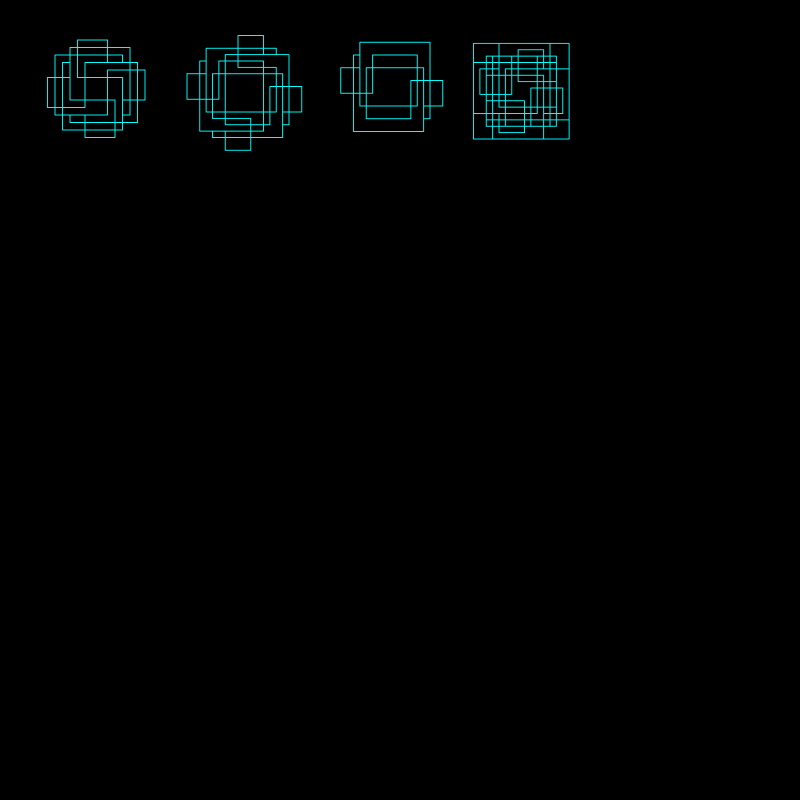
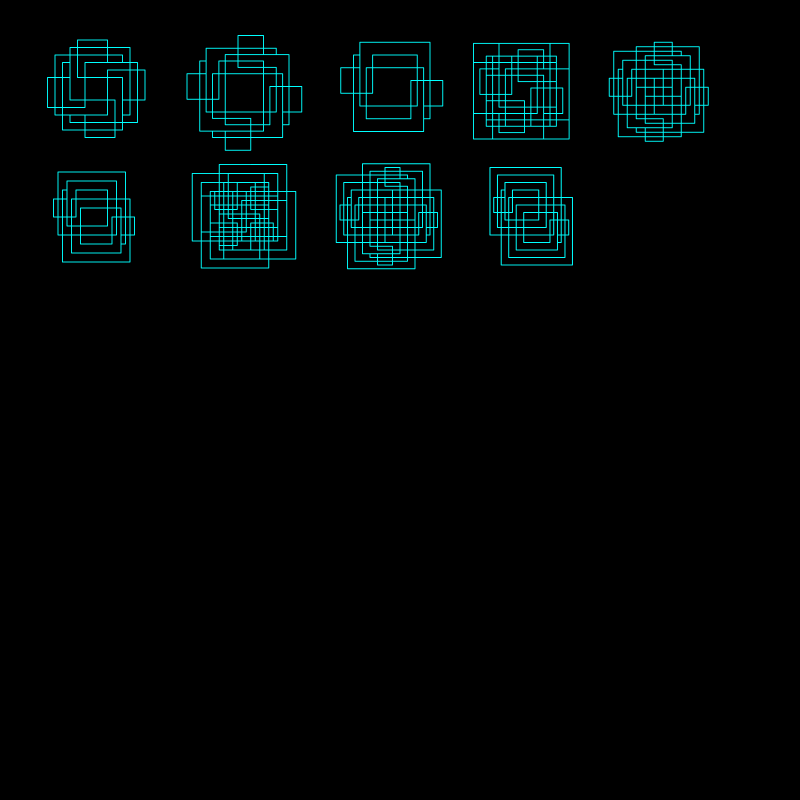
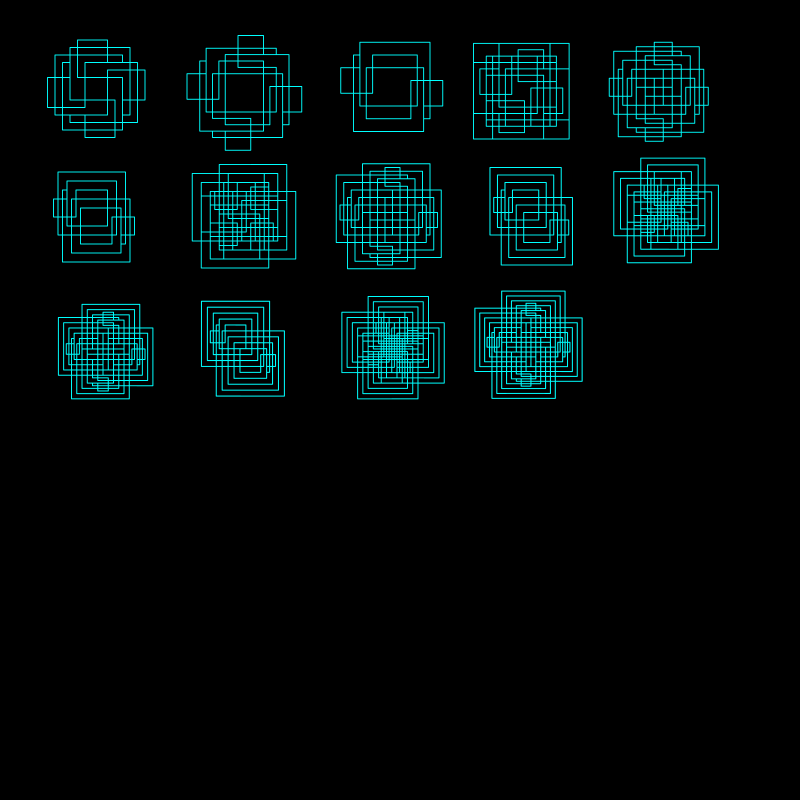
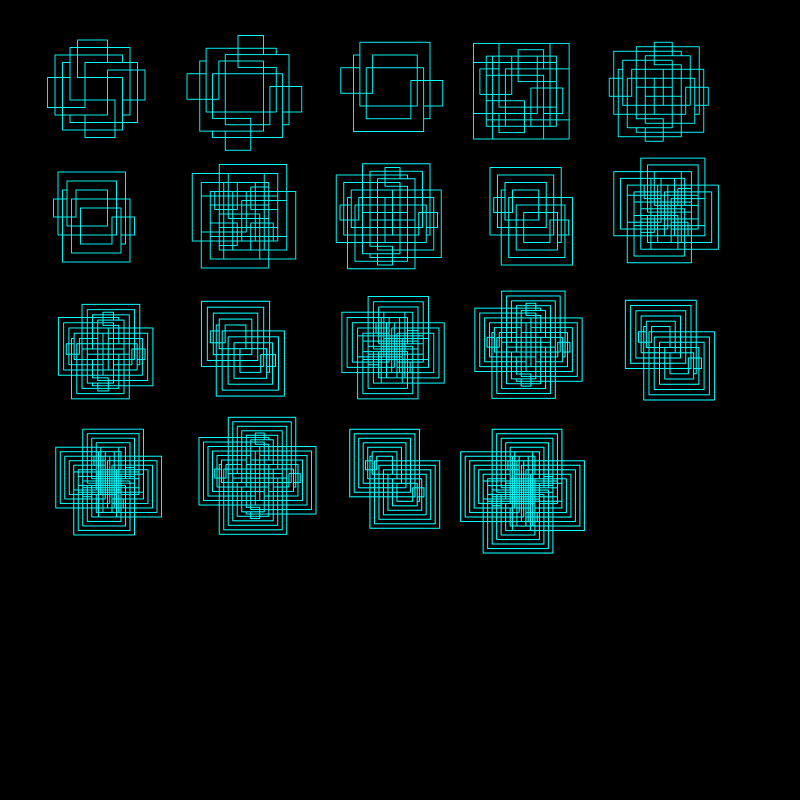
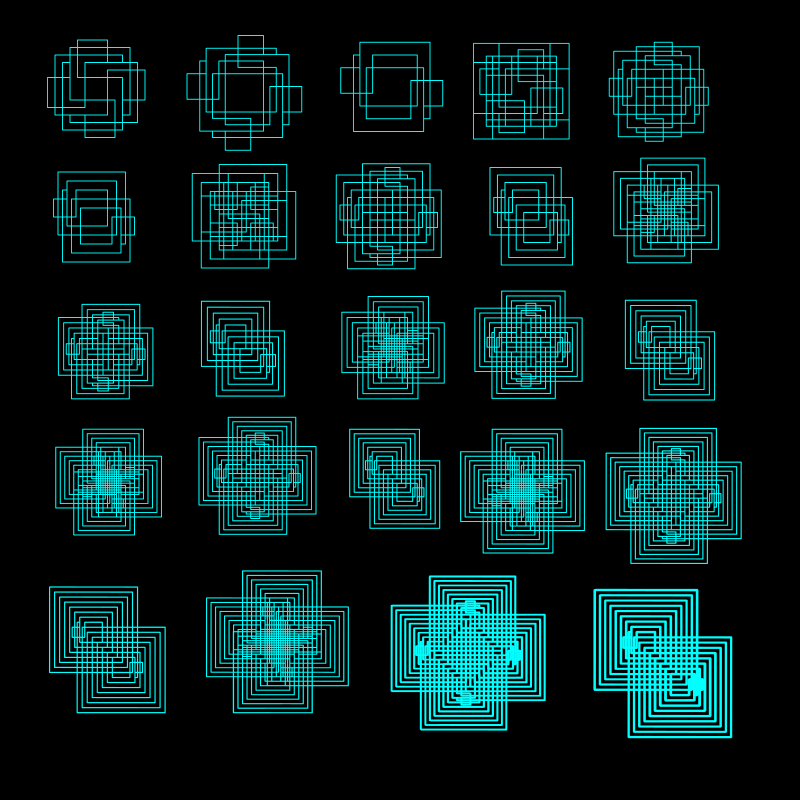
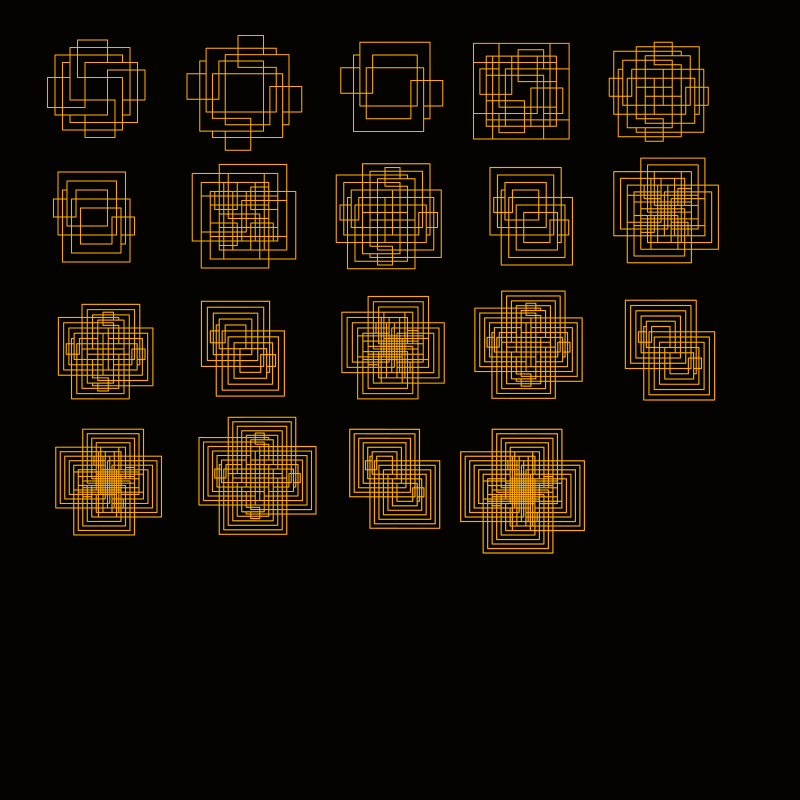
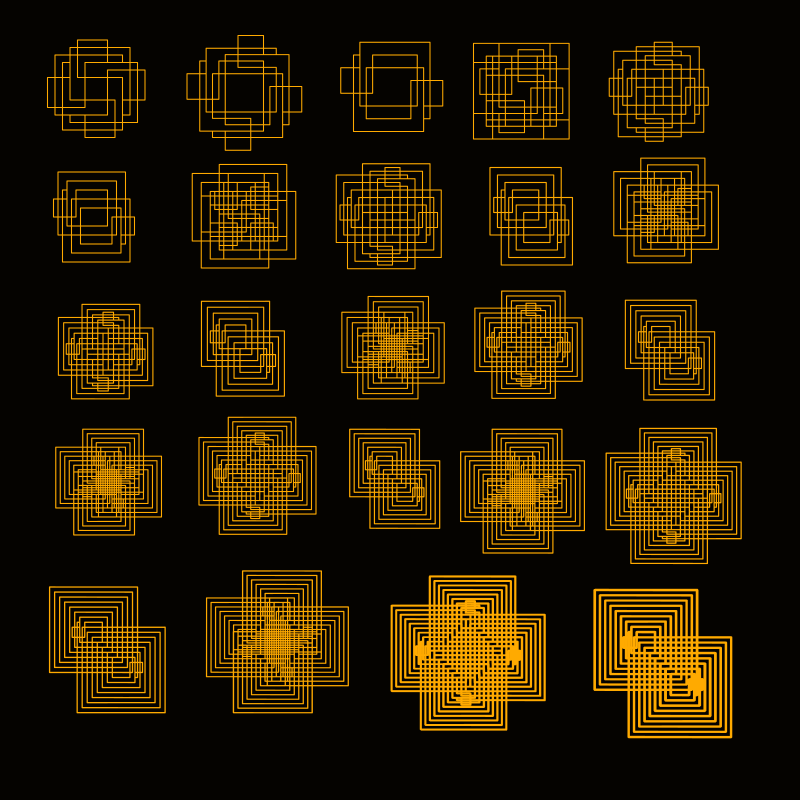
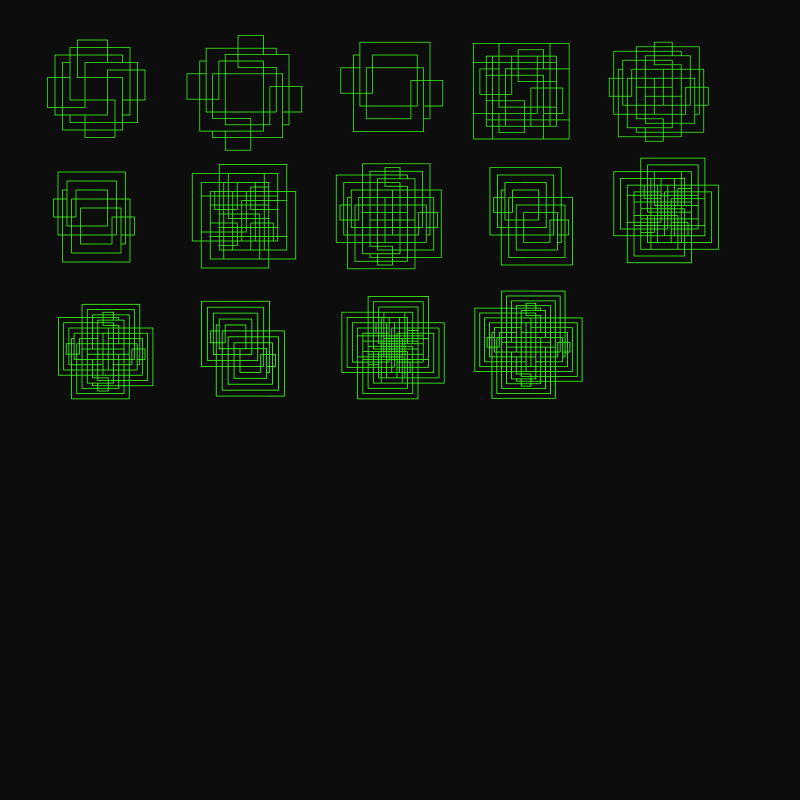
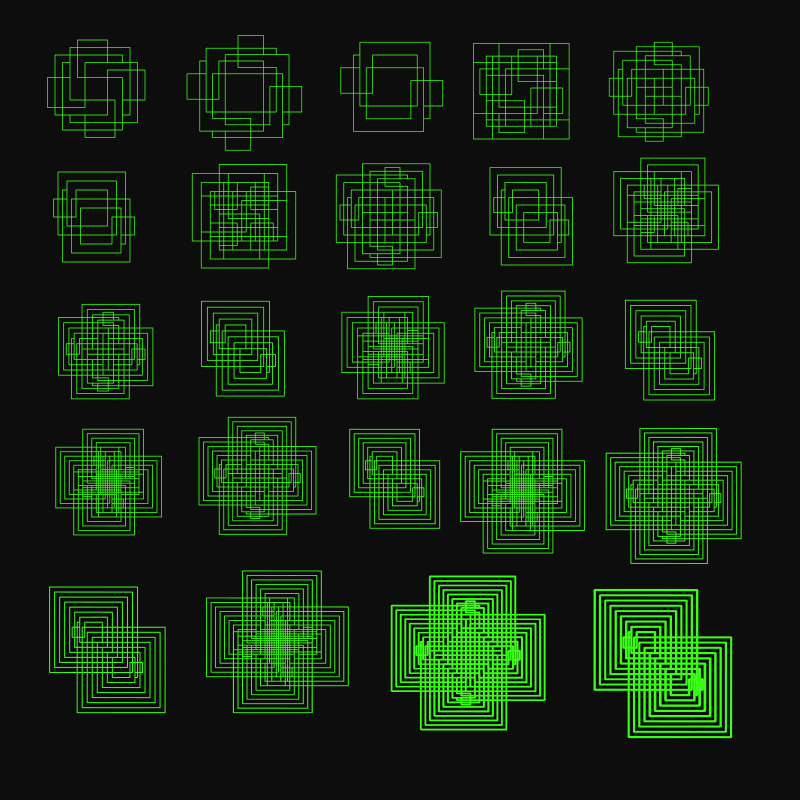
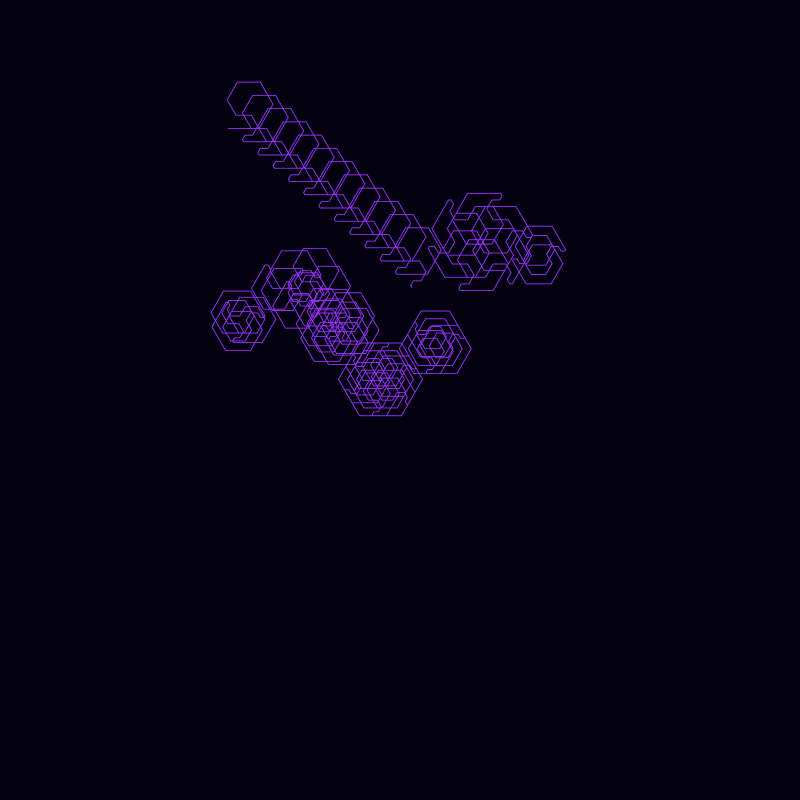
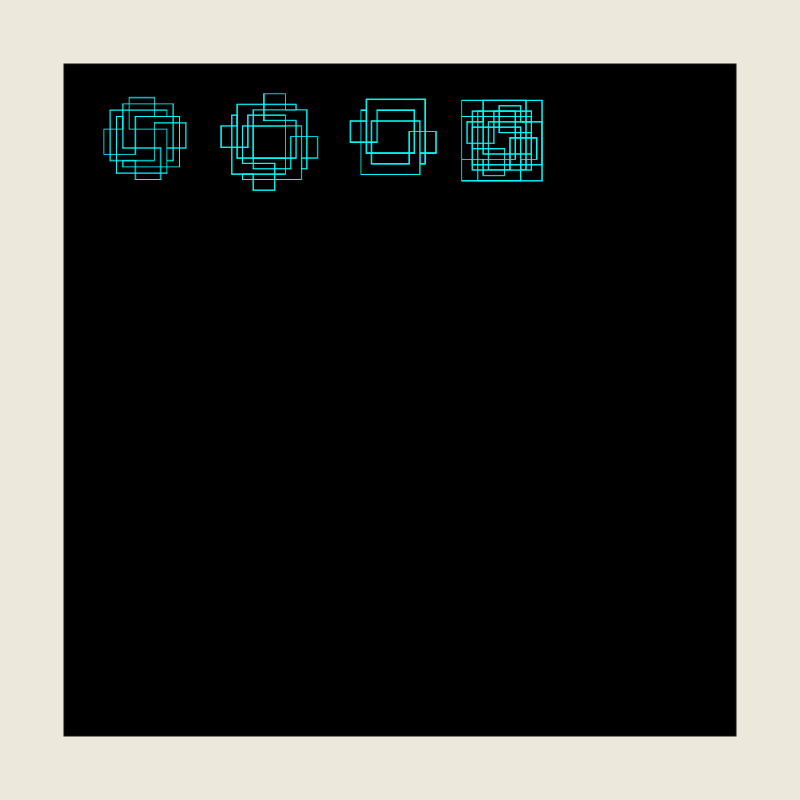
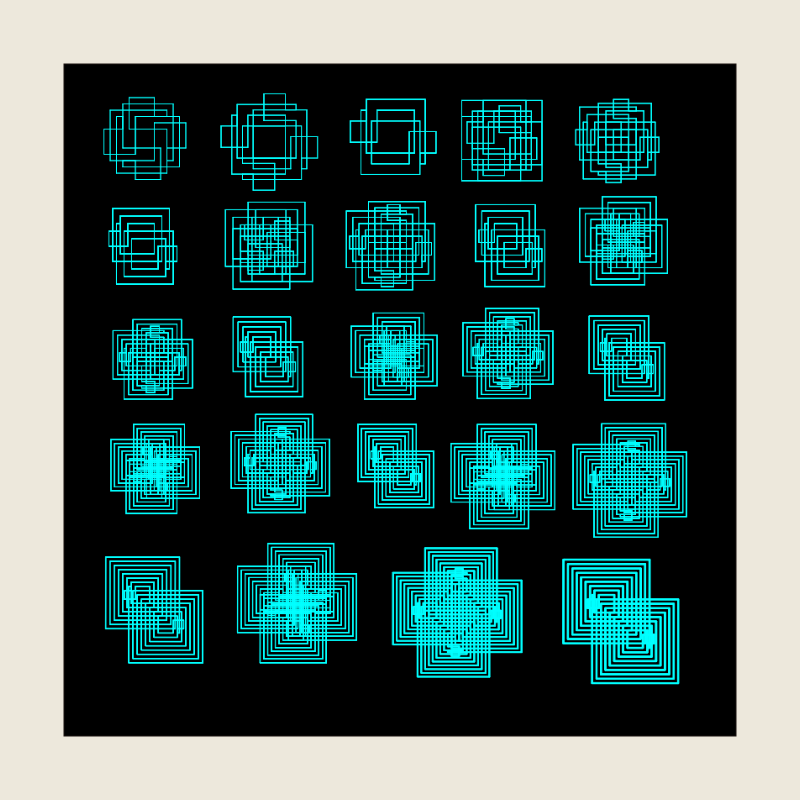
Twenty-four spirolaterals of increasing order, laid out as a sheet of specimens.
What a spirolateral is
Walk forward one unit, turn. Walk forward two units, turn. Three, turn. Up to n, then
start again at one. Keep going.
If the turn is a fixed angle, the walk eventually returns to its start with its original
heading, and the figure closes. Which n and which angle you choose decides the shape —
and whether it closes at all.
Frank Odds named and catalogued these in 1973. They are a very small idea with a very
large output space.
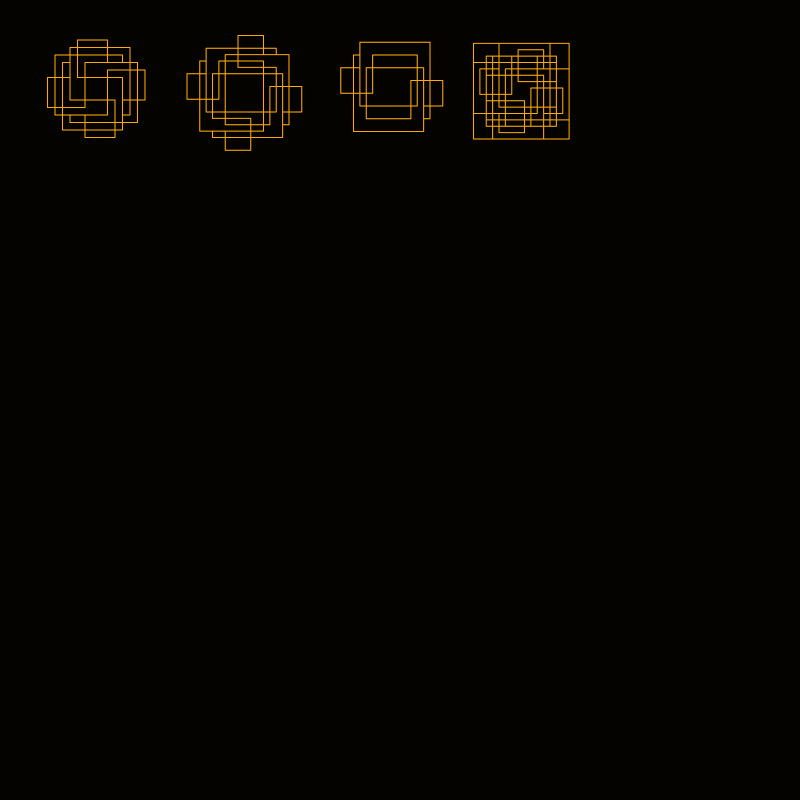
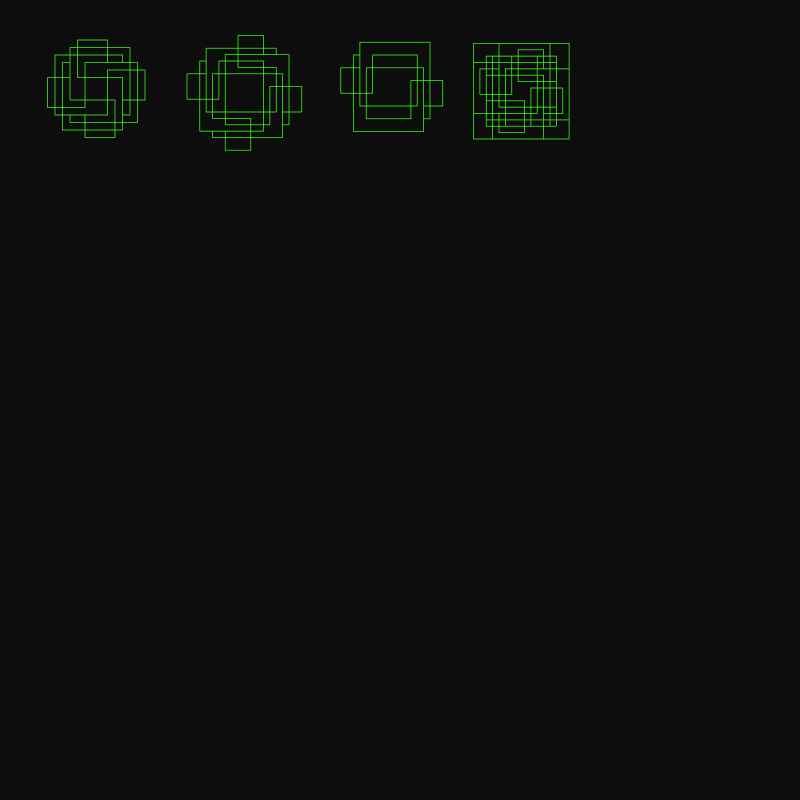
The first few figures on the sheet, orders nine to thirteen.
The turn is not always the same way
This variant adds one thing to the classic rule: the turn direction depends on the step
number.
if (count == a || count == b || count == c)
    t.Left(angle);
else
    t.Right(angle);
Three step numbers are singled out, and on those the walk turns left instead of
right. That breaks the rotational symmetry the plain rule produces and gives each figure
a distinct character — which is what makes a sheet of twenty-four of them worth laying
out.
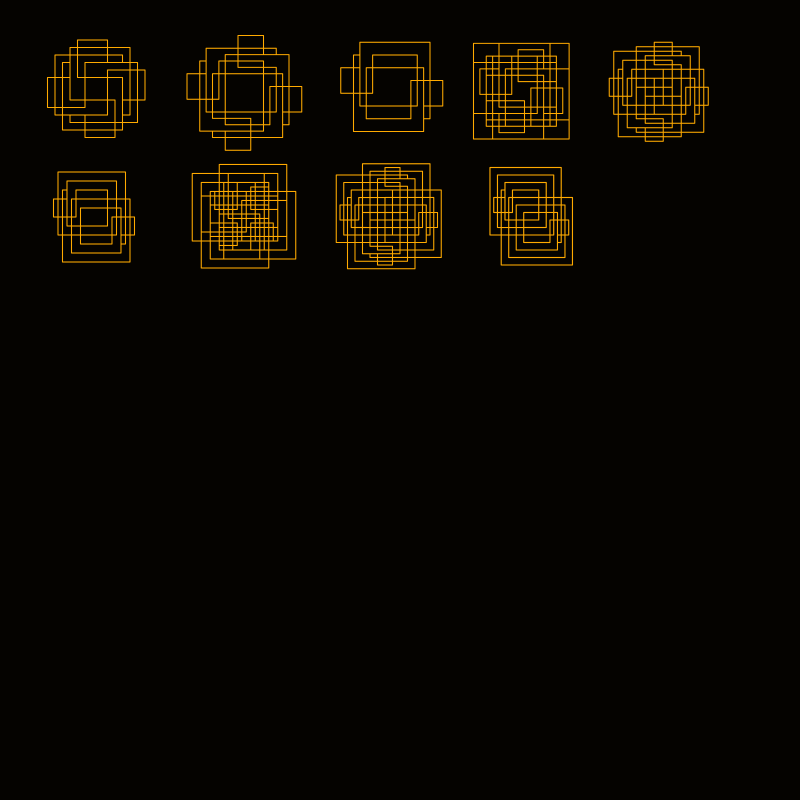
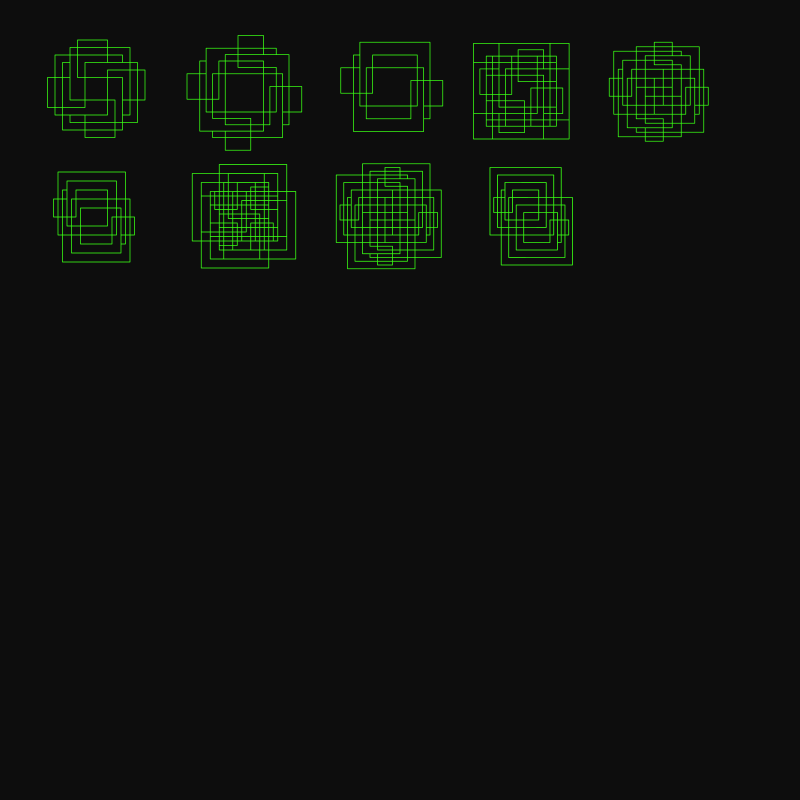
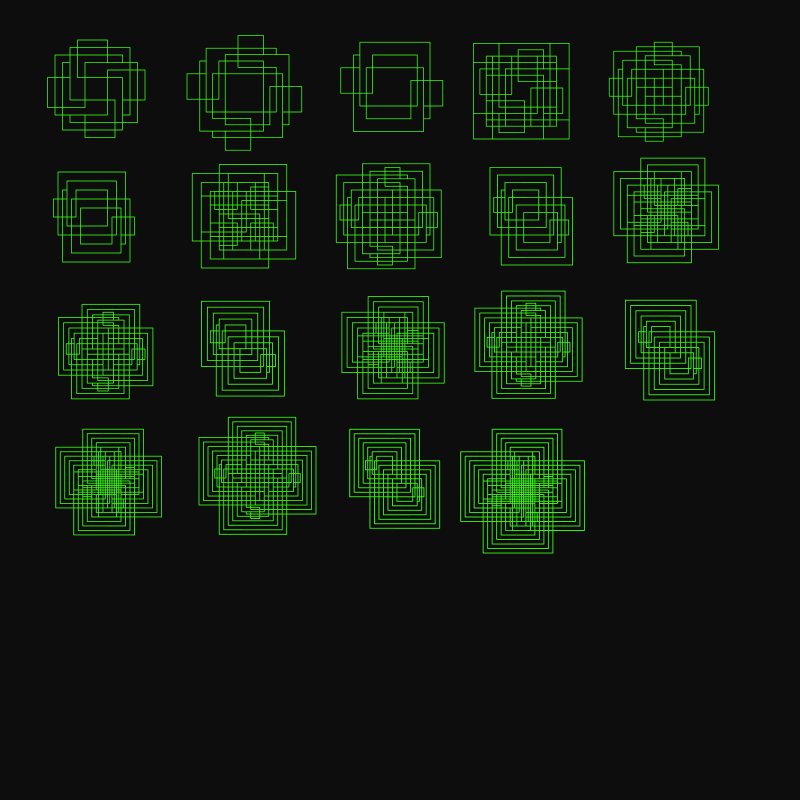
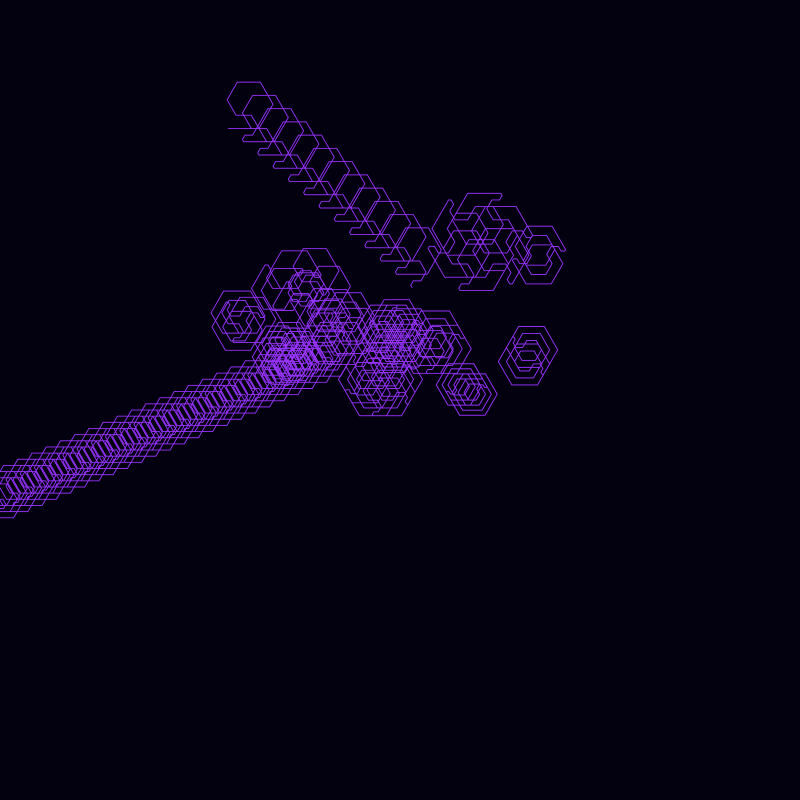
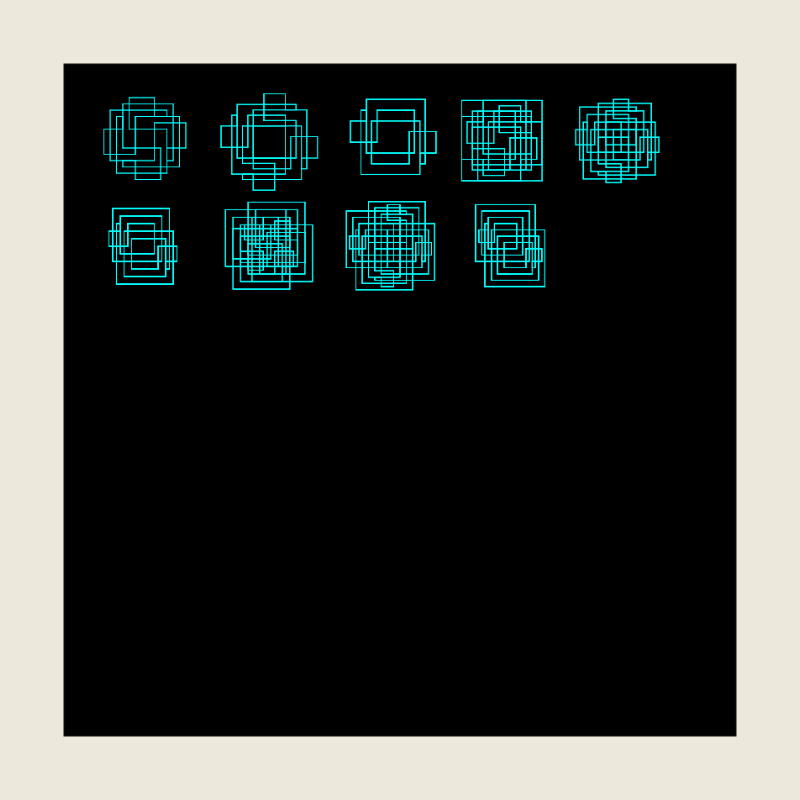
Two rows.
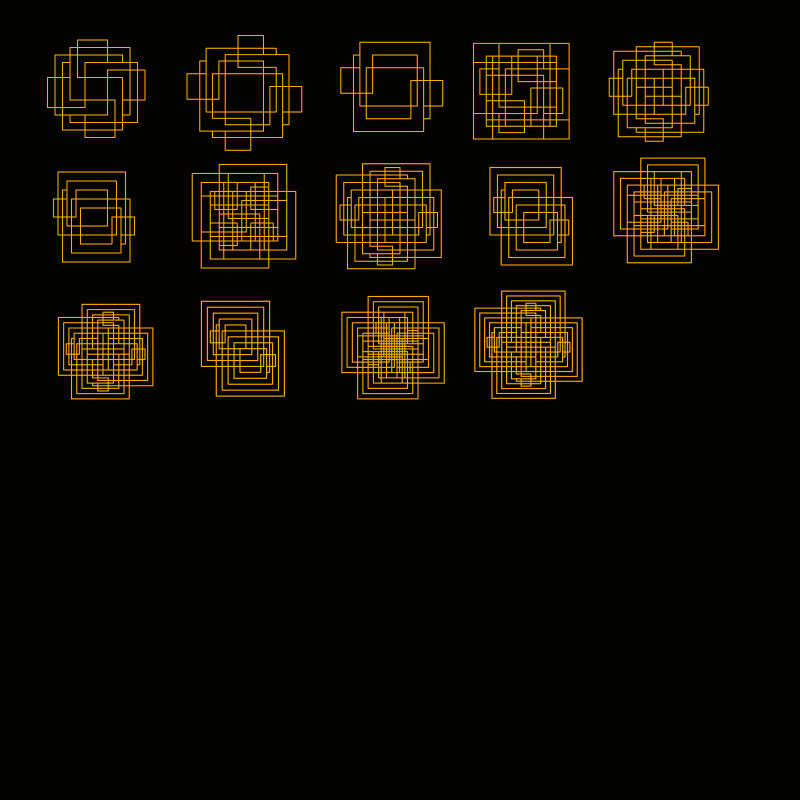
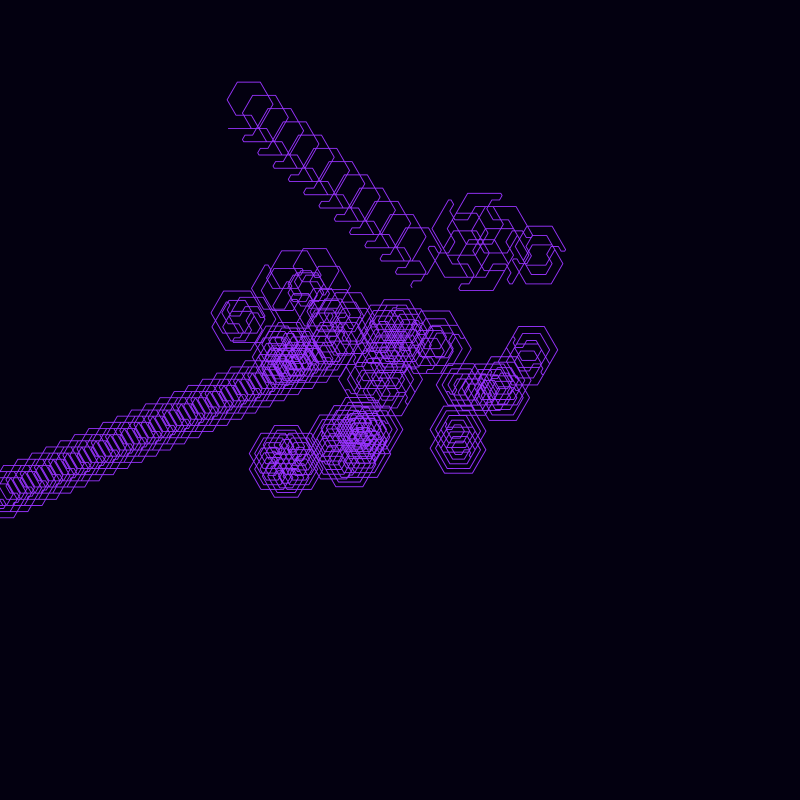
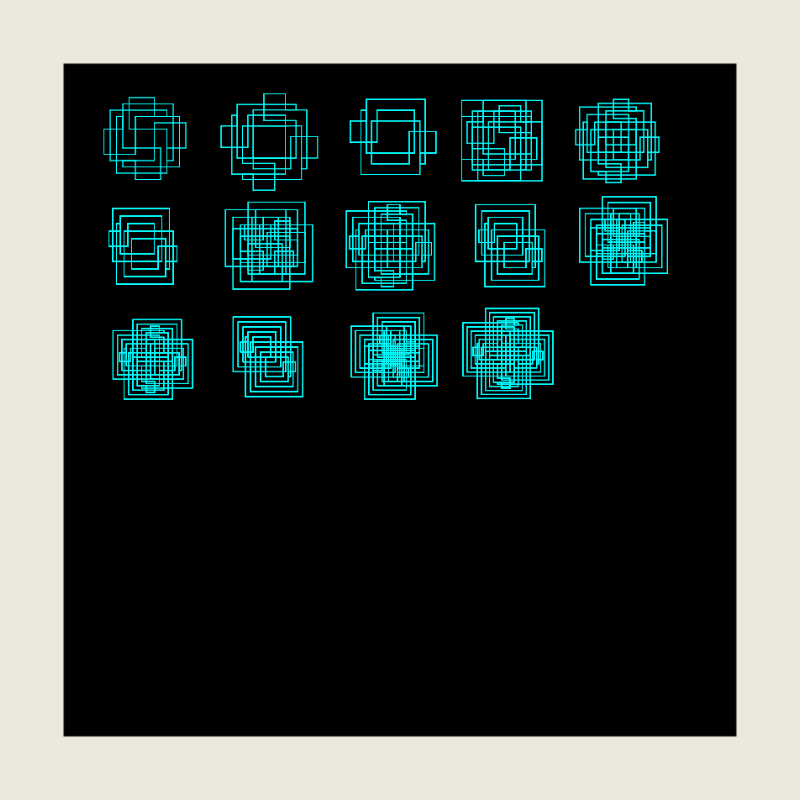
Three rows. The higher the order, the longer the walk runs before the turn pattern
repeats, and the more area the figure encloses.
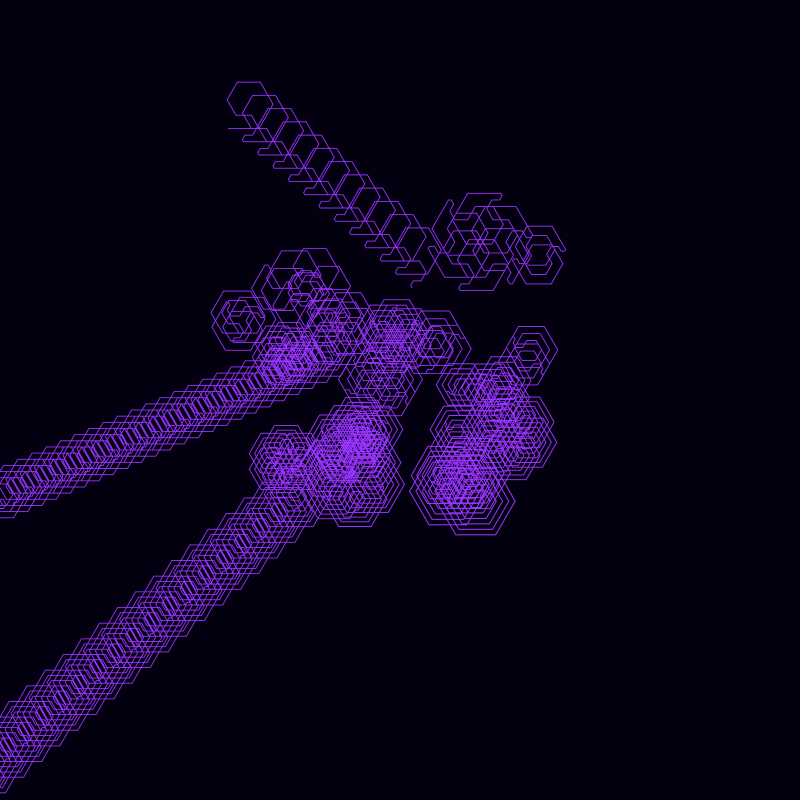
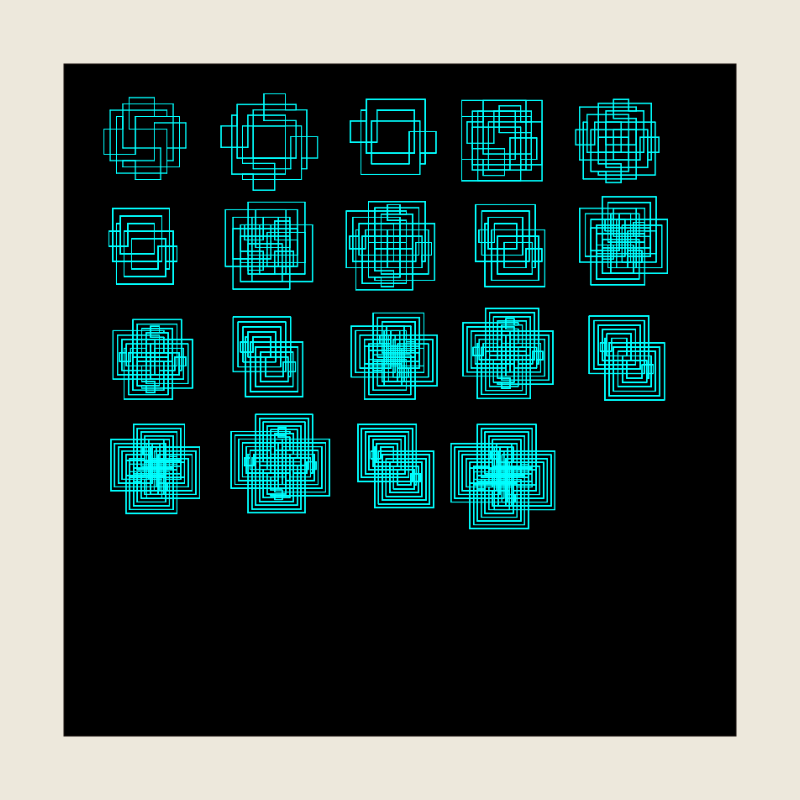
Four rows.
The layout is composed, not generated
private static readonly (float X, float Y, int N, float Side)[] Spirals =
[
    (-90f, -90f, 9, 2.0f),
    (-50f, -70f, 11, 1.7f),
    …
];
Twenty-four entries, each giving a position, an order and a step length. Nothing computes
them. The positions are irregular — figures are nudged to fit around their neighbours'
outlines — and the step length falls as the order rises so that a forty-order figure ends
up the same size on the page as a nine-order one.
It is a specimen sheet, arranged by eye, and the arrangement is as much the piece as the
figures are.
The whole sheet: orders nine through forty.
Five renderings
| Rendering | Figures | Ink | Turns |
|---|
| Cyber Cyan | 24 | cyan on black | 90° |
| Solar Gold | — | amber on near-black | 90° |
| Matrix Green | — | neon green on near-black | 90° |
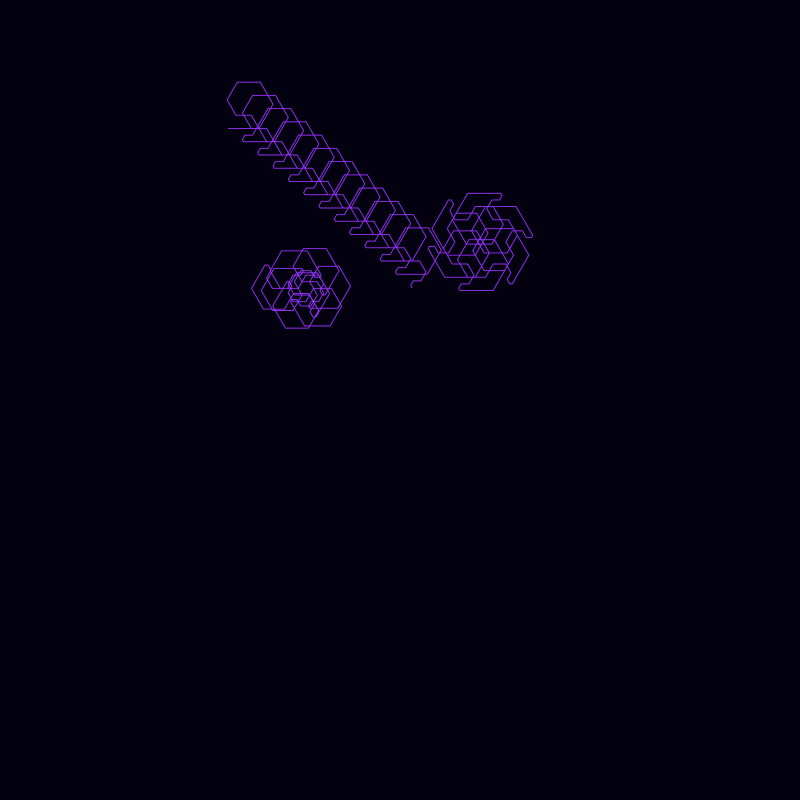
| Prism Violet | — | violet on near-black | 60° |
| Museum | — | cyan on black, warm mat | 90° |
Cyber Cyan, Solar Gold, and Matrix Green share the same 90° geometry — only palette differs.
Prism Violet uses 60° turns; the asymmetric turn pattern produces expanding walks rather than
compact loops, giving the sheet a different character.
Museum presents Cyber Cyan with a warm-cream mat border — the same figure, gallery-framed.
Determinism
Nothing is seeded and nothing is random. Every figure is a fixed turtle walk from a fixed
starting position.
Origin
Ported from a Turtletoy sketch by rupertxrussell.