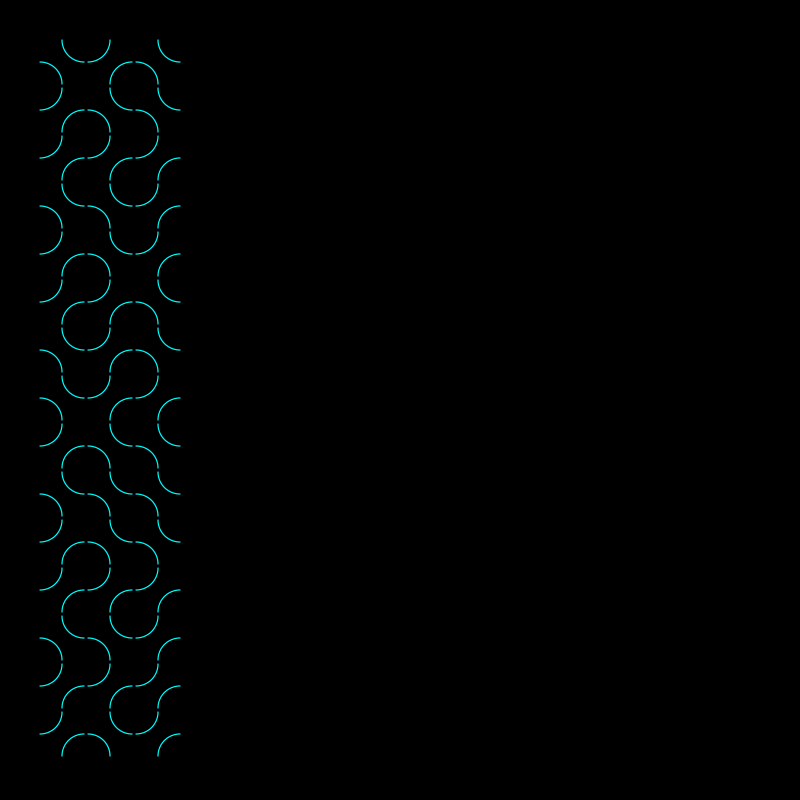
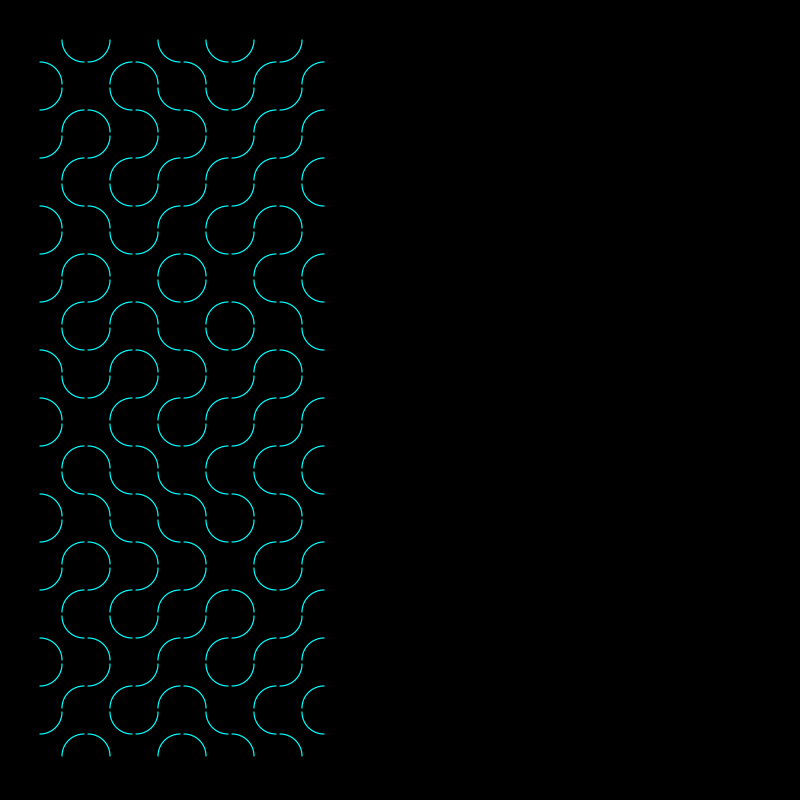
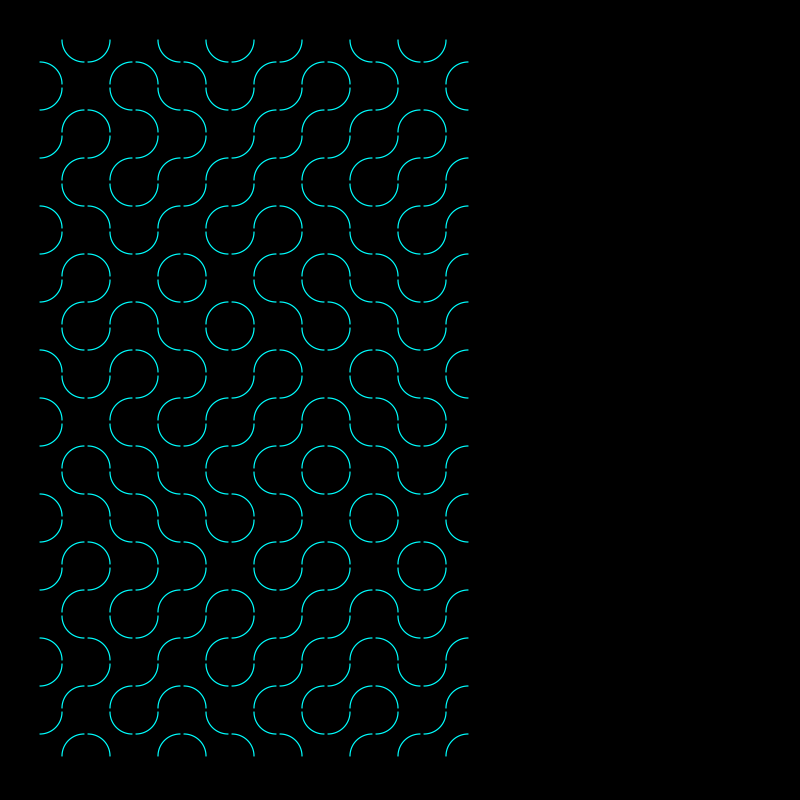
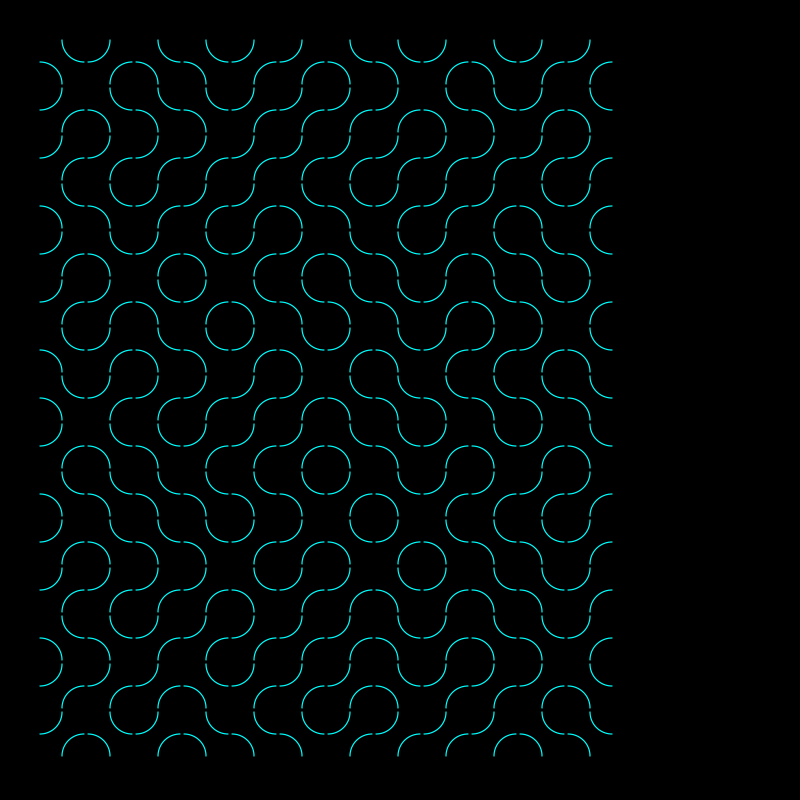
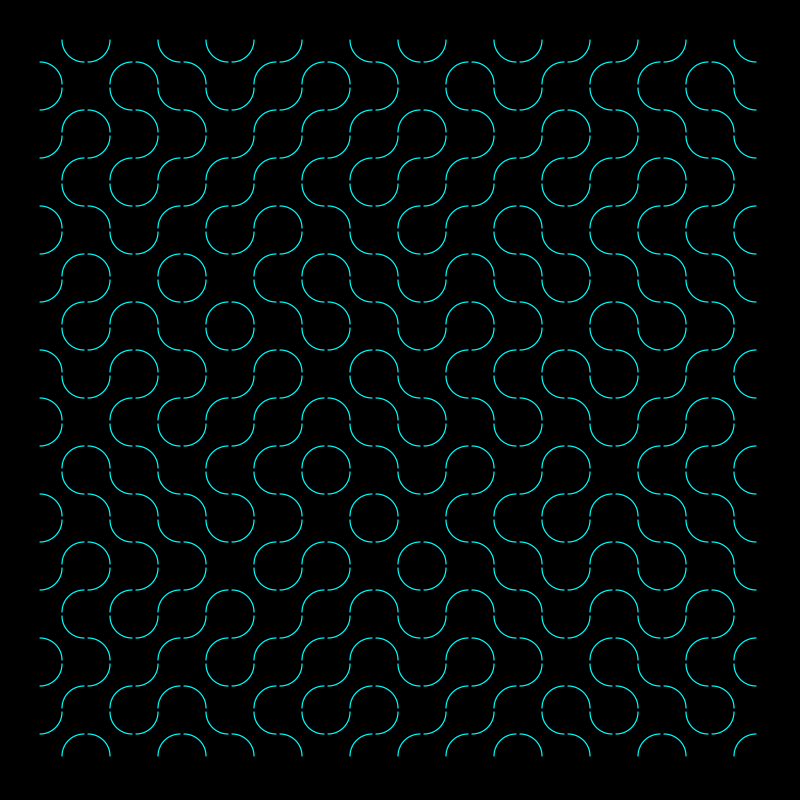
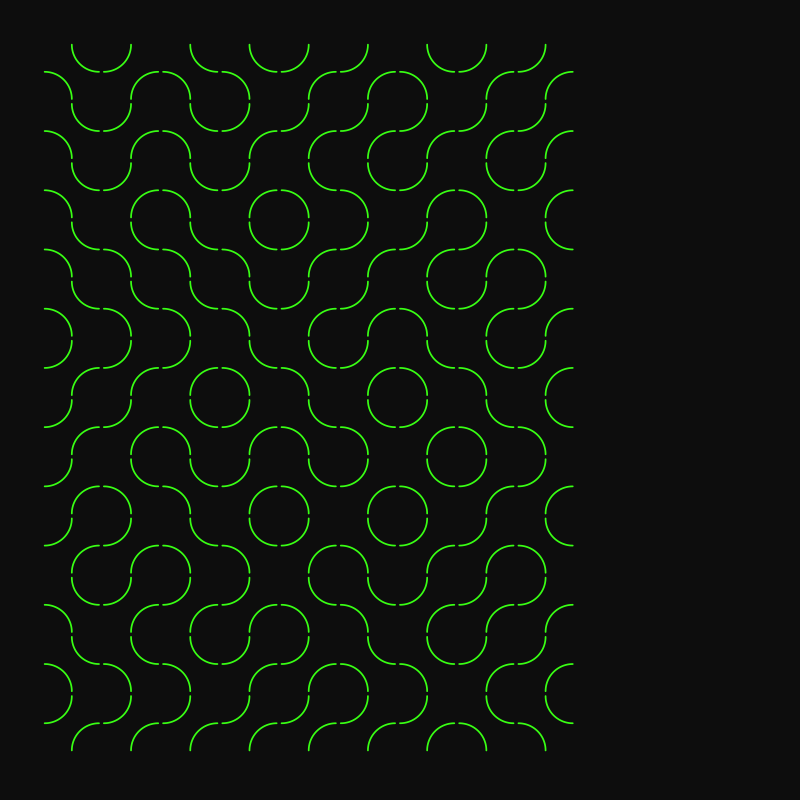
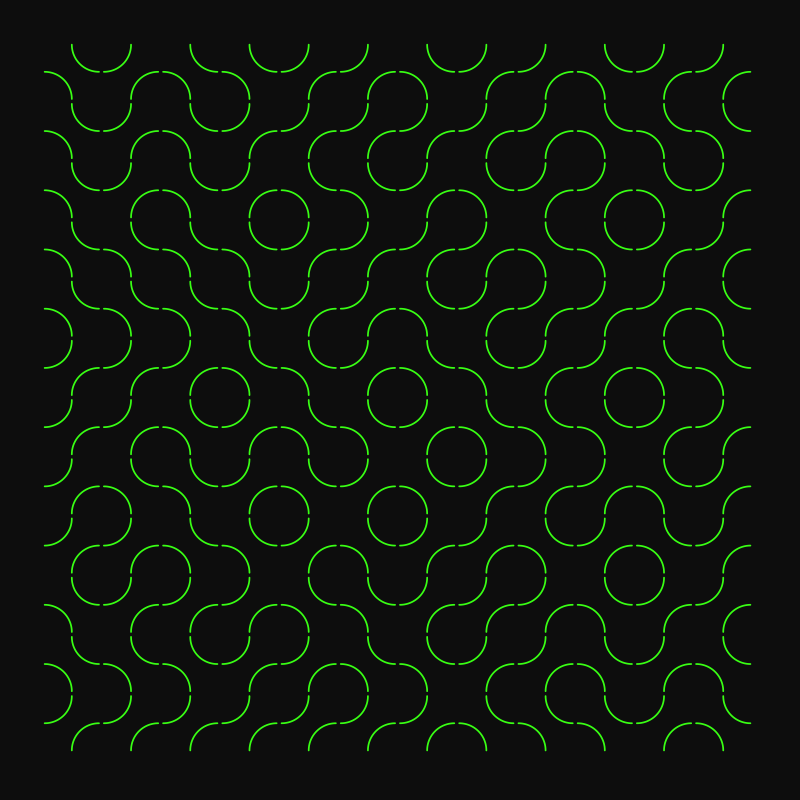
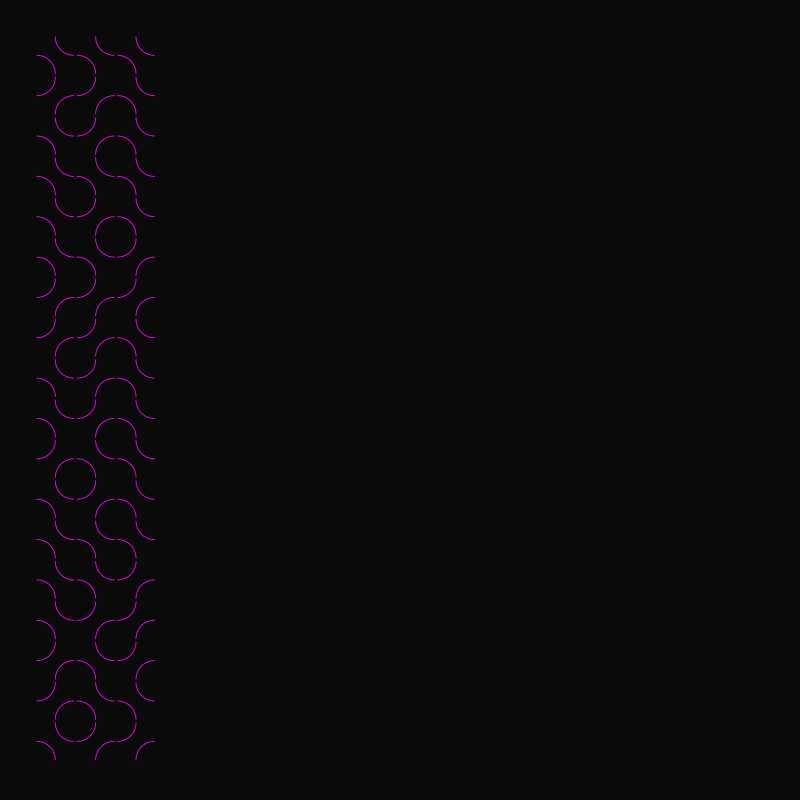
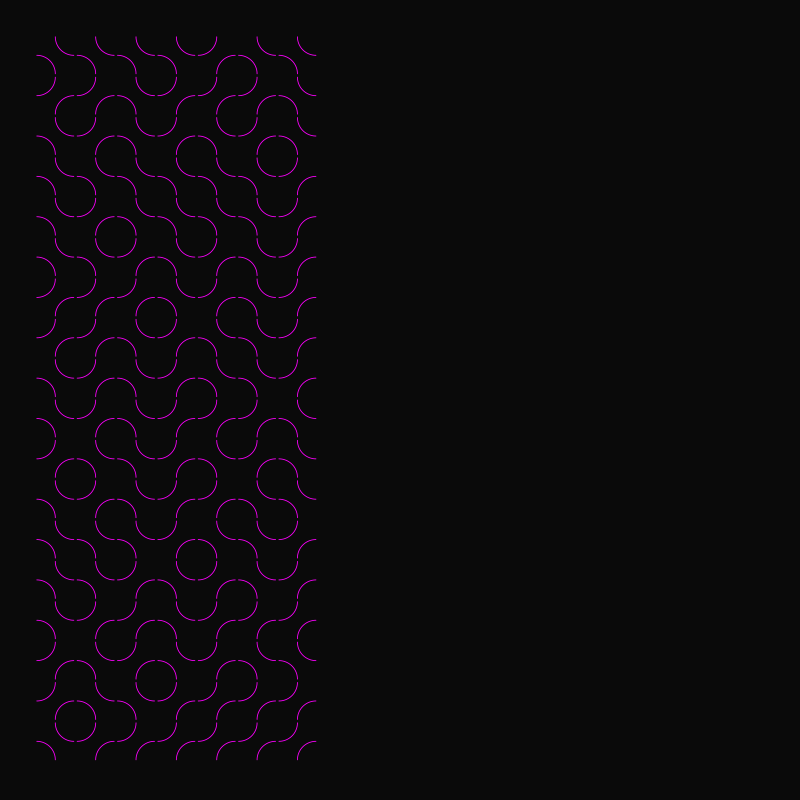
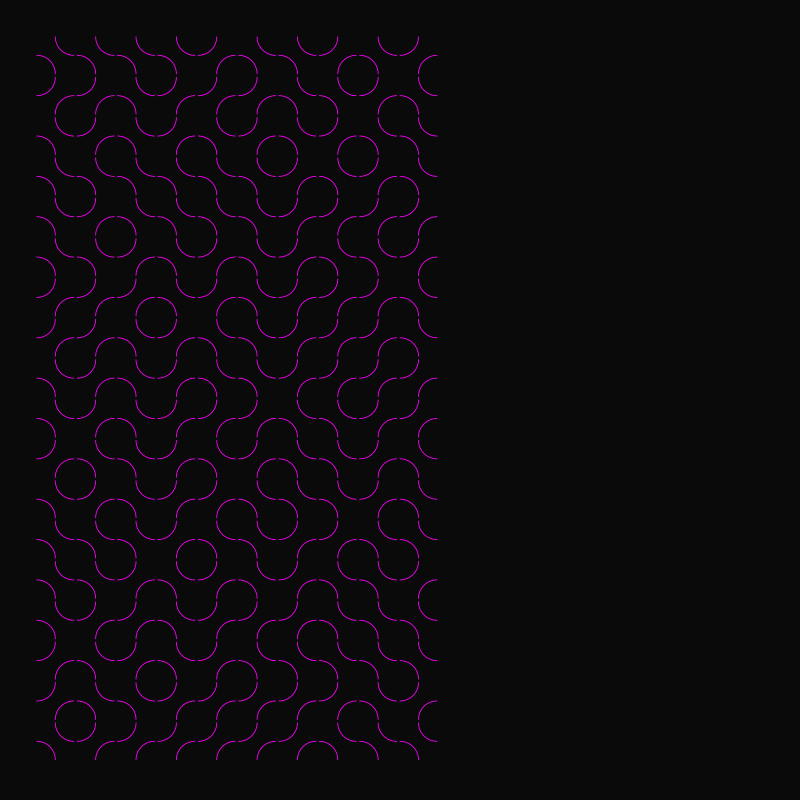
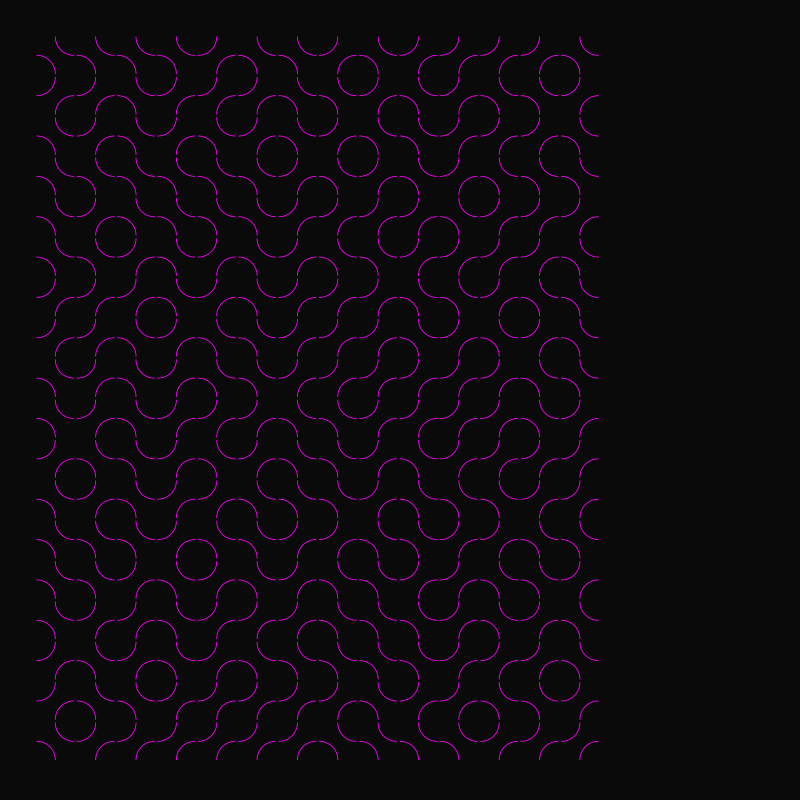
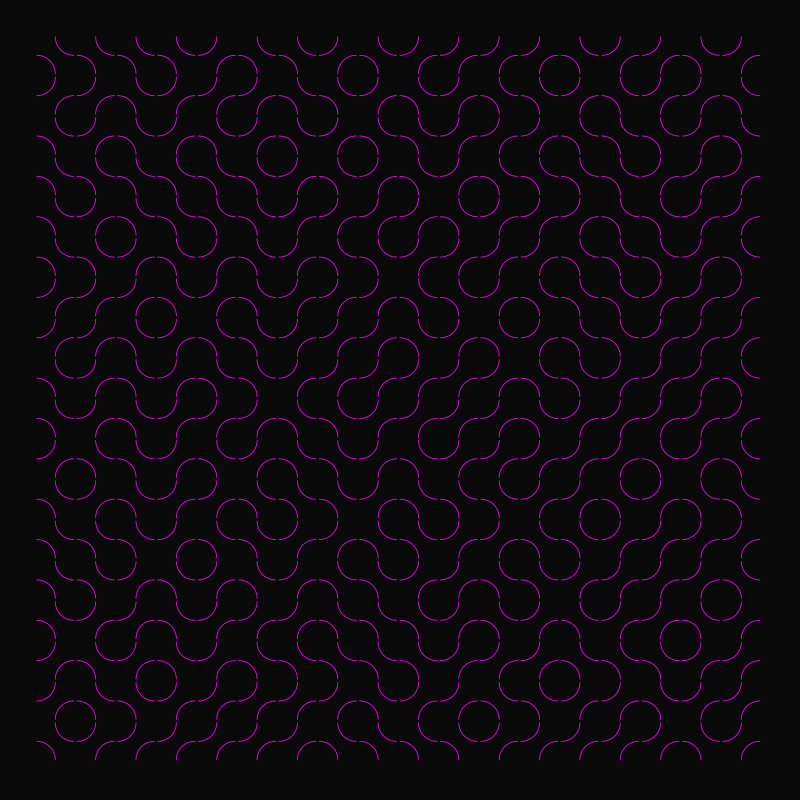
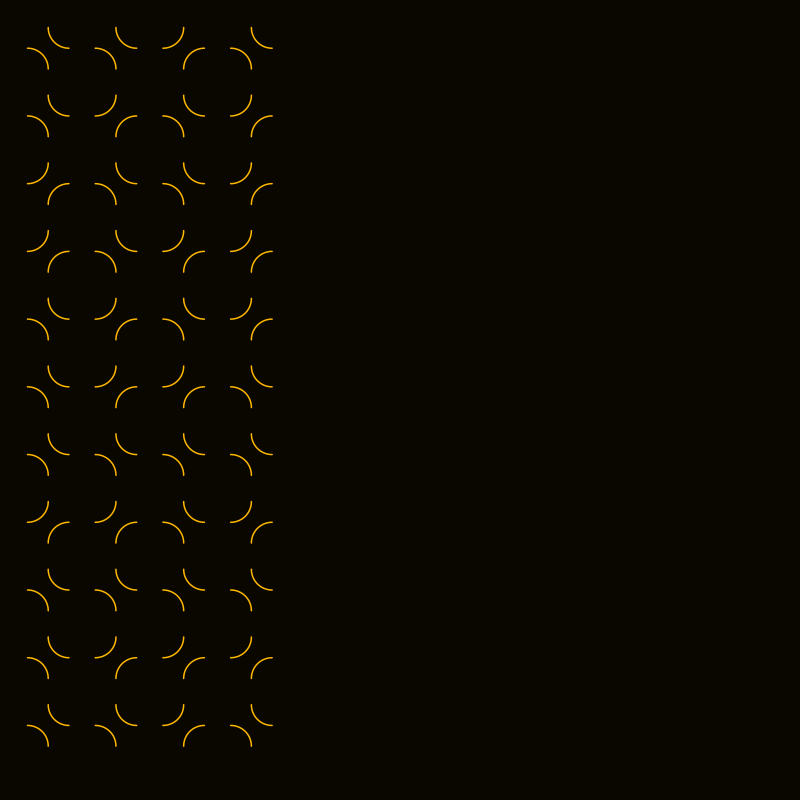
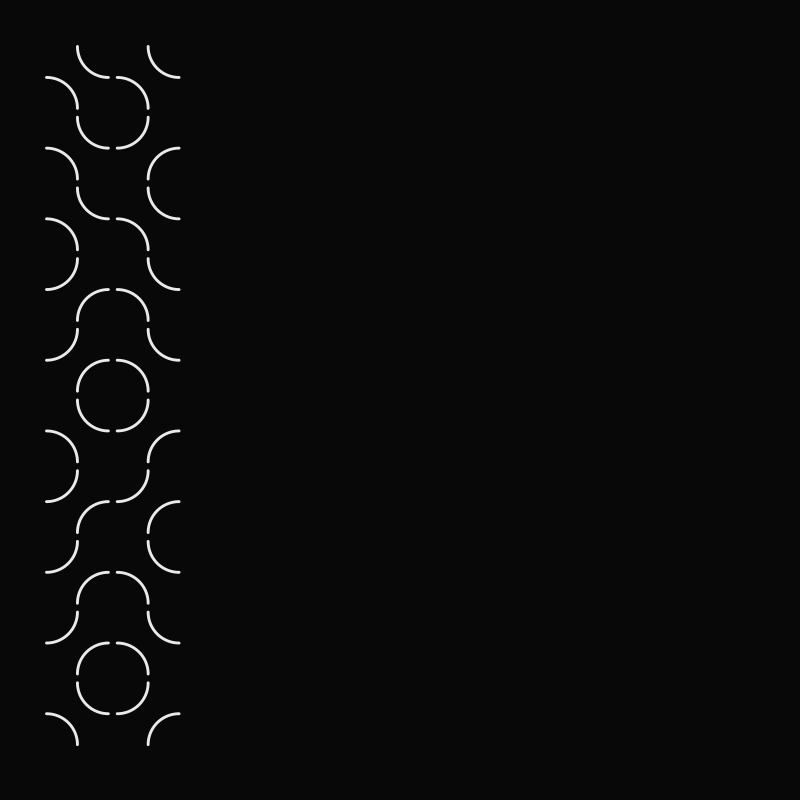
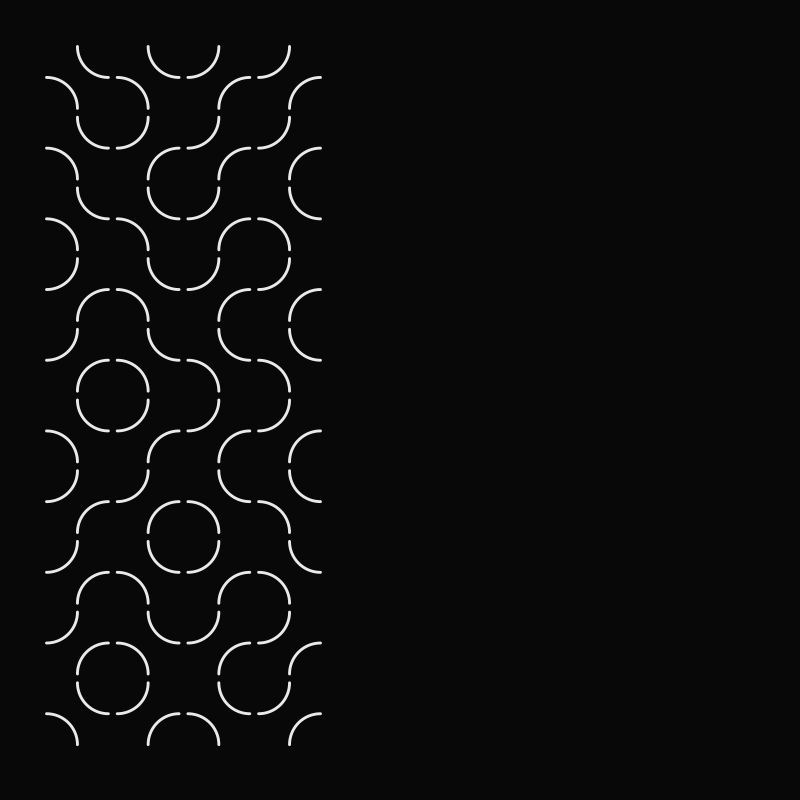
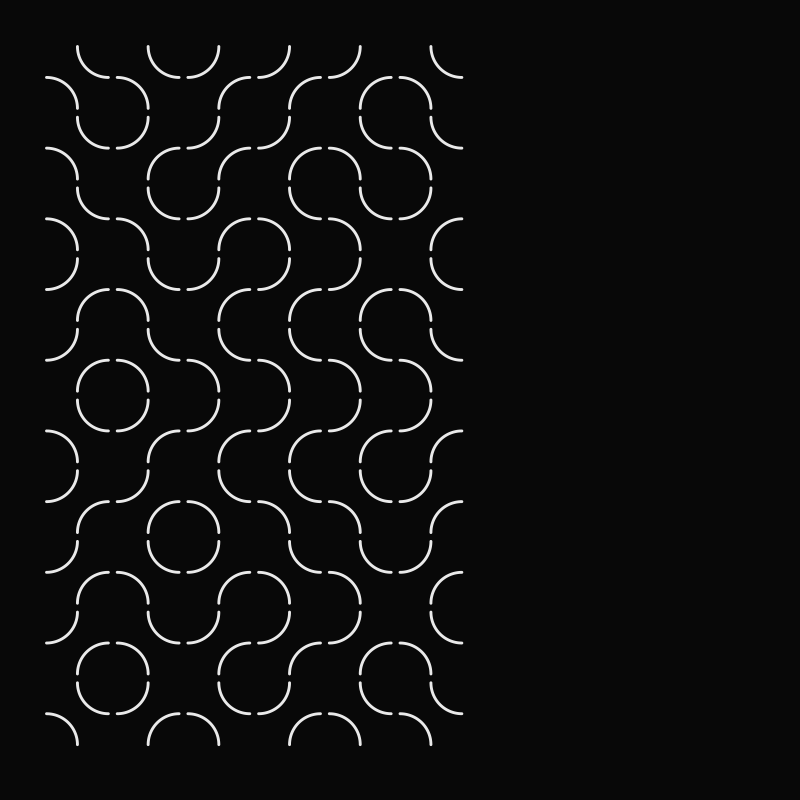
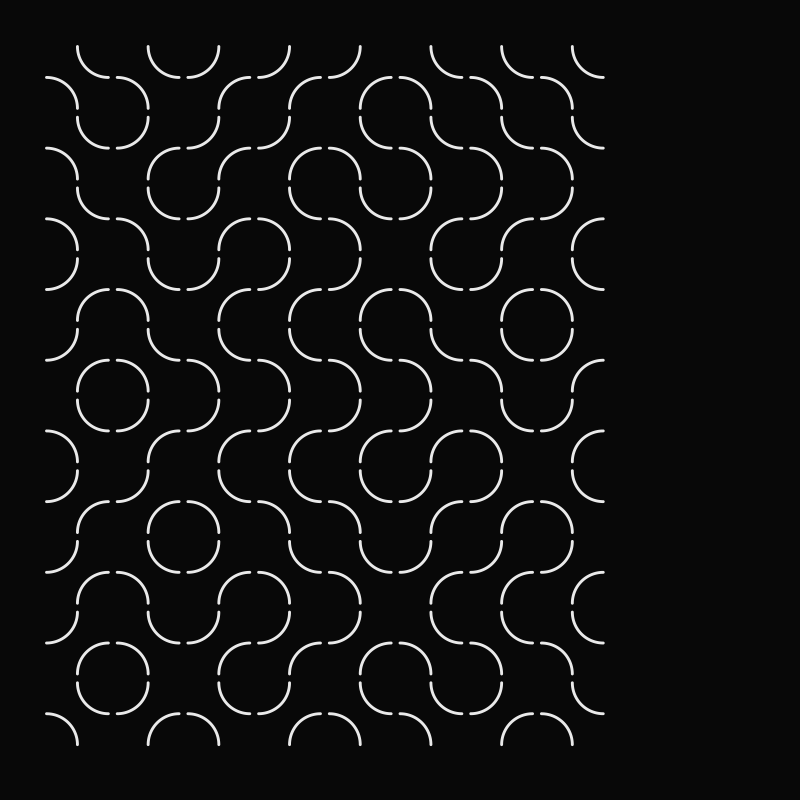
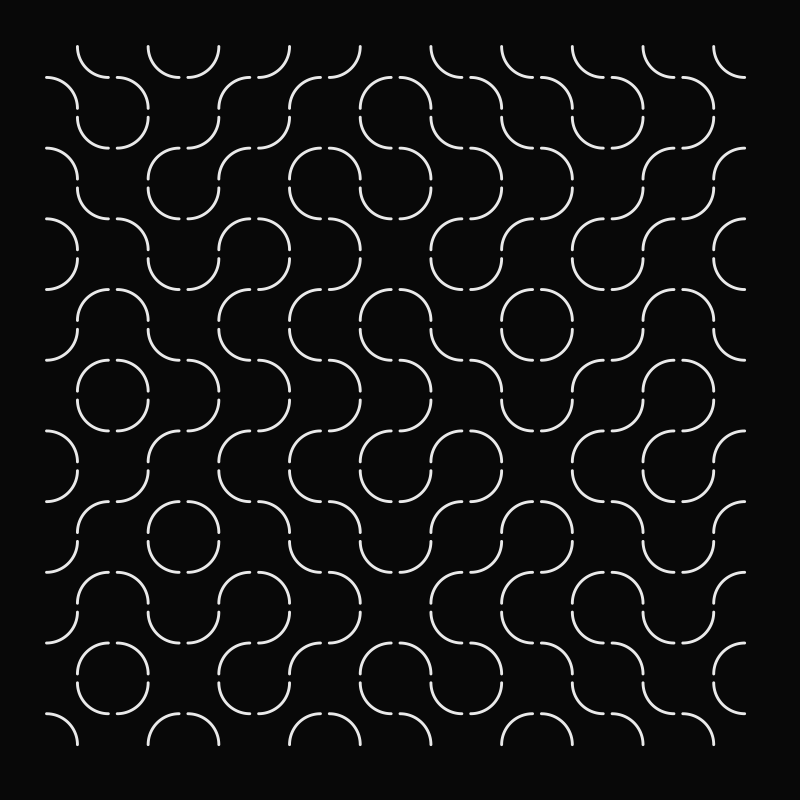
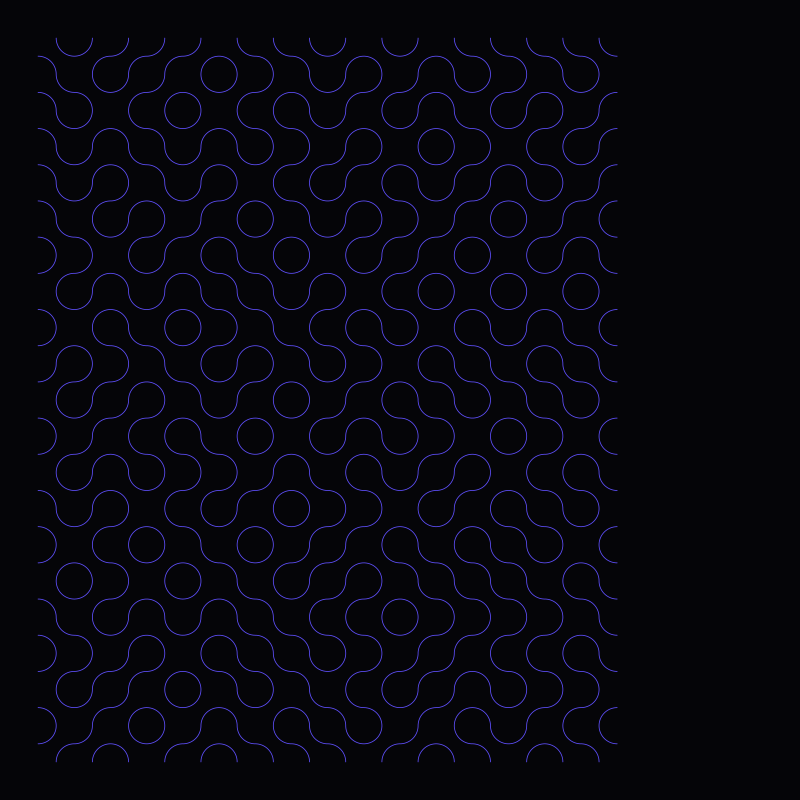
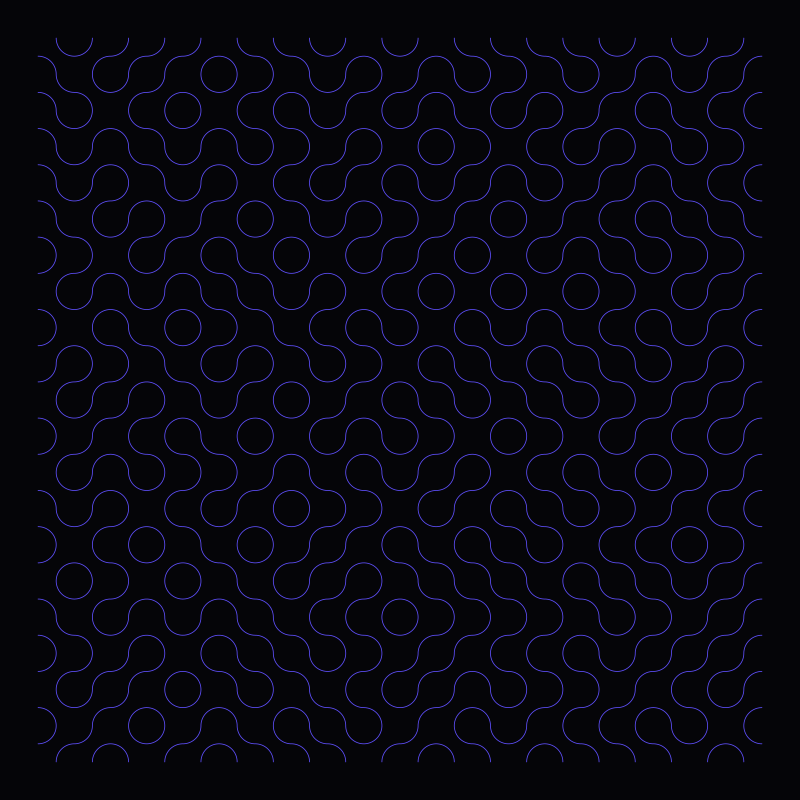
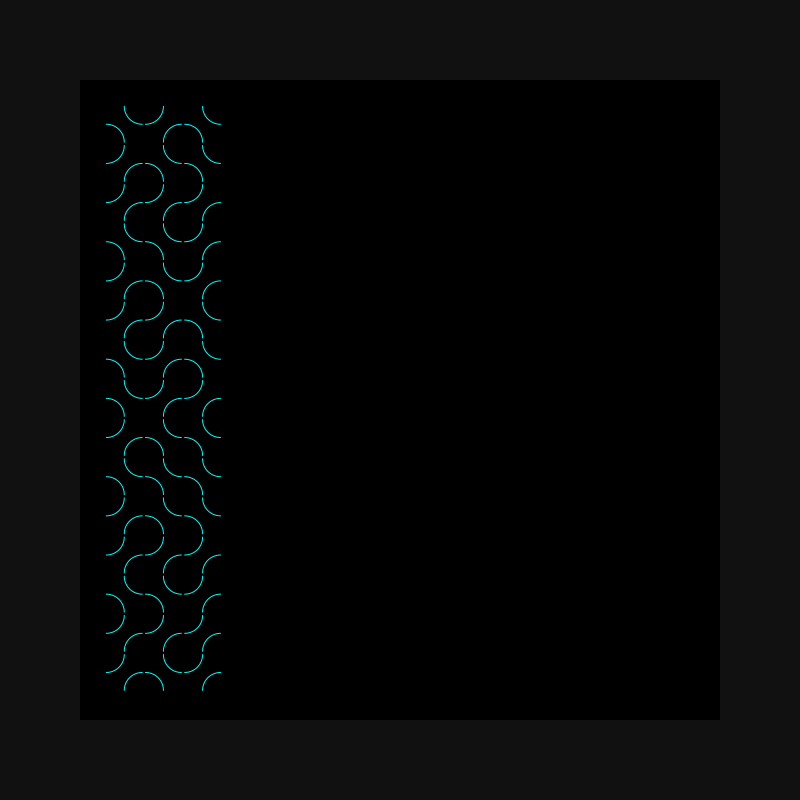
The 1704 idea at its plainest: one motif, four orientations, a coin per tile.
Truchet’s original
Sébastien Truchet, a Dominican priest and typographer, published Mémoire sur les
combinaisons in 1704 after noticing decorated tiles at a château. His question was
combinatorial: how many patterns can be made from one square tile divided along a
diagonal, laid at four orientations?
This piece is that question with arcs instead of a diagonal. Every tile carries the same
motif; only the orientation varies, and it is a coin.
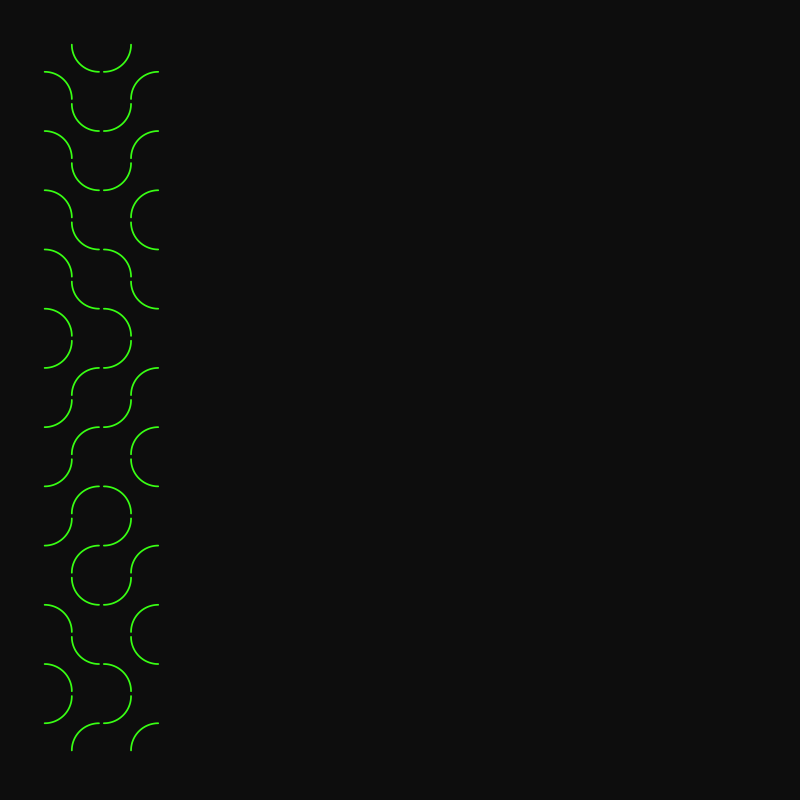
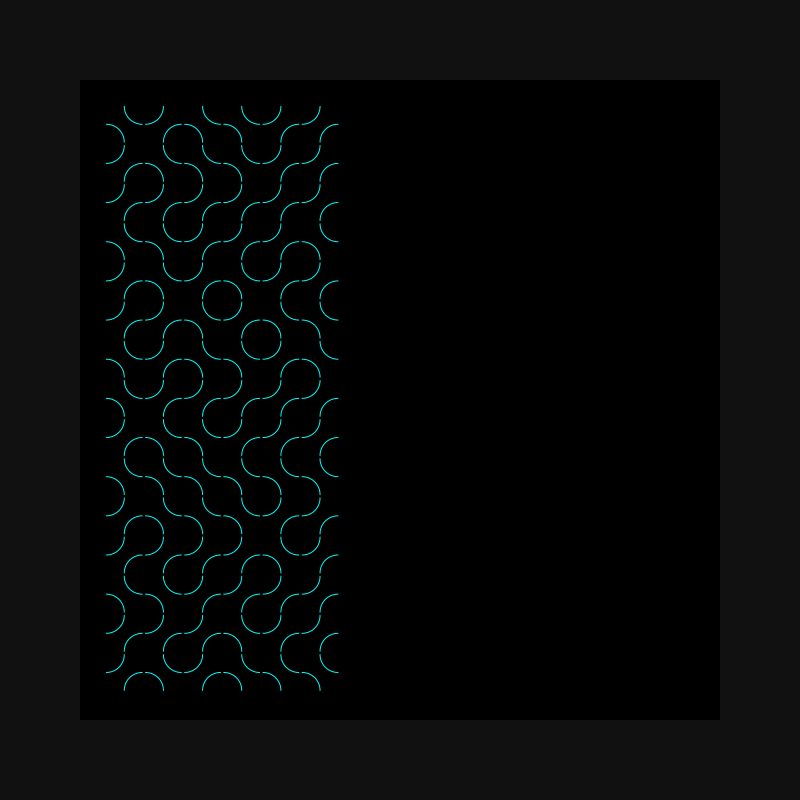
A fifth of the grid.
The joining condition
The motif meets each edge of its tile at the midpoint. Its neighbour’s motif meets
the shared edge at the same point, whatever orientation either took — so every arc end
meets another arc end, at every interior edge, without exception.
That single constraint is the whole of Truchet tiling. Without it there would be 225
separate marks; with it there is a small number of long continuous paths, and the piece
has a structure nothing in the code describes.
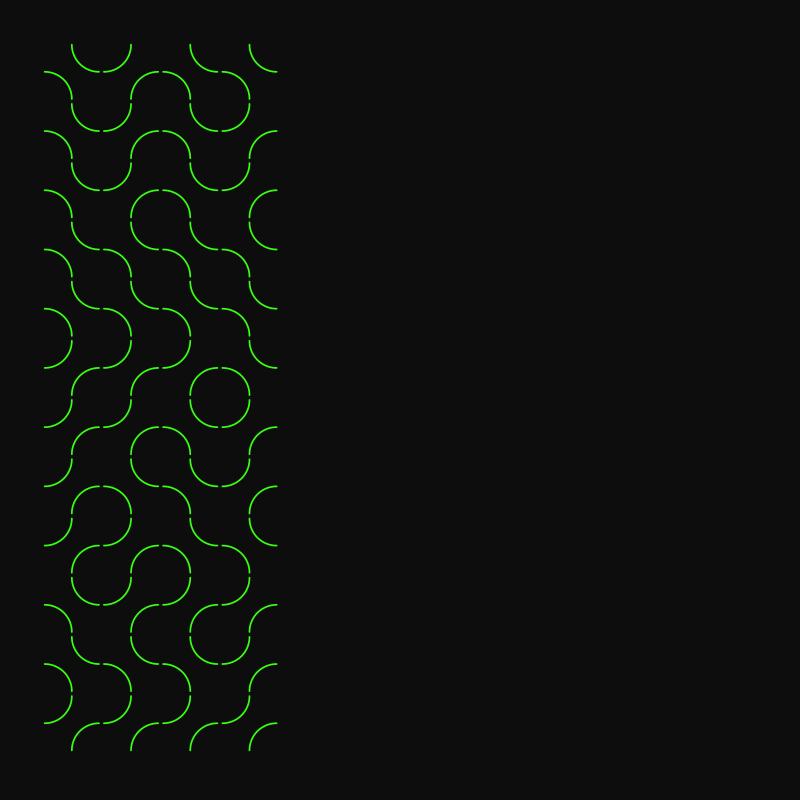
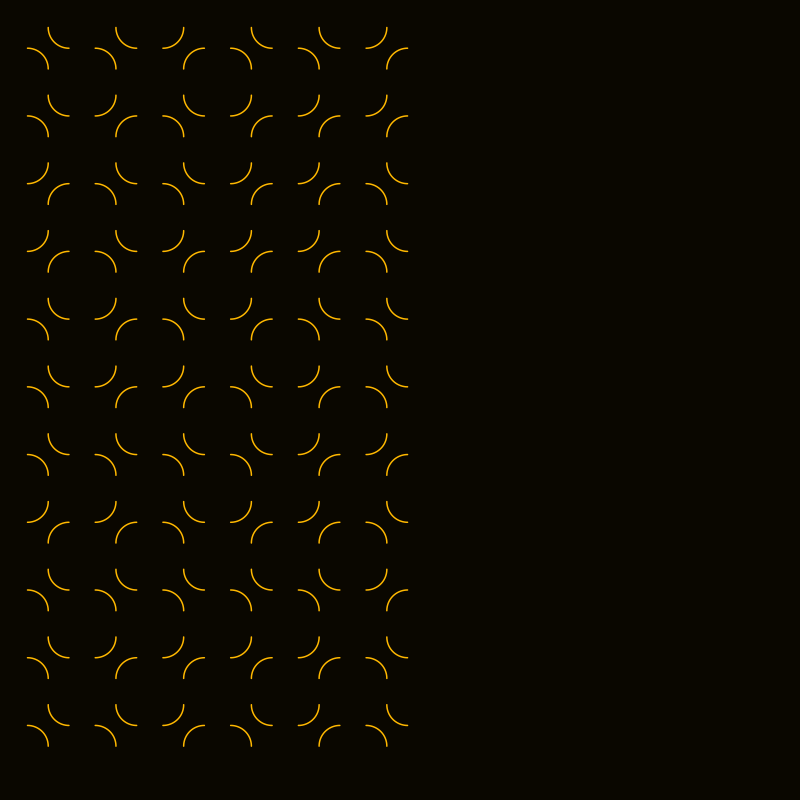
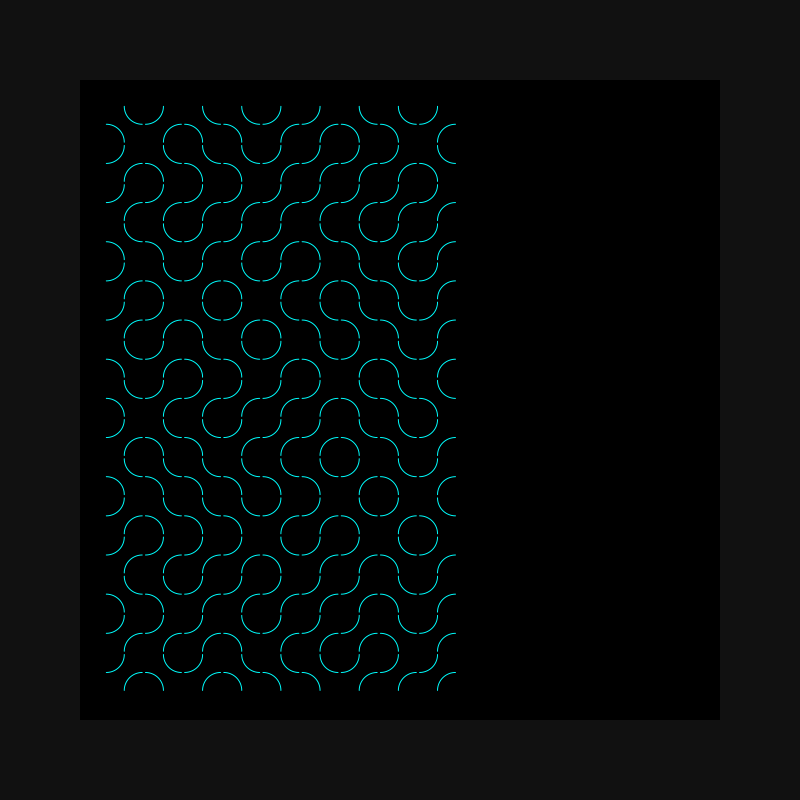
Two fifths.
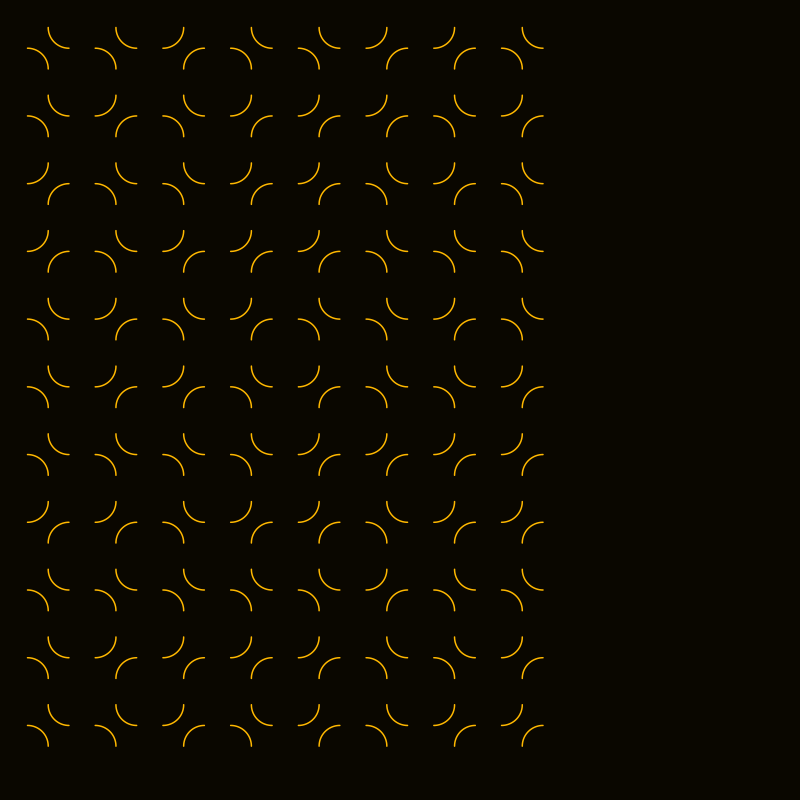
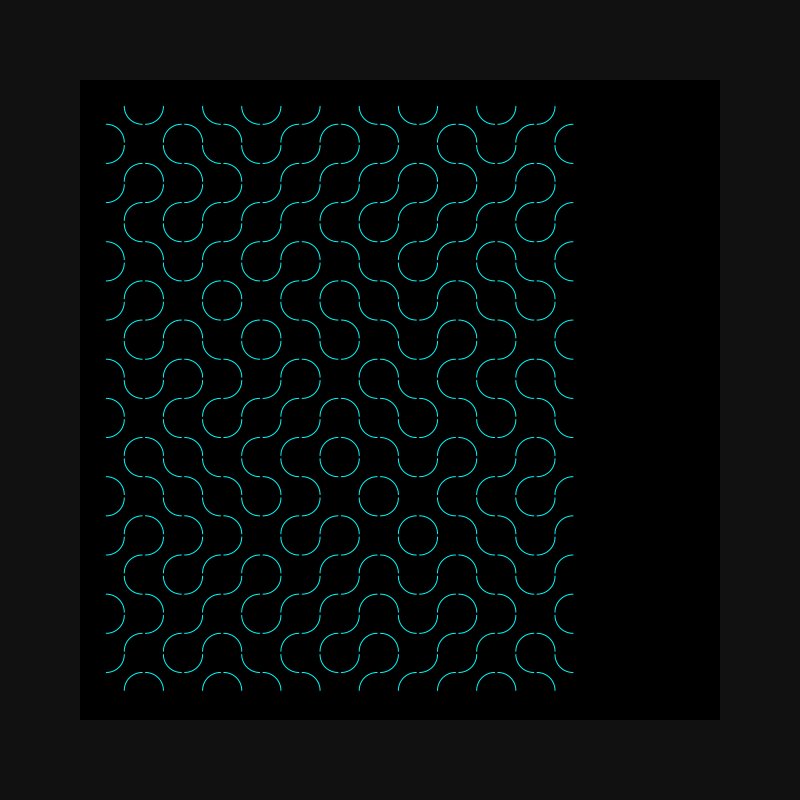
Three fifths.
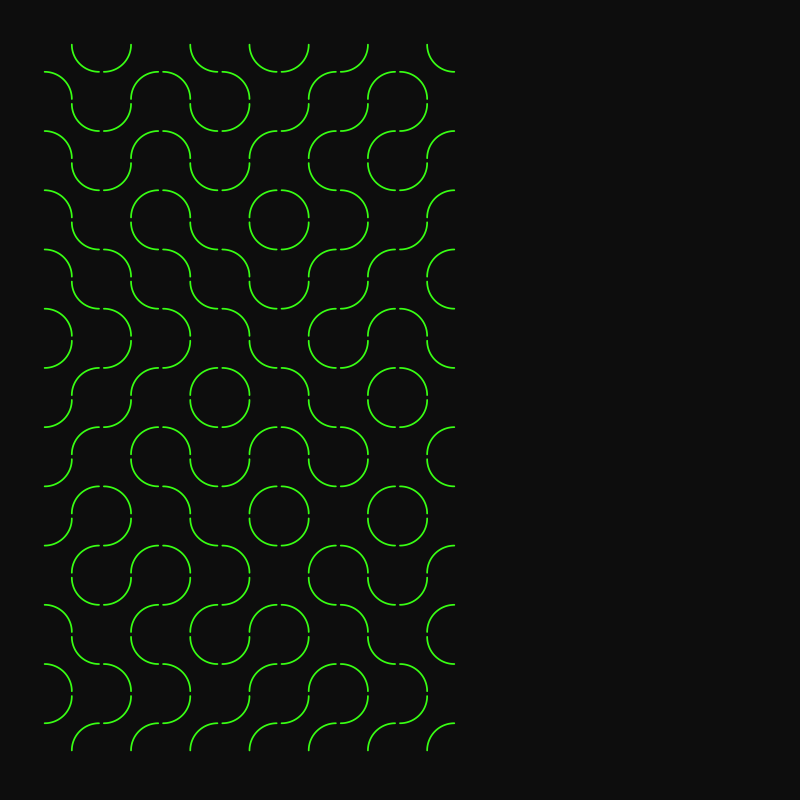
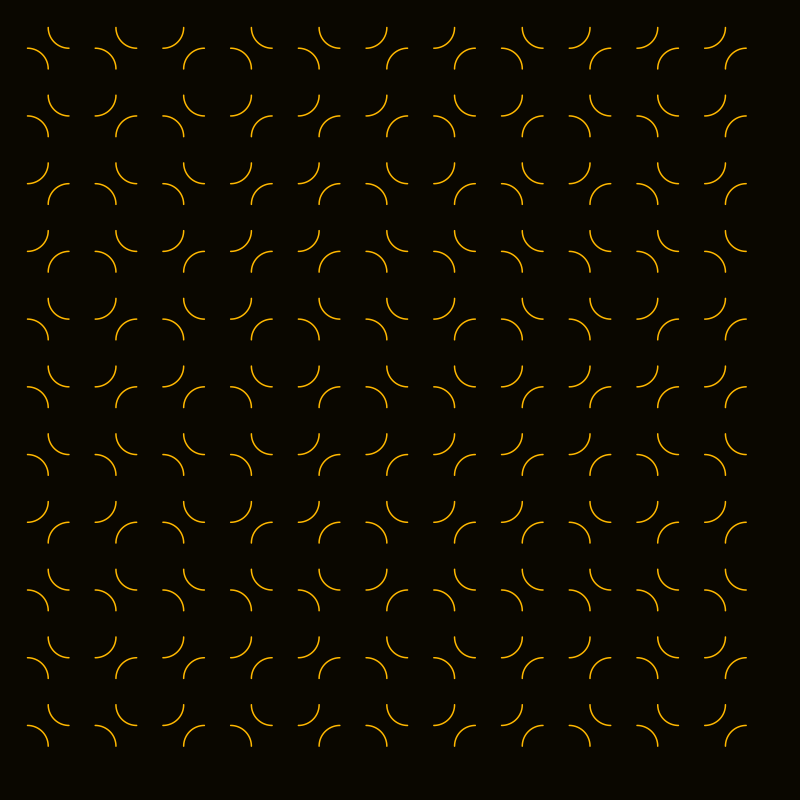
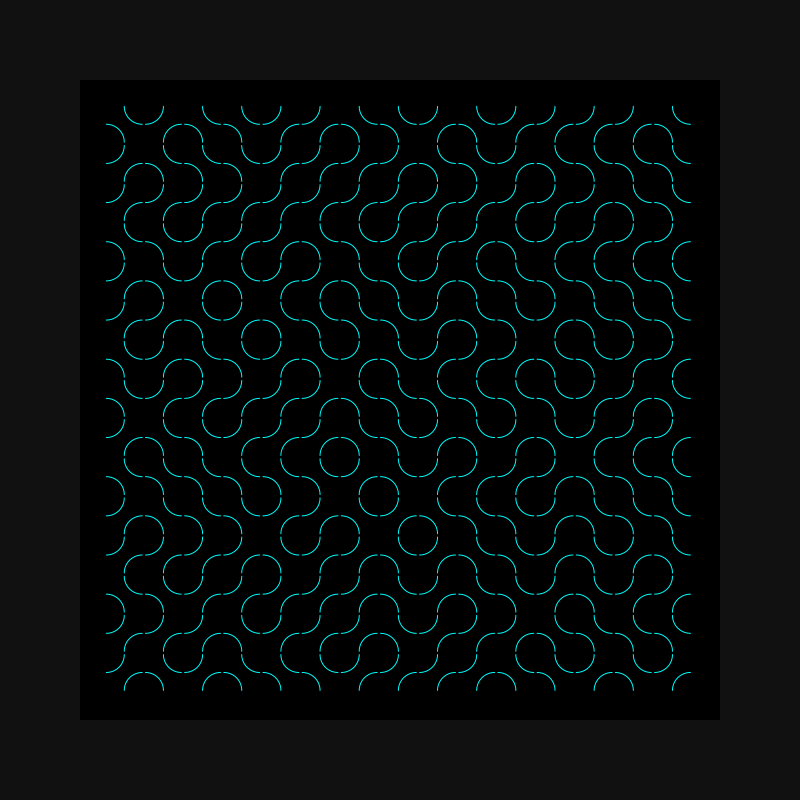
Four fifths. The orientations are independent per tile — nothing biases a tile towards
agreeing with its neighbour — so any long run you find is coincidence.
The full grid.
Six renderings
| Rendering | Grid | Gap | Size | Stroke | Ink |
|---|
| Cyber Cyan | 15×15 | 12 | 11 | 0.30 | cyan on black |
| Plasma Magenta | 18×18 | 12 | 11 | 0.25 | magenta on near-black |
| Matrix Green | 12×12 | 12 | 11 | 0.35 | green on near-black |
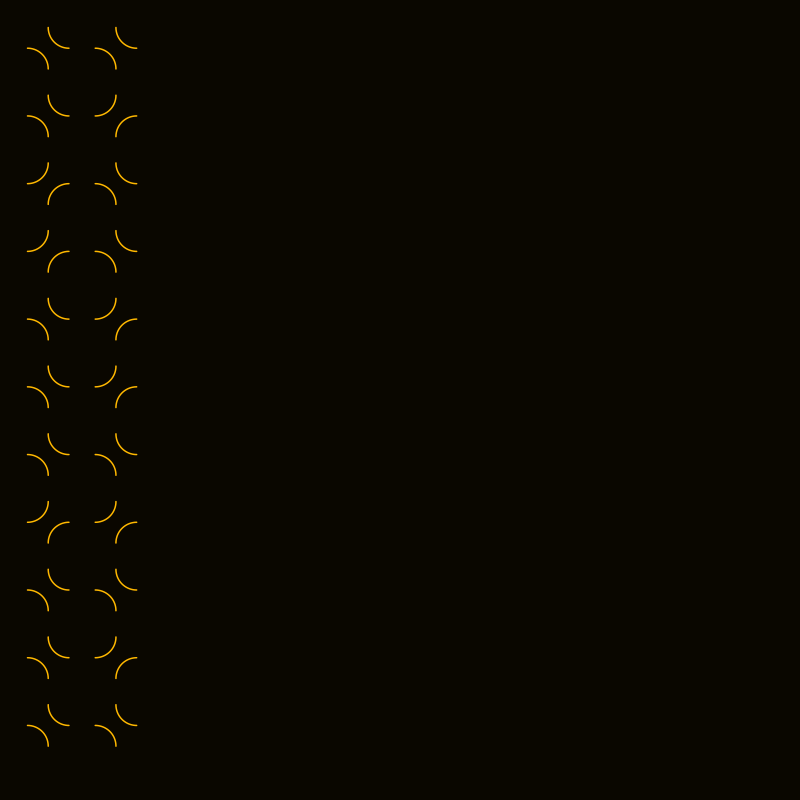
| Solar Gold | 11×11 | 18 | 11 | 0.40 | amber on near-black |
| Ghost White | 10×10 | 16 | 14 | 0.65 | white on near-black |
| Void Indigo | 20×20 | 9 | 9 | 0.20 | indigo on near-black |
Gap against Size determines the spacing between tiles and shapes the character of each
rendering. At 12 and 11 (Cyber Cyan, Plasma Magenta, Matrix Green) a hairline gap remains
between cells, so the arc joins are implied rather than drawn. At 9 and 9 (Void Indigo) the
tiles touch exactly and arc ends meet with no gap — curves flow seamlessly across the field.
At 18 and 11 (Solar Gold) the tiles are clearly separated, making each tile’s pair of arcs
readable as an isolated motif rather than part of a continuous path. Ghost White uses a much
heavier stroke weight with larger arcs on a coarser grid, shifting the piece toward a graphic,
printmaking register.
Each rendering has its own seed, so the six are independent draws.
Determinism
The generator is seeded from the preset and consumed once per tile, column by column.
The generator is System.Random, which the project’s determinism policy flags as not
guaranteed stable across .NET versions.